
Jaeger-LeCoultre Establishes the High Precision Guarantee: A New Seal of Watchmaking Authority
AI-assisted voice playback. Starts only when you choose Play.
Certification in horology has long remained the domain of neutral third parties and state institutions. Rolex submits its Chronometer pieces to the COSC; Omega maintains its Master Chronometer accreditation through an independent Swiss laboratory. Yet for a manufacture of Jaeger-LeCoultre's standing—one with nearly two centuries of movement development and completion within its own ateliers—the impulse to codify its own exacting standards has become not merely permissible but essential.
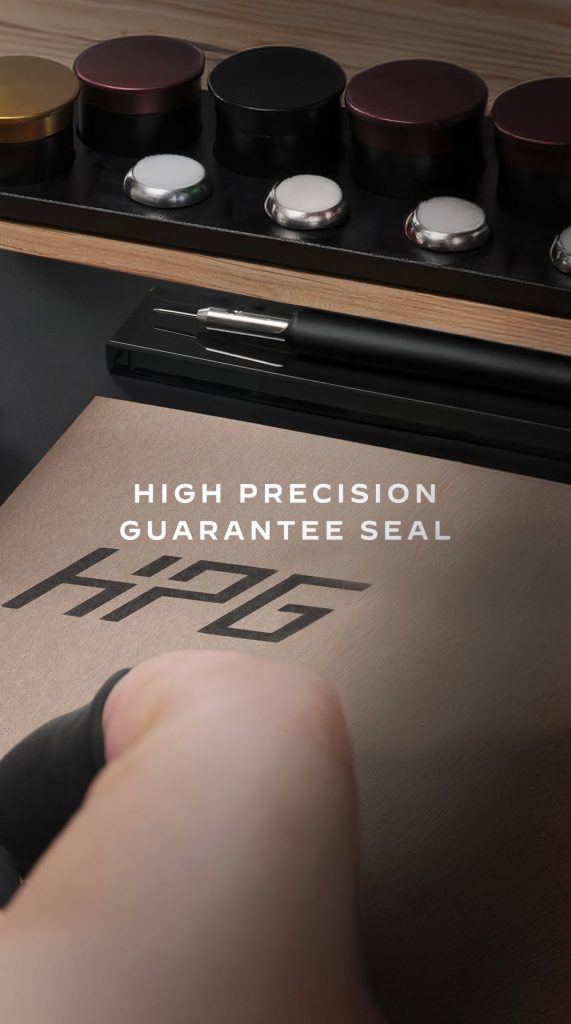
The introduction of the High Precision Guarantee seal represents precisely such a moment: a conscious affirmation that the Vallée de Joux house possesses not only the expertise to devise a proprietary certification protocol, but the confidence to stand behind it visibly, engraved upon the caseback of every piece that meets its criteria.
The Dual Criteria of Excellence
The HPG seal establishes two intersecting demands of ownership. The first concerns chronometric precision—the measurement of a movement's ability to maintain accurate timekeeping across the varied conditions encountered during daily wear. The second addresses aesthetic refinement: the finishing of the movement itself, examined against standards that govern everything from anglage and perlage to the quality of decoration applied to springs, wheels and bridges.
This pairing is deliberate. Precision without beauty remains merely functional; beauty without precision becomes ornament divorced from purpose. By tethering both criteria within a single hallmark, Jaeger-LeCoultre articulates a philosophy of watchmaking that refuses the false separation between performance and craft.
Testing in the Rhythm of Life
Where the HPG distinction gains particular weight is in its testing protocol. Rather than confining evaluation to laboratory conditions—as COSC certification does—the Jaeger-LeCoultre standard subjects each movement to the changing conditions that constitute actual ownership: temperature fluctuation, positional variation, the modest shocks of ordinary use. This approach acknowledges a truth long understood by serious collectors: a movement that performs flawlessly on a test bench may behave quite differently on the wrist.
The seal thus becomes a contract between maker and wearer, visible proof that the piece has survived not theoretical scrutiny but the practical gauntlet of inhabited time.
A Manufacture's Privilege
For a maison that designs and manufactures the entirety of its mechanical propositions—from the casting of components to the assembly of finished calibres—such a seal represents a natural expression of autonomy and accountability. Jaeger-LeCoultre need not depend upon external validation because the entire production ecosystem remains contained within its control.
The HPG becomes, in effect, an internal standard made legible to the outside world; a visible gesture that separates the ambition of the manufacture from those brands that rely upon external certification or manufacture-outsourced movements. It is authority earned through vertical integration and articulated through the permanence of an engraved mark.
In an era marked by the proliferation of certification schemes—some rigorous, others largely promotional—the High Precision Guarantee offers a refreshing clarity of purpose. It does not claim to be the world's most stringent standard, nor does it require external arbitration. Rather, it stands as an internally administered assurance that reflects the particular standards of a single, historically significant manufacture: a private promise, publicly declared, and sealed upon the caseback of every watch that earns it.
Key Facts
- Certification Name: High Precision Guarantee (HPG) Seal
- Issuing Manufacture: Jaeger-LeCoultre, Vallée de Joux, Switzerland
- Certification Criteria: Chronometric precision and refined movement finishing standards
- Physical Mark: Engraved on caseback of certified timepieces
- Testing Protocol: Rigorous assessment under changing daily wear conditions
The Simply Luxury View
The HPG seal represents a deliberate step toward transparency in an industry where certification has become increasingly fragmented and, in some quarters, commercially driven. By establishing its own proprietary standard and committing to engrave it visibly on every qualifying piece, Jaeger-LeCoultre positions the mark as a guarantee of internal rigour rather than third-party validation—a distinction of considerable importance to collectors who understand that a manufacture's reputation remains its most valuable asset.
For owners, the seal offers something more subtle than mere reassurance of accuracy: it provides a narrative of intentionality. Each HPG-marked watch becomes a tangible record that the manufacture has subjected the piece to the actual conditions of wear, not merely laboratory extremes. This alignment of testing protocol with lived experience represents a maturation in how independent manufactures articulate their standards to a globally sophisticated collecting audience.
Official brand website: jaeger-lecoultre.com
Imagery is used for editorial purposes. All rights remain with the respective owners, photographers and licensors.
Imagery courtesy of Jaeger-LeCoultre (@jaegerlecoultre).