BELL & ROSS PUTS 4.5 BILLION YEARS OF COSMIC HISTORY ON THE BR-X5
The BR-X5 Meteorite pairs Bell & Ross’s architectural instrument design with a Muonionalusta meteorite dial, making every one of the 250 watches naturally unrepeatable.
AI-assisted voice playback. Starts only when you choose Play.
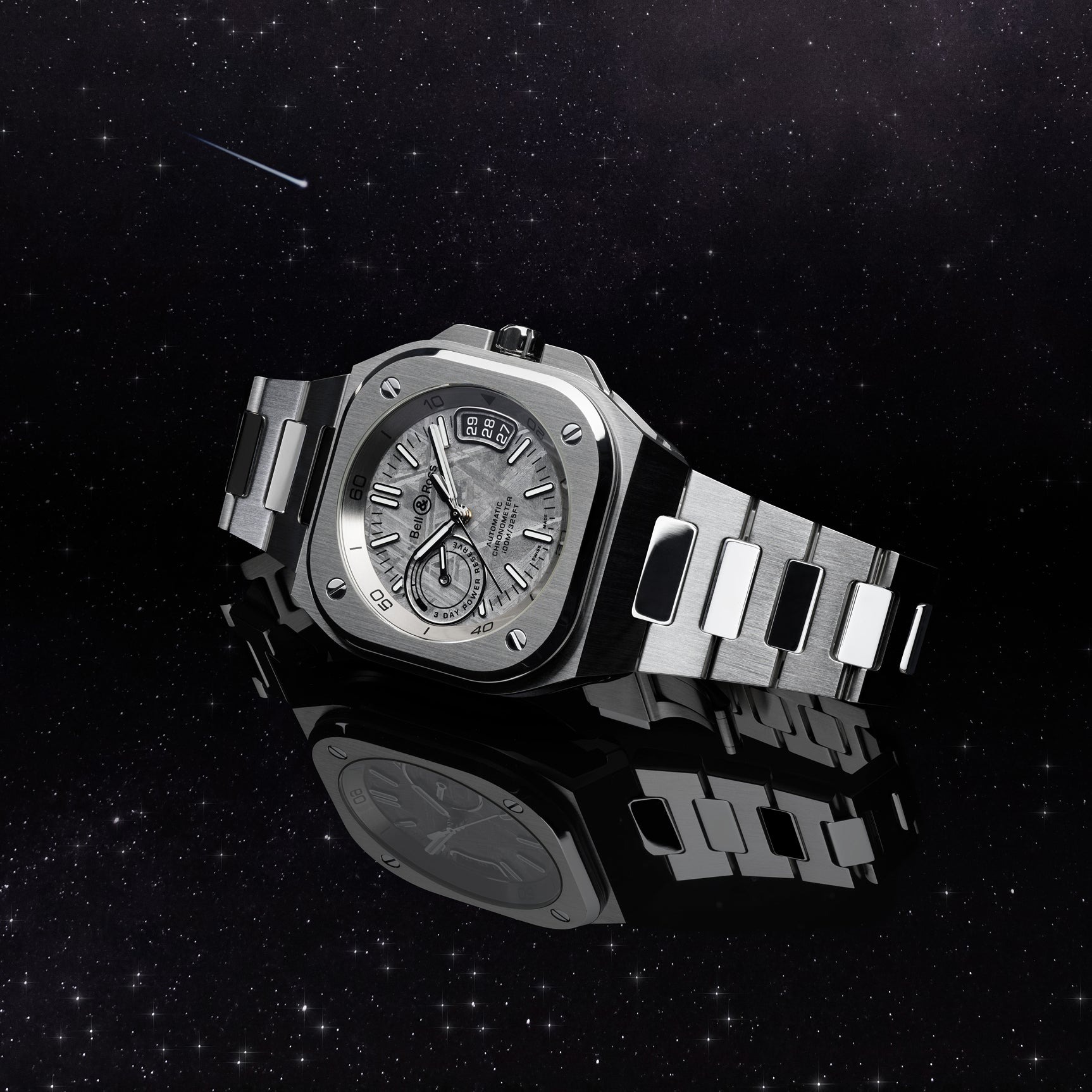
Watchmaking spends enormous energy trying to make one object identical to the next. Meteorite refuses to cooperate. Cut open a piece of Muonionalusta, and its interlocking crystalline pattern is already fixed by a cooling process that took place over geological time. Bell & Ross has used that unpredictability as the central idea of the BR-X5 Meteorite, a 250-piece edition in which each dial carries a naturally different signature.
A DIAL NO FACTORY CAN REPEAT
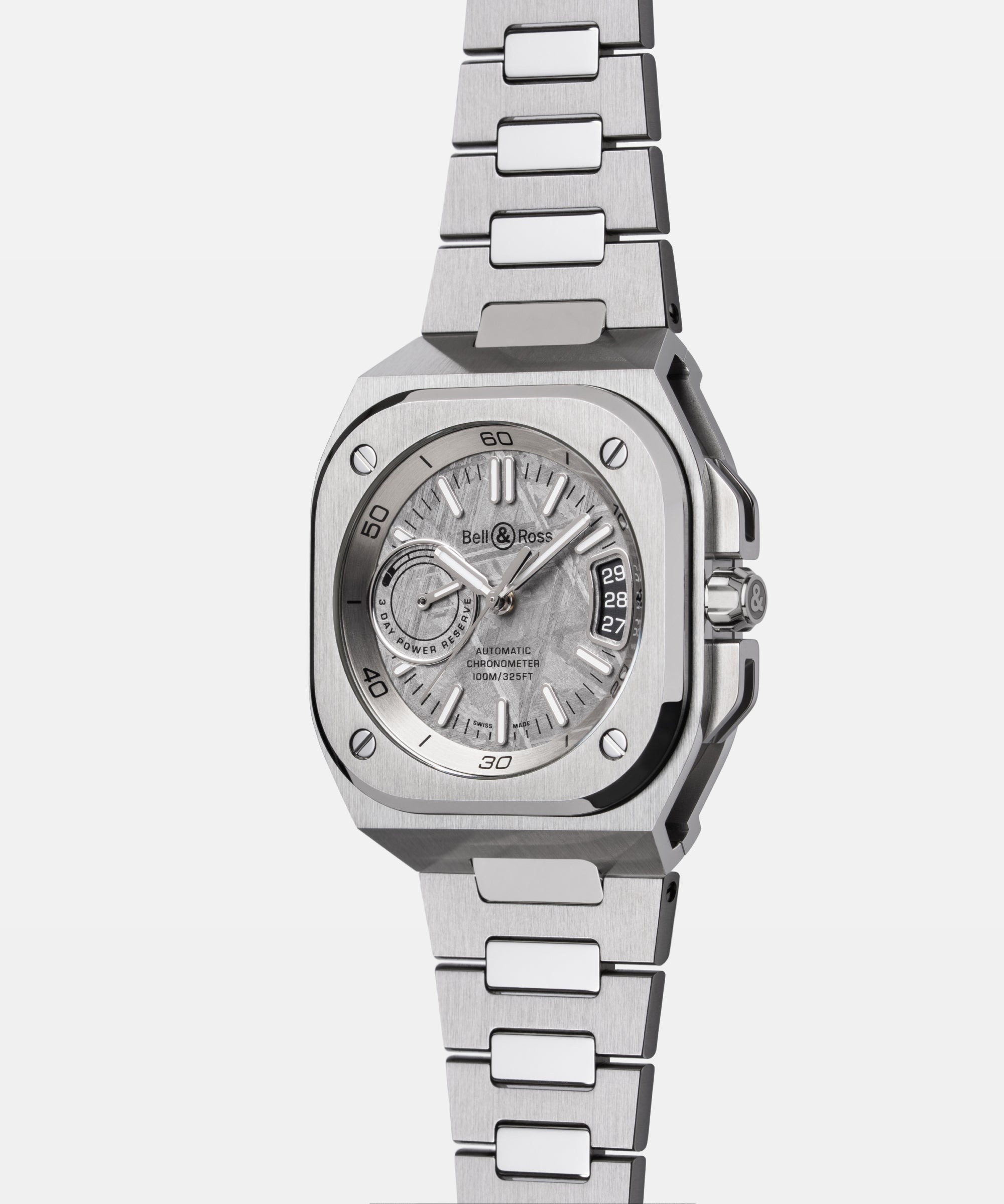
The material is approximately 4.5 billion years old, placing its formation close to the birth of the solar system. The Muonionalusta meteorite was first identified in northern Sweden in the early twentieth century, and when properly cut and treated, it reveals the long bands and intersecting lines known as a Widmanstätten pattern. Those structures cannot be manufactured in a conventional workshop because they are the record of metal cooling at an almost impossibly slow rate in space.
Bell & Ross does not laminate a decorative slice over a conventional metal base. The dial itself is cut from meteorite, with the mounting architecture passing through the material. The brand applies a stabilising protective treatment while preserving the shifting grey tones and crystalline grain. The practical challenge is obvious: the dial must remain legible even though the surface is visually active. Rhodium-plated applied indices and Super-LumiNova provide the necessary contrast.
THE BR-X5 ARCHITECTURE DOES THE DISCIPLINE
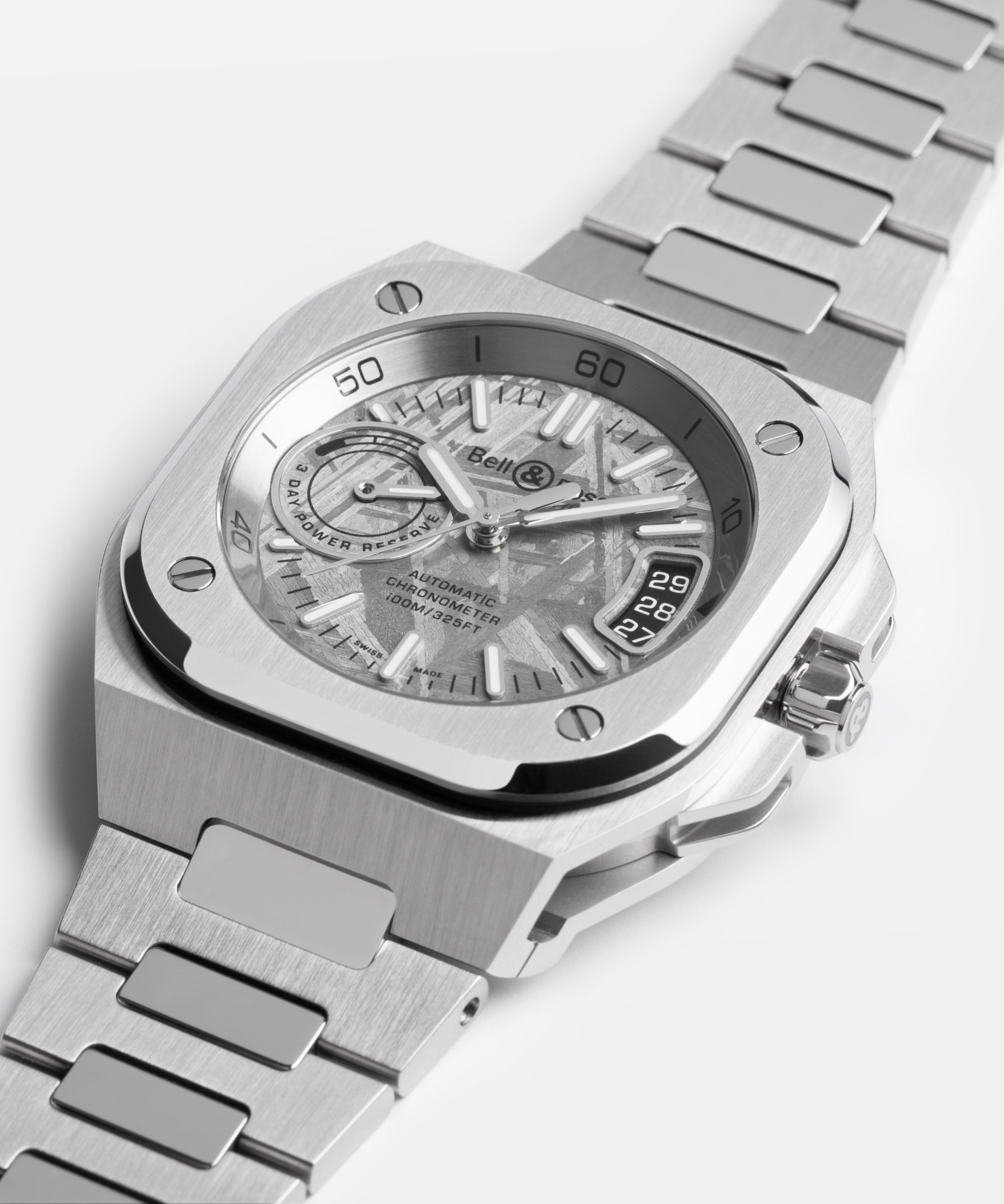
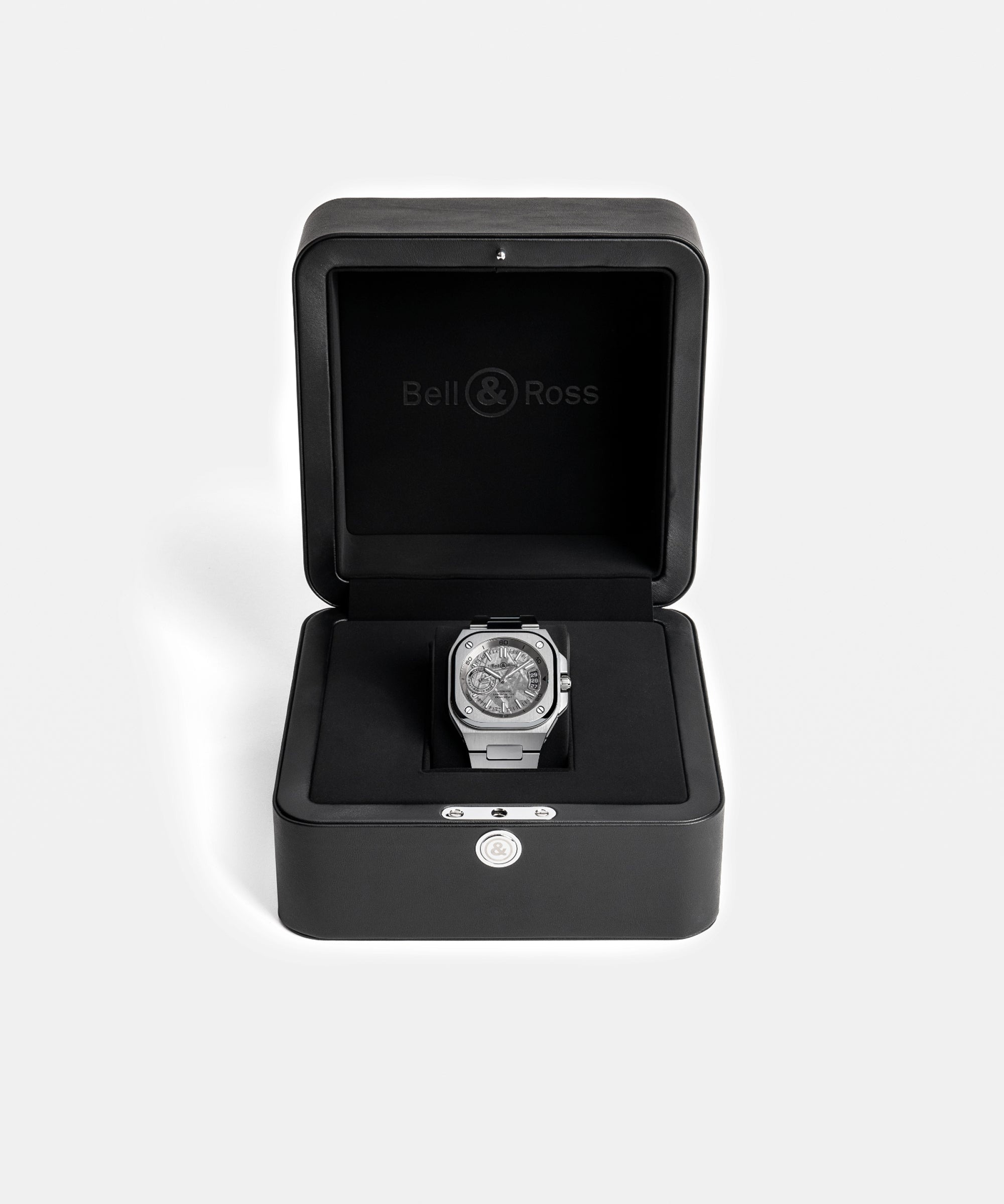
Cosmic material can easily become a gimmick if the watch around it is too theatrical. The BR-X5 is a useful counterweight because its case is deliberately engineered and graphic. At 41 mm, the satin-polished steel construction uses the collection’s layered “sandwich” architecture and four exposed screws, retaining the instrument-panel identity that has defined Bell & Ross for decades.
Inside is the manufacture BR-CAL.323 automatic movement, COSC-certified and offering around 70 hours of power reserve. The display includes a large date at three o’clock and a power-reserve indication at nine, giving the face a functional balance rather than leaving the meteorite to do all the visual work. Water resistance is rated to 100 metres, and Bell & Ross backs the model with a five-year warranty.
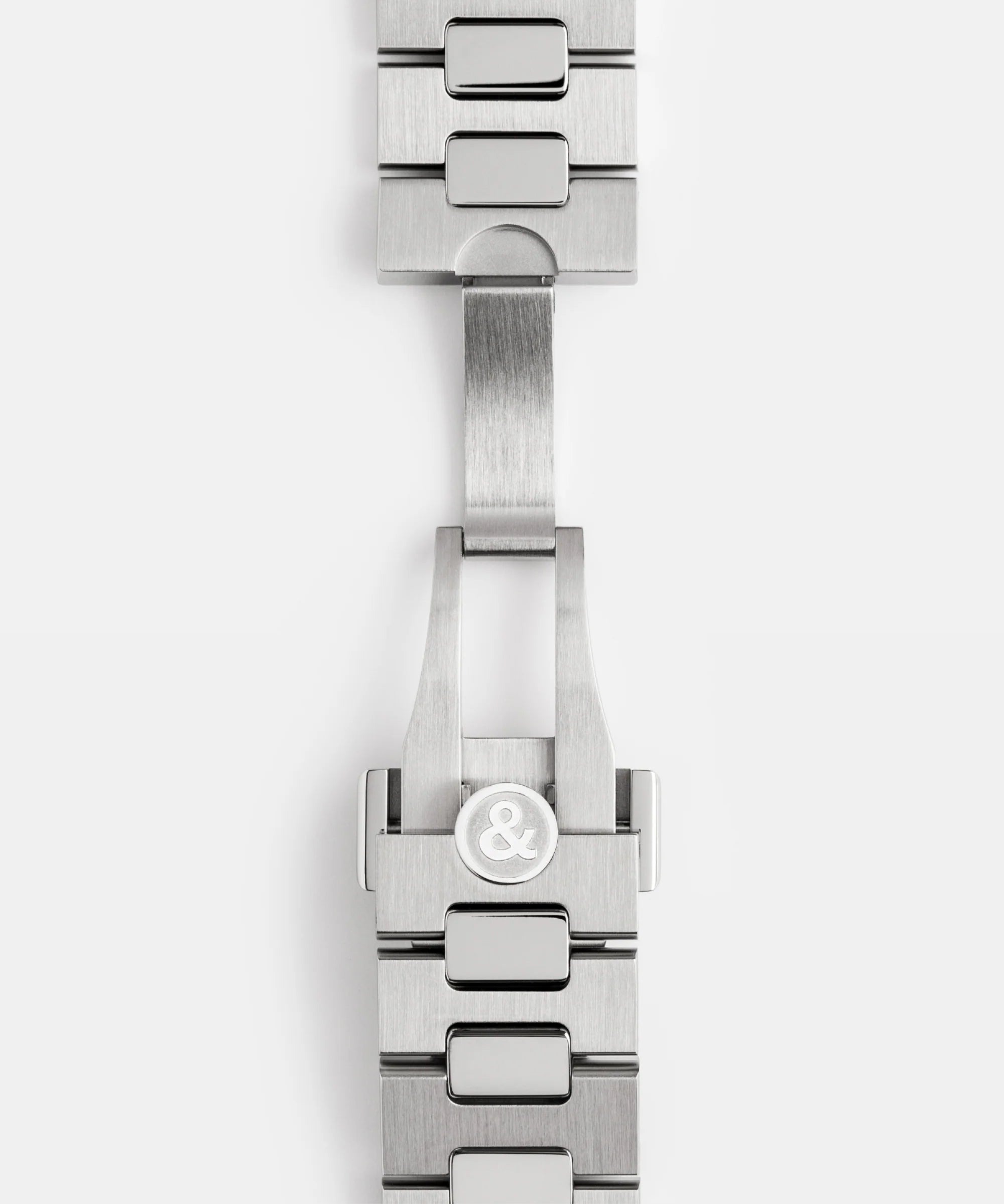
The watch is offered on a steel bracelet or black rubber strap. Both make sense: steel extends the mineral quality of the case and dial, while rubber pushes the BR-X5 closer to the technical equipment language from which the brand takes so much inspiration.
SPACE MATERIAL, INSTRUMENT LOGIC
There is an appealing contradiction at the heart of the watch. The movement represents controlled, repeatable Swiss manufacture; the dial represents a material event that began before Earth existed. One has been engineered to tight tolerances, while the other is valuable precisely because no two examples can be identical.
That makes the limited run more meaningful than a simple numbered edition. The scarcity is not only the 250-piece production count; it is the fact that each owner receives a different arrangement of crystalline lines. In an industry where exclusivity is often created by changing a colour or restricting volume, Bell & Ross has chosen a material that makes individuality unavoidable.
The BR-X5 Meteorite works because it does not ask the meteorite to transform the watch into jewellery. It keeps the case disciplined, the information clear and the mechanics contemporary, then lets a fragment of the solar system provide the one element that cannot be designed.