THE NEW LUXURY HEIRLOOM MAY BE A BAG THAT HAS ALREADY LIVED A LIFE
From the Fendi Baguette and Chloé Paddington to Balenciaga’s Le City and the Louis Vuitton Speedy, younger luxury consumers are turning fashion archives into a discovery channel — and maisons are responding with strategic re-editions.
AI-assisted voice playback. Starts only when you choose Play.
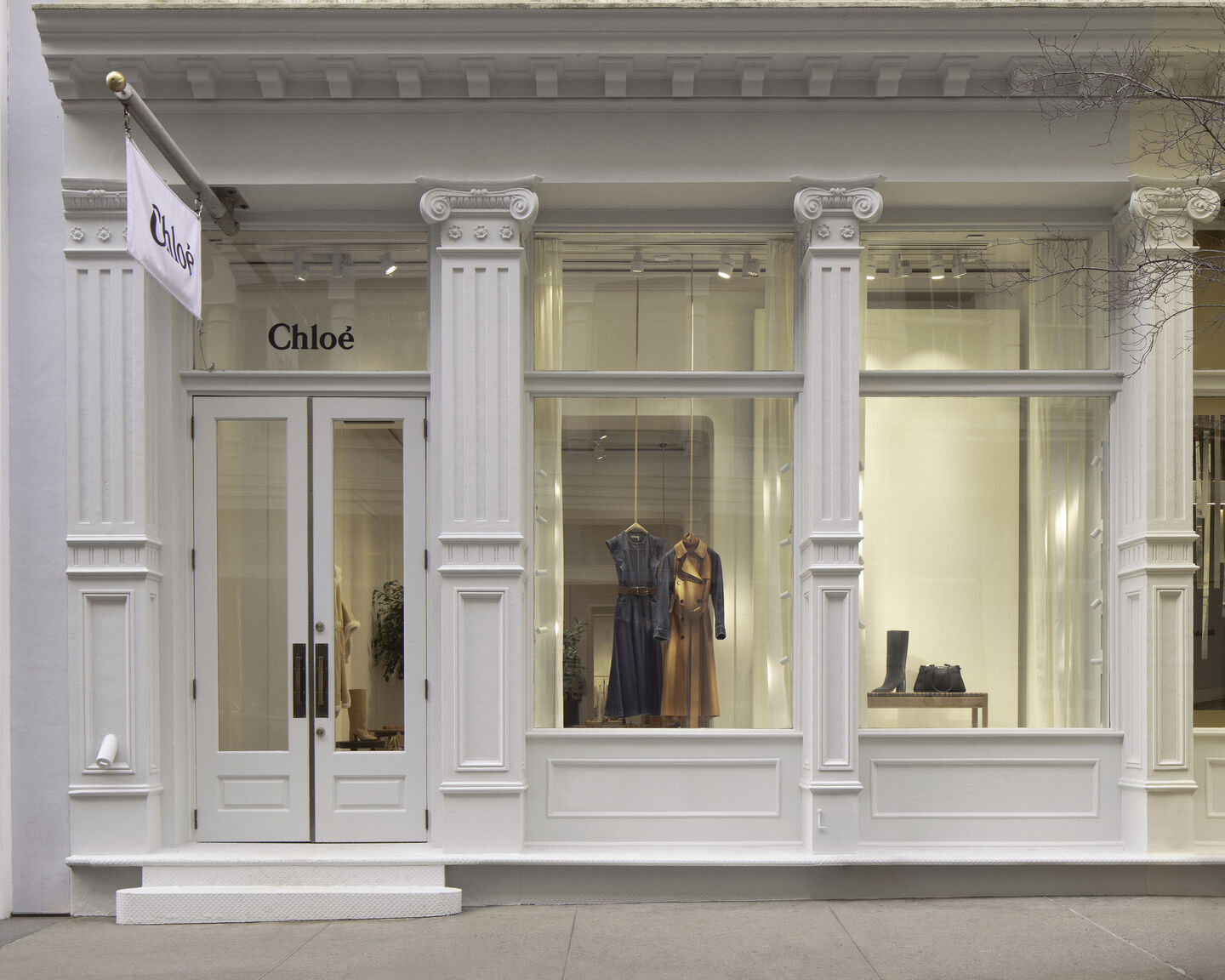
Luxury fashion has spent generations training consumers to want what comes next. Yet some of the most desirable bags of 2026 are objects whose cultural peak arrived years — or decades — ago. The Fendi Baguette, Chloé Paddington, Balenciaga City and Louis Vuitton Speedy are being rediscovered not as museum pieces, but as active parts of a contemporary wardrobe.
Resale has become discovery.
The shift is especially visible among younger consumers, for whom second-hand platforms function as both marketplace and archive. LUXUO cites research from Boston Consulting Group and Vestiaire Collective indicating that second-hand pieces can account for a significant share of younger wardrobes, with handbags particularly prominent. The same research suggests resale is also introducing shoppers to brands they may later buy new.
That changes the old assumption that the secondary market sits downstream from luxury retail. In practice, it can now sit upstream, shaping taste before a consumer enters a boutique. A bag discovered through vintage imagery, a resale listing, or an old campaign can create desire that the current collection then benefits from.
The It bag returns with its history intact.
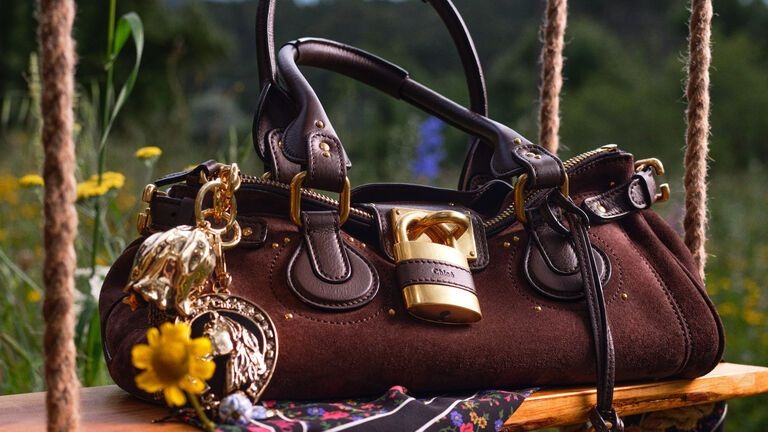
The renewed Chloé Paddington is a clear example. First launched in 2005, the slouchy bag with its oversized leather-wrapped padlock became one of the defining accessories of the era. Chloé has brought it back in updated materials and proportions while retaining the hardware that makes the silhouette immediately recognisable.
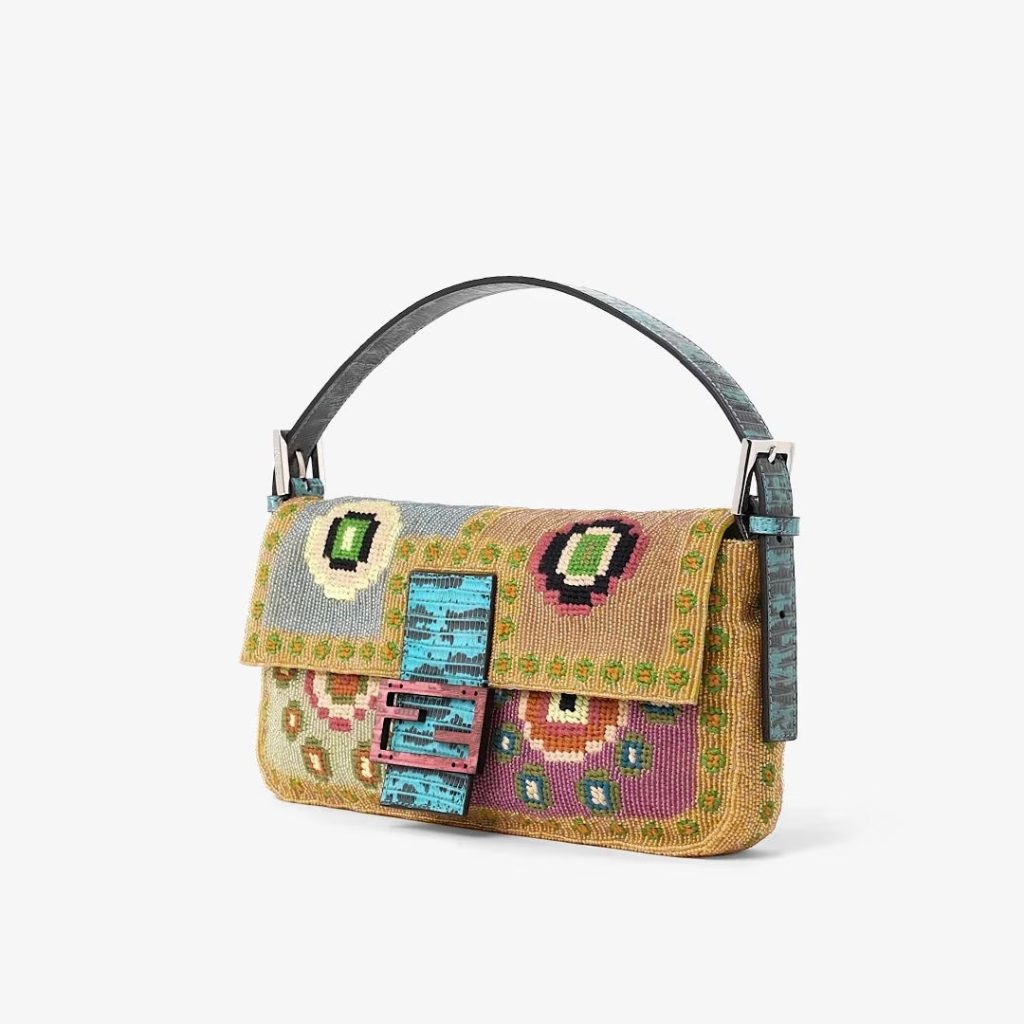
Fendi has taken an even more archival approach with the Baguette 26424 Re-Edition. The current version explicitly draws on an original 26424 design and uses intensive hand embroidery, beads and mirrors. The message is not simply that the Baguette is still sold; it is that a specific historical expression of the Baguette is worth reconstructing.
Heritage is now a product strategy.
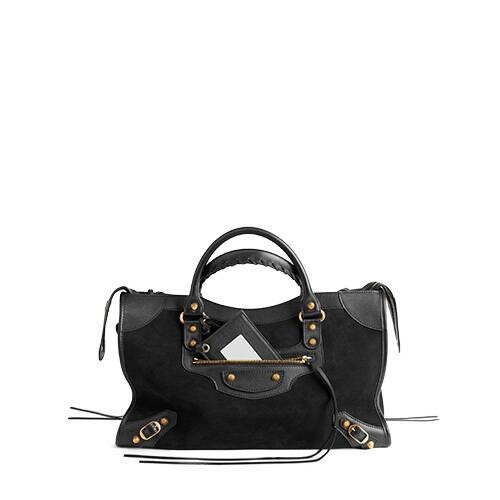
Balenciaga’s Le City and Louis Vuitton’s Speedy reinforce the same pattern. Le City leans into the early-2000s codes that made the original famous, including braided handles, hardware, and a deliberately relaxed body. Louis Vuitton’s Speedy continues to evolve through materials and collaborations while remaining instantly legible as a house icon.
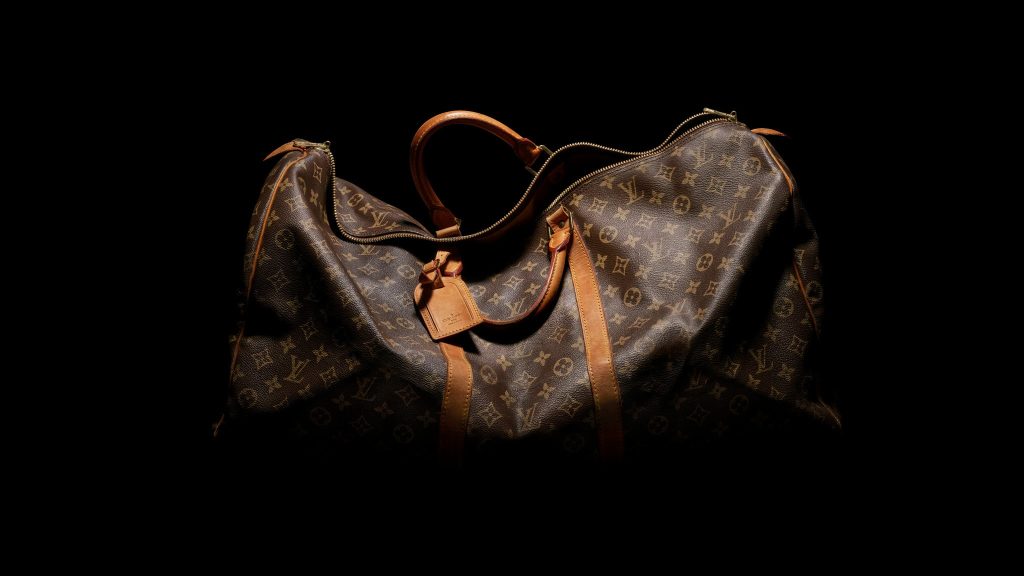
The commercial opportunity is obvious. Established maisons possess something newer brands cannot manufacture quickly: an archive that already carries memory. As consumers become fatigued by accelerated trend cycles, the passage of time itself can add value. A design that disappeared and returned may feel more meaningful than one engineered to become viral for a season.
The difference between vintage and vintage-looking
There is, however, a tension. The more profitable nostalgia becomes, the more aggressively brands can mine it. A genuinely old bag has accumulated marks, cultural associations and ownership history naturally; a re-edition arrives with the history designed in. Both can be desirable, but they do not offer the same emotional proposition.
That distinction is precisely why the vintage movement matters. Younger consumers are not only buying old shapes. They are signalling that provenance, durability and the feeling of a previous life can compete with newness as luxury values. The next great It bag may still be launched tomorrow — but increasingly, it may also be waiting in an archive, ready to be seen differently.