
Cartier brings the cameo carver’s art to its most sculptural panther yet
A Panthère watch built on the logic of ancestral cameo carving, worn by Tilda Swinton, gathers lacquer, gem-setting and lapidary work from Cartier’s Maison des Métiers d’Art into a single wrist-sized relief.
AI-assisted voice playback. Starts only when you choose Play.

A cameo is a decision about depth. The carver works a layered stone or shell so that the figure stands proud of a contrasting ground, and the whole effect depends on what is taken away. It is one of the oldest disciplines in the decorative arts, and among the least often attempted today. Cartier has just used its logic to build a panther.
The oldest art in the lapidary’s repertoire
The watch belongs to Indomptables de Cartier, part of the house’s Into the Wild chapter, and it is worn in the campaign by Tilda Swinton. The panther head rises in gold above a dark ground, modelled rather than drawn, the animal reading as relief rather than silhouette. That is the cameo principle carried from shell into metal and stone.
The achievement is in the scale. A cameo enjoys a flat field; a watch has a dial, hands that must sweep across it and a case that has to stay wearable. Building a three-dimensional animal into that envelope means the relief must be deep enough to read across a room and shallow enough to slip under a cuff. Getting both at once is the work.
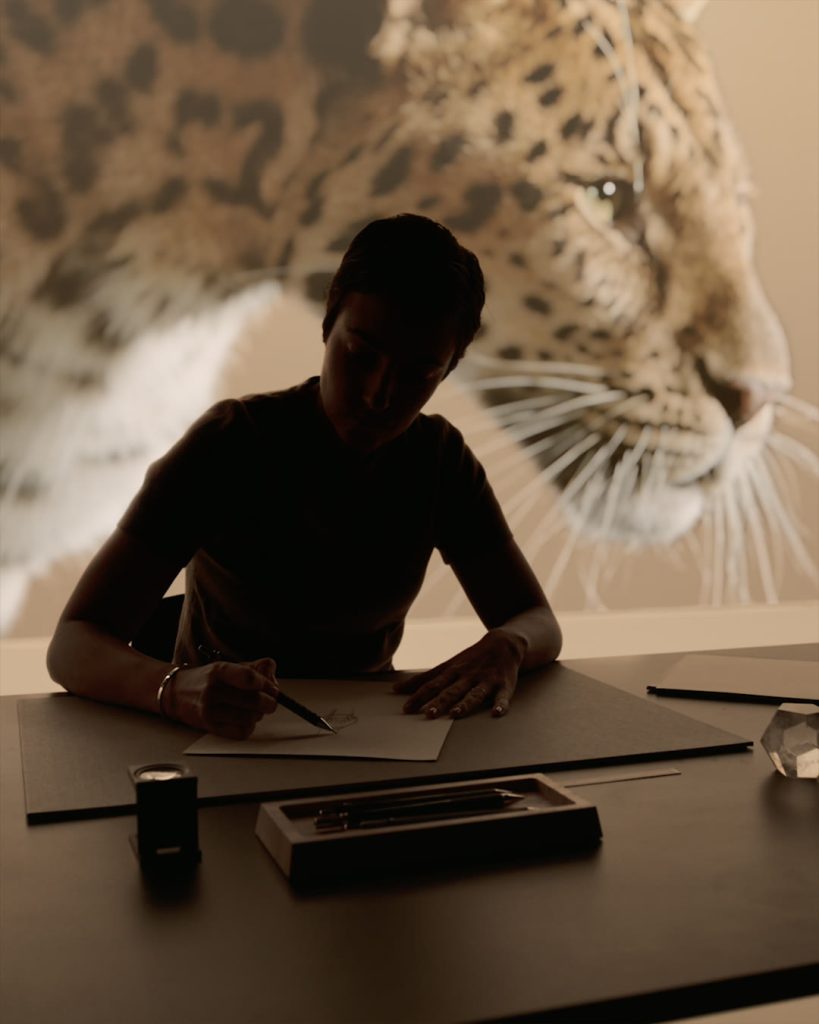
What the Maison des Métiers d’Art is for
The piece comes from Cartier’s Maison des Métiers d’Art in La Chaux-de-Fonds, an atelier the house maintains expressly to keep rare crafts in working order. Its vocabulary across this collection runs to black lacquer, glyptic carving, lost-wax casting, lapidary and pavé setting.
The most particular of these is what Cartier calls fur setting, in which each onyx or sapphire marking of a panther’s coat is cut by hand to an individual shape so that no two spots repeat. It is a technique designed to defeat the eye’s instinct for pattern, and it is slow by definition. Robb Report Malaysia notes that one Métiers d’Art panther watch took more than three years of research for a single decorative element.
This is the part of high jewellery that cannot be industrialised. Stones can be sourced and settings can be taught, but a workshop still able to carve in relief exists only because a house chose to keep paying for it through every decade when nobody was asking.
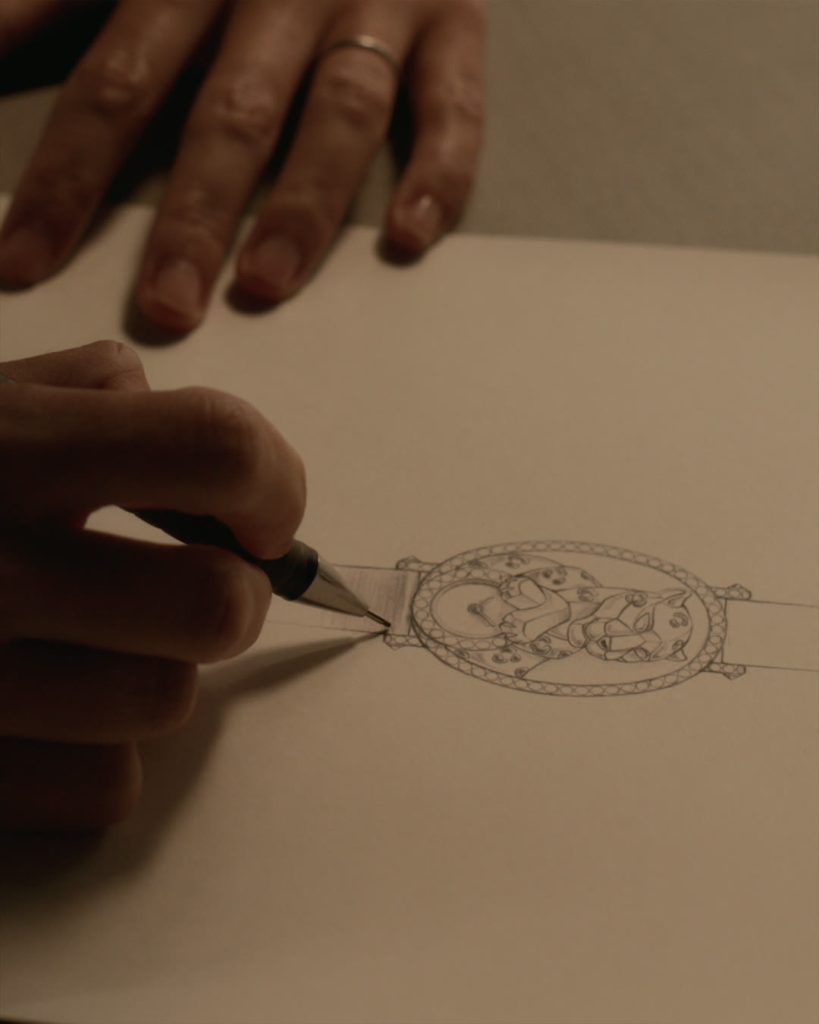
A panther with a long service record
The animal arrived at Cartier in 1914, in a George Barbier illustration and in a wristwatch patterned with a spotted pelt in diamond and onyx. It became a character rather than a motif under Jeanne Toussaint, appointed director of high jewellery in 1933, whose fully three-dimensional Panthère brooch for the Duchess of Windsor in 1948 set the terms every generation since has worked within.
Toussaint’s panther carried meaning as well as beauty: an emblem of independence for women who had spent a decade running things. Cartier has been careful ever since to give each new generation of the animal a fresh technical problem rather than a fresh colourway, which is why it has never settled into being a logo.
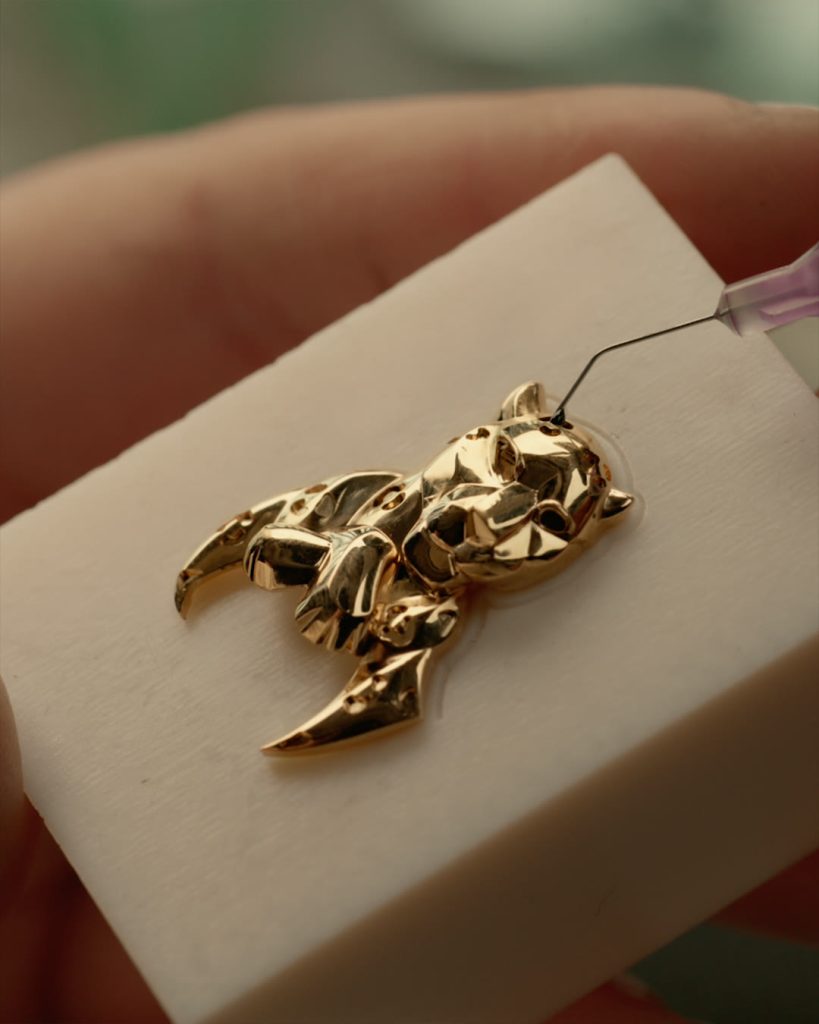
Swinton as the natural face
Tilda Swinton is a recent addition to the house and a beautifully judged one. She speaks about the pieces in terms of character rather than value: “When I look at the pieces, I’m so touched by their solitude.” Elsewhere in the campaign she wears the Faune & Flore crocodile necklace and an Indomptables tiger watch.
Solitude is an unexpected word for jewellery and exactly the right one here. These are single animals, carved one at a time, in a workshop that keeps its techniques alive by using them. The panther is not asking to be recognised. It is there to show that the relief still works.