
LOUIS VUITTON MAKES THE TAMBOUR SPIN TIME A PERMANENT PART OF HIGH WATCHMAKING
Louis Vuitton expands its Spin Time language into the permanent Tambour collection, turning the house’s rotating-cube display into a broader high-watchmaking family built around La Fabrique du Temps.
AI-assisted voice playback. Starts only when you choose Play.
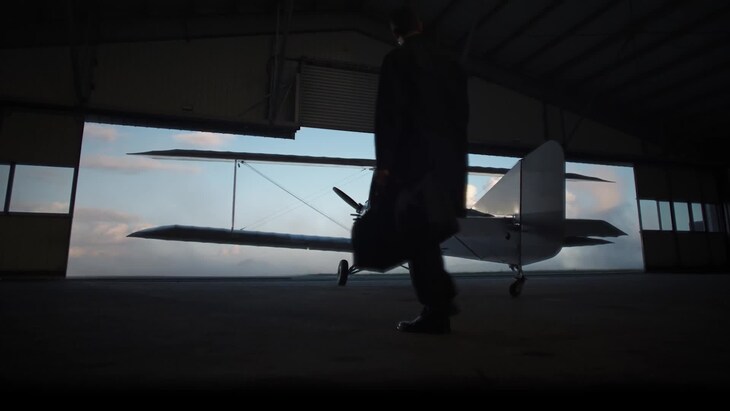
Louis Vuitton’s Spin Time has always been a useful reminder that serious watchmaking does not have to look solemn. The complication replaces a conventional hour hand with rotating cubes positioned around the dial, each turning to reveal the current hour before returning to its resting face. It is mechanical theatre, but theatre with discipline — and in 2026 the house is giving that language a more permanent role within its high-watchmaking universe.
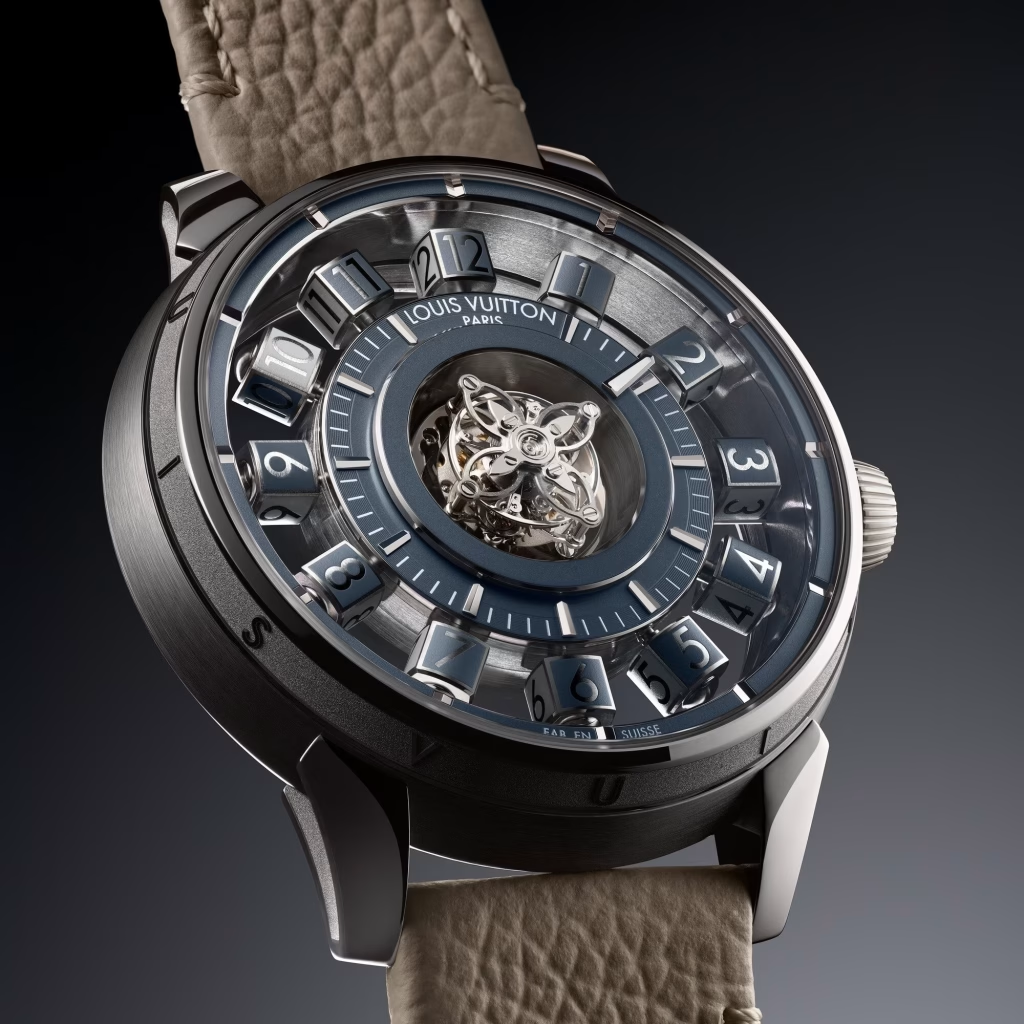
Robb Report Singapore reports that five Tambour Spin Time references are joining the permanent collection, broadening the concept beyond the limited executions that helped reintroduce it last year. The move matters because it shifts Spin Time from an occasional showcase into something closer to a house signature, supported by the technical infrastructure of La Fabrique du Temps Louis Vuitton.
A DISPLAY THAT THINKS IN THREE DIMENSIONS
Spin Time first appeared at Louis Vuitton in 2009, inspired by the split-flap displays once associated with airport departure boards. In the modern execution, three-dimensional cubes rotate to indicate the hours. Every 60 minutes, one cube returns to its neutral side as the next reveals the hour. It is instantly readable once understood, yet visually unlike the conventional hands-and-indices architecture that dominates mechanical watchmaking.
The contemporary Tambour Taiko Spin Time platform uses the in-house calibre LFT ST13.01. Louis Vuitton lists a 45-hour power reserve for the automatic movement, while the official collection presentation emphasises a redesigned architecture created for the modern case. The result is not simply a revival of a novelty display; it is the consolidation of a complication that the maison wants collectors to recognise as its own.
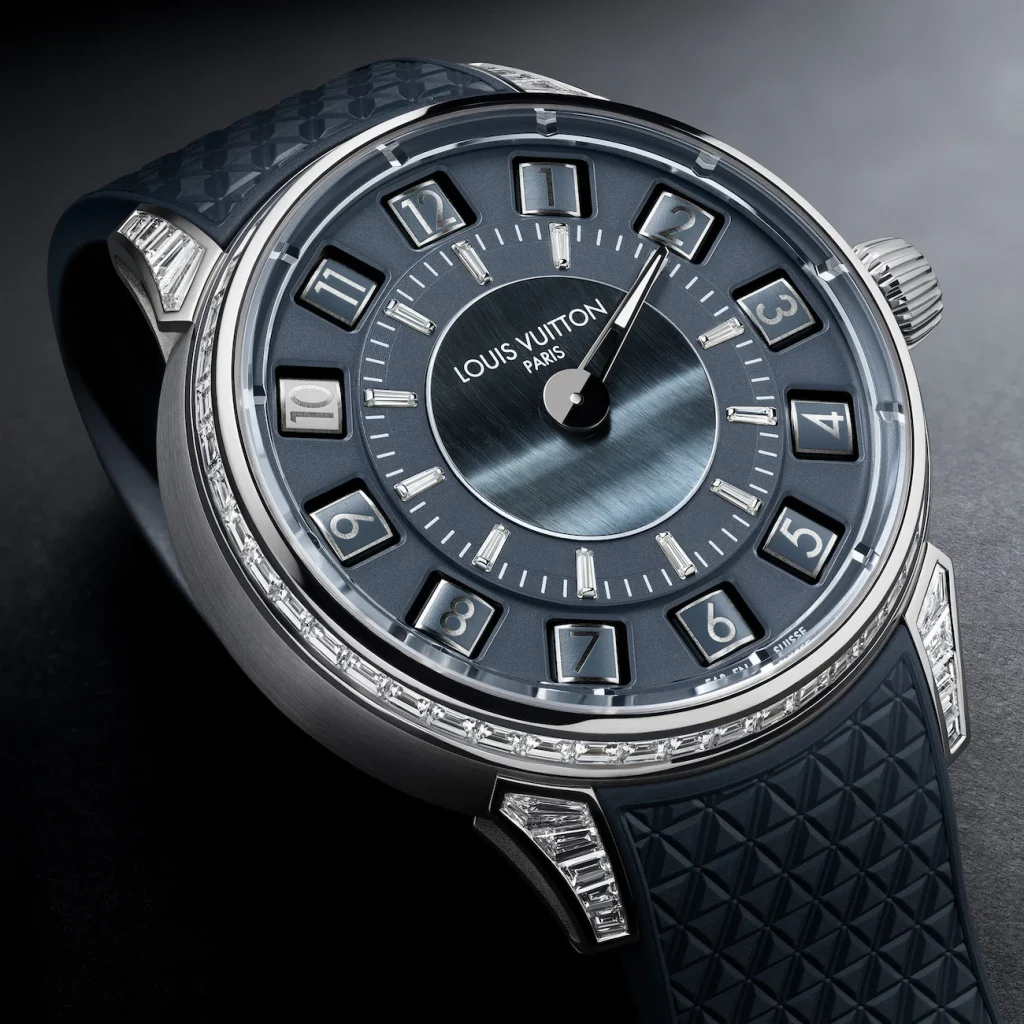
BLUE, WHITE GOLD AND AUSTRALIAN OPAL
The new permanent references also show how flexibly the Spin Time mechanism can be dressed. Robb Report highlights a Tambour Spin Time Air in a strong blue treatment, with its suspended calibre positioned within a 42.5 mm case in 18-carat white gold. By contrast, a 39.5 mm Tambour Spin Time Australia uses Australian opal, allowing the dial to shift through different shades of blue as the light changes.
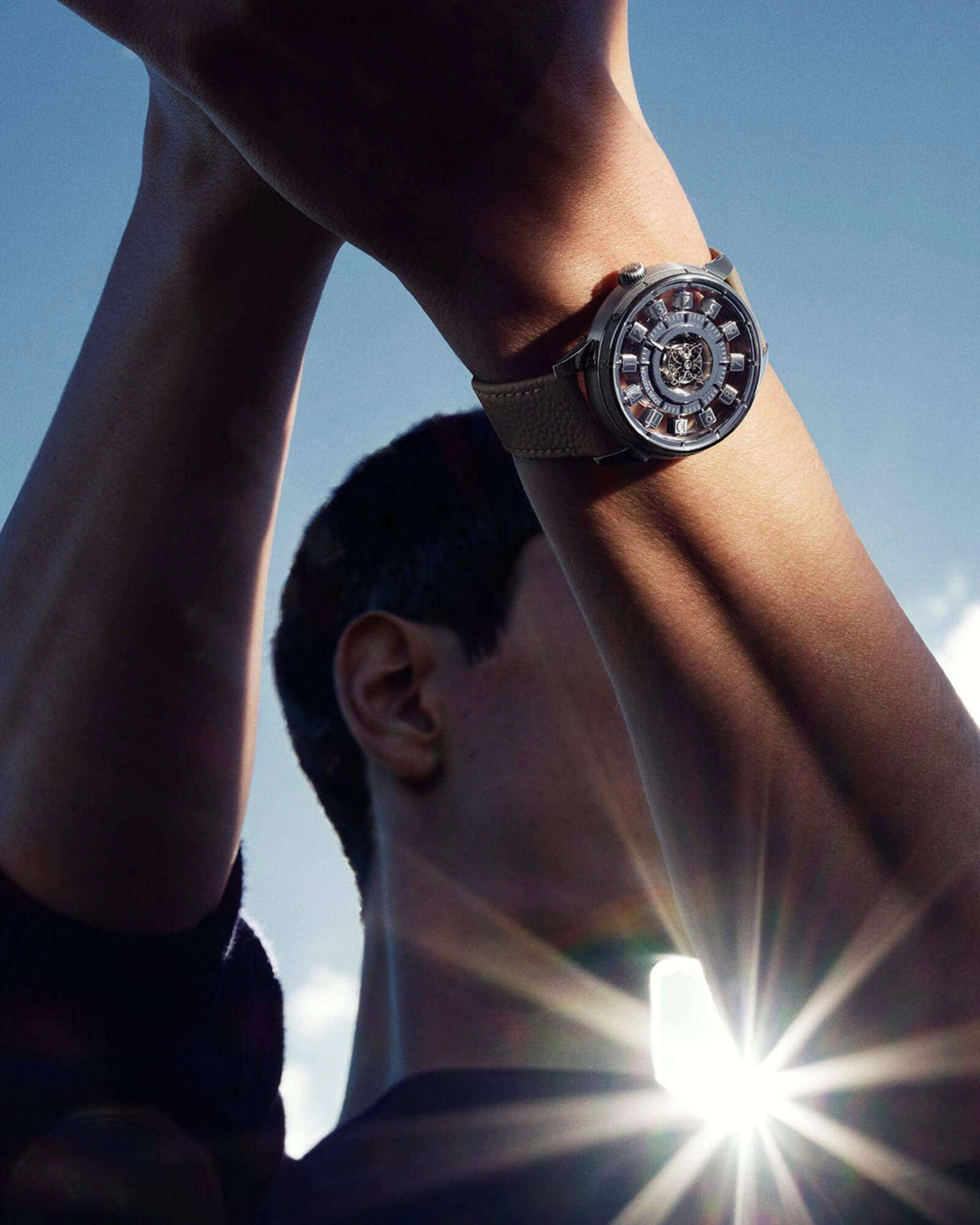
That variation is important in a complication built around movement and surprise. The cubes provide the kinetic identity; colour, stone and case architecture provide the emotional one. Louis Vuitton can therefore make the same underlying idea feel graphic, gem-like or almost architectural without losing the mechanism’s recognisable character.
WHEN A HOUSE CODE BECOMES A CALIBRE CODE
Louis Vuitton has spent years deepening its credibility in high watchmaking, and La Fabrique du Temps is central to that strategy. The strongest pieces are those where the house’s broader design instincts — travel, transformation, objects that reveal themselves through use — are translated into mechanics rather than merely applied as decoration.
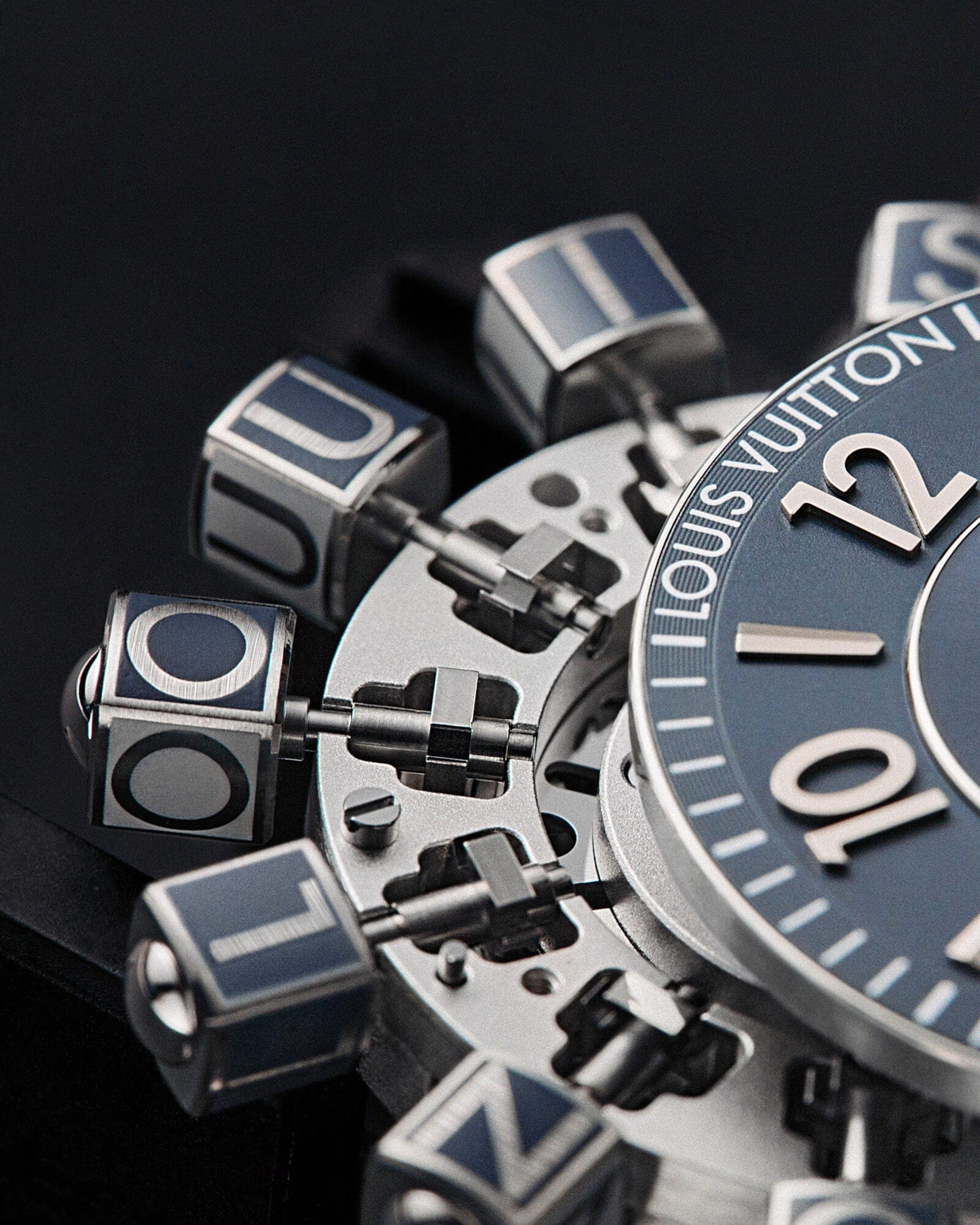
Making Spin Time a permanent proposition is a statement of confidence. The complication is distinctive enough to identify the watch from across a room, but it also rewards inspection at close range. That combination is difficult to manufacture in every sense of the word. For collectors looking beyond conventional haute horlogerie codes, the appeal lies precisely there: Louis Vuitton is not trying to make its watchmaking disappear into the category. It is making the category speak with a Louis Vuitton accent.