
The Superyacht Is Becoming a Private Wellness Estate
AI-assisted voice playback. Starts only when you choose Play.
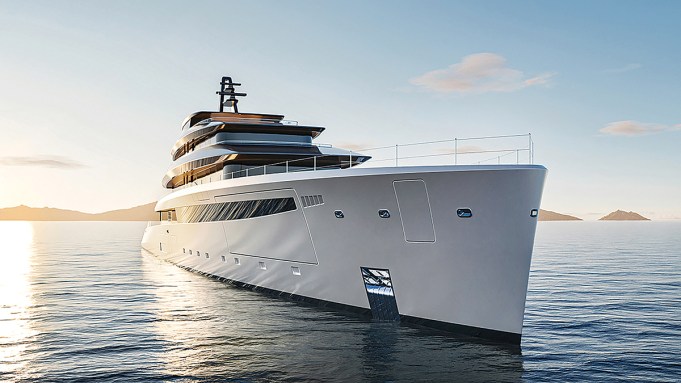
For decades, the accepted grammar of superyacht design placed formal entertaining spaces in the most desirable positions. Salons claimed the panoramic views, dining rooms occupied expansive decks and wellness facilities, where provided, were frequently confined to less prominent areas.
That hierarchy is changing. Owners increasingly want their time at sea to support the routines they value on land, from structured exercise and considered nutrition to restorative sleep and post-training recovery. The result is more significant than the addition of a larger gym. Wellness is beginning to determine spatial planning, technical specifications and even the rhythm of life on board.
From secondary amenity to design principle
The most revealing change is one of position. Fitness and spa facilities are moving away from enclosed lower-deck rooms and into brighter spaces with direct connections to the sea. Natural light, generous headroom and outdoor access are becoming as important as the equipment itself, while adjacent recovery zones allow exercise, bathing and treatment to operate as one sequence.
Dutch Design’s Sea Rover makes this principle unusually explicit. Developed by founder Scott Blum with designer Bernd Weel and engineering by Diana Yacht Design, the 42.5-metre vessel has been conceived around an active, health-conscious life at sea. Its spa, gym and sports court occupy the bridge deck, giving activities usually treated as private necessities a prominent position with wide ocean views.
The configuration includes facilities for yoga, Pilates and functional training alongside hot and cold bathing, a sauna, massage space and infrared light therapy. A multipurpose sports court can accommodate basketball, pickleball, volleyball and outdoor exercise, while an extensive inventory of water-sports equipment encourages activity beyond the yacht.
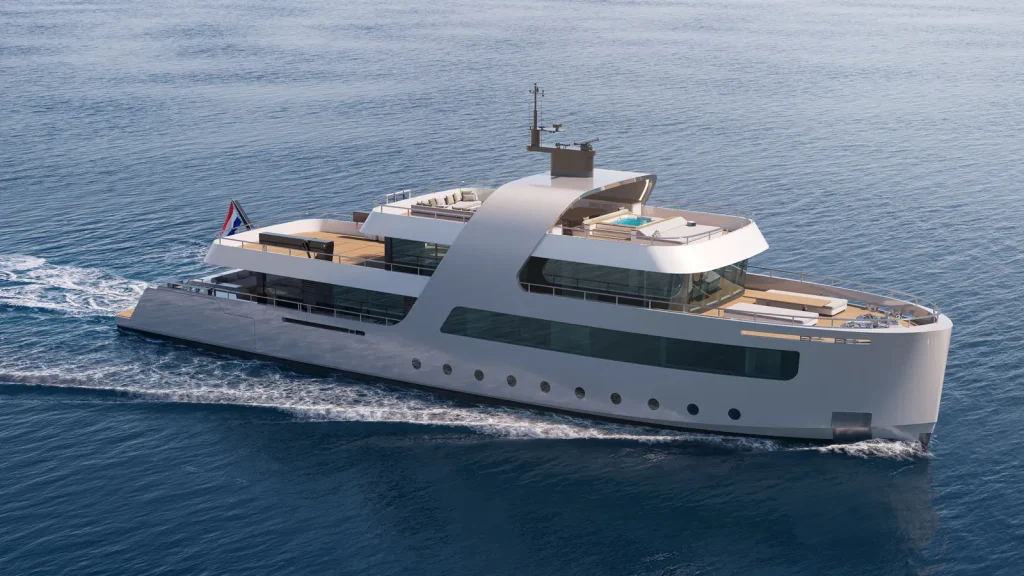
Sea Rover puts daily living first
Sea Rover’s significance lies not simply in the number of its amenities, but in the order in which they were considered. Dutch Design describes the yacht as wellness-first, signalling that movement and recovery informed the vessel from its earliest design stages rather than being incorporated after the principal accommodation had been arranged.
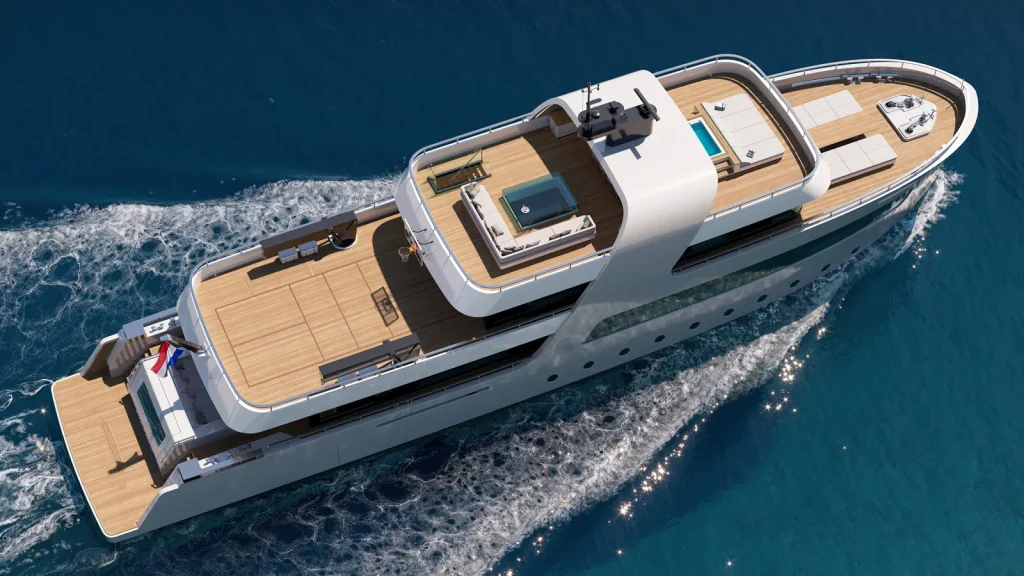
That approach reaches beyond the bridge deck. A central glazed stairwell draws daylight through the yacht, while the full-beam owner’s suite includes an onsen-style bath and steam room. Bespoke mattresses by British bedmaker Savoir place sleep within the wider wellness programme, and the interiors combine natural materials with a restrained, California-influenced palette.
The yacht is also intended to support energetic exploration. Fold-down sections create an expansive beach club, and the design provides space for diving, wakeboarding, paddleboarding and other water-based pursuits. Dining and galley areas have been positioned to encourage a more open relationship between guests, crew and the preparation of food.
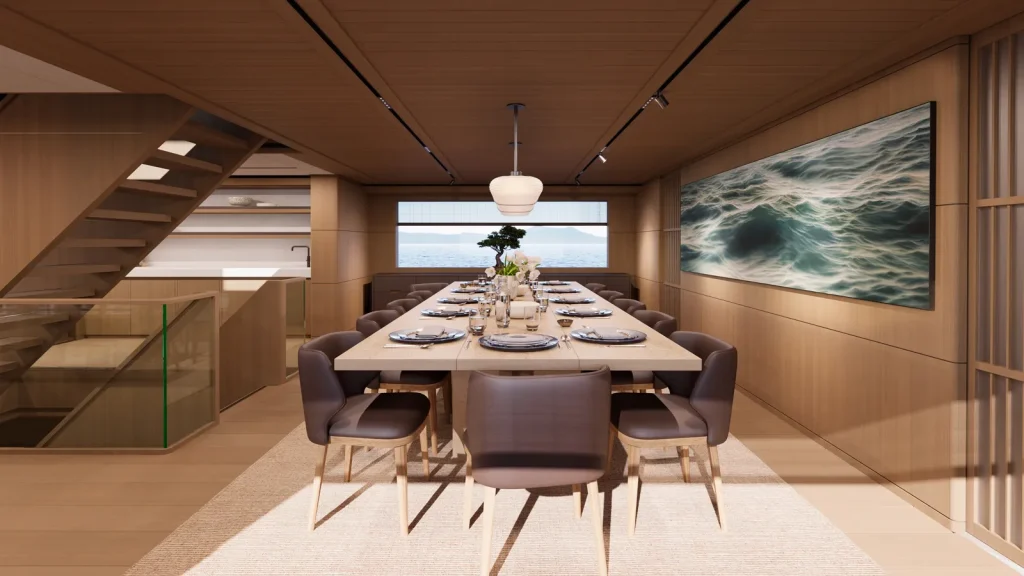
Construction of the first Sea Rover began in 2025. Its aluminium superstructure has since been installed on the steel hull, with delivery targeted for April 2028. The vessel is planned as the first of a limited series of ten.
Wellness at a grander scale
The same priorities are visible at the upper reaches of yacht building. Lürssen’s 115-metre Ahpo, designed inside and out by Nuvolari Lenard, demonstrates how a substantial wellness environment can be integrated into a yacht intended for extended family cruising. Its facilities include a hammam, sauna, massage room, beauty salon and plunge pool, arranged as part of a generous beach-club complex.
At this scale, a wellness suite can become a destination in its own right. Yet its presence also reflects a broader understanding of luxury: space is valuable not only when it provides spectacle, but when it contributes to how owners and guests feel during a long voyage.
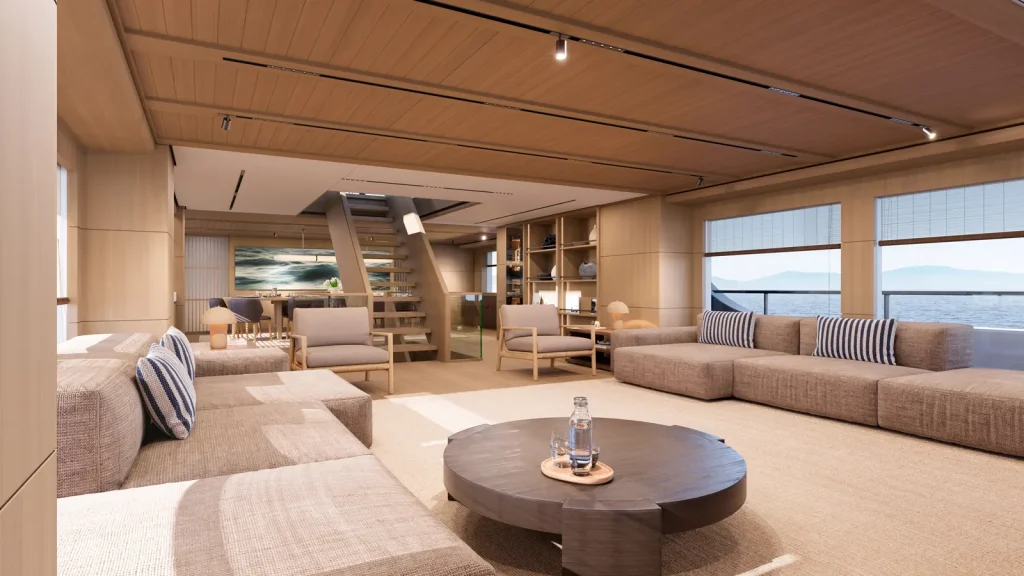
Heesen is carrying that thinking into Project Ananda, a 72.3-metre Smart Custom yacht designed with Sinot Yacht Architecture & Design. Its approximately 100-square-metre spa and beach club is planned to include a sauna, steam room, ice bath, snow shower, hyperbaric chamber and rooms for massage and medical treatment.
The space was developed with Heesen’s human health engineering specialists, showing how closely wellness is becoming connected to naval architecture and onboard systems. Project Ananda is scheduled to begin keel laying in November 2026, with delivery anticipated in 2030.
Designing for recovery requires engineering
A true wellness programme presents challenges that decorative spas do not. Hot and cold pools introduce weight and complex water systems. Steam rooms and saunas demand careful ventilation and moisture management. Treatment equipment may require dedicated power, acoustic isolation and sufficient technical access for maintenance.
The surrounding environment matters just as much. Noise and vibration can undermine sleep and relaxation, while poor circulation can make an otherwise attractive gym uncomfortable during vigorous exercise. Designers must therefore consider air quality, temperature, sound, lighting and movement through the vessel as interconnected elements.
Hybrid propulsion offers another useful dimension. On Project Ananda, the planned system is intended to enable periods of silent cruising, improving the atmosphere aboard while reducing the intrusion of machinery. Such features illustrate how the pursuit of wellbeing can influence decisions far beyond the spa itself.
A more active life at sea
The architectural shift is being matched by a change in onboard culture. A yacht designed for wellbeing needs itineraries and crew expertise capable of making those spaces meaningful. Training sessions can be paired with trail running, swimming, diving or cycling ashore, while chefs may be asked to maintain nutritional programmes rather than suspend them for the duration of a cruise.
For owners, this allows a yacht to function less like an escape from everyday disciplines and more like a private environment in which those disciplines become pleasurable. A morning might move from open-water swimming to strength training, hot-and-cold recovery and breakfast prepared around an established nutrition plan, all without sacrificing the spontaneity of travel.
Crew welfare is also entering the discussion. Sea Rover’s crew accommodation is specified to a notably considered standard, acknowledging that service quality, continuity and onboard atmosphere depend upon the wellbeing of the people operating the vessel.
The future of yacht wellness will not be measured solely by the length of an equipment list. Its success will depend on whether the vessel supports healthier habits naturally, through intelligent circulation, calm interiors, access to daylight and the effortless transition between movement, recovery and rest.
As projects such as Sea Rover and Ananda move from design to construction, they point towards a more personal definition of maritime luxury. The yacht remains a platform for privacy and exploration, but it is increasingly expected to return its owner to shore feeling restored rather than merely entertained.
Imagery is used for editorial purposes. All rights remain with the respective owners, photographers and licensors.