
Zegna Su Misura: The Heirloom Suit as Testament to Generational Continuity
AI-assisted voice playback. Starts only when you choose Play.
Luxury tailoring has long occupied an ambiguous territory between the personal and the permanent. A suit, after all, is simultaneously intimate—shaped to one man's frame, worn against his skin, altered by his movements—and paradoxically durable, capable of outliving its original wearer. Zegna, the Piedmontese house founded in 1910, has built its contemporary narrative around this tension, positioning the handmade suit not as a seasonal acquisition but as a deliberate investment in continuity.
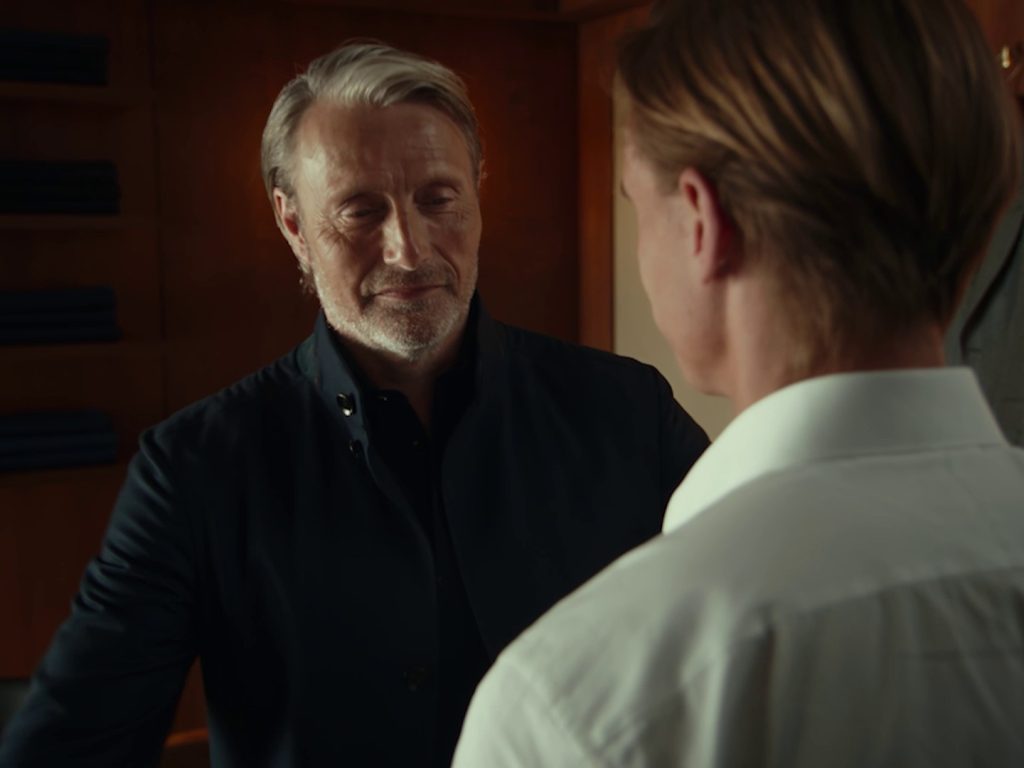
The house's Su Misura programme, its made-to-measure offering, now explicitly embraces this philosophy of intergenerational stewardship. A recent campaign acknowledges what collectors and discerning dressers have long understood: certain garments accumulate rather than depreciate, gathering the patina of lived experience and emotional resonance as they pass between generations.
Tailoring as Biographical Record
The notion of clothing as documentary evidence—a suit that records not merely fashion preference but the chronology of a life—requires particular craft to realise. Zegna's position within this conversation rests on its historical commitment to fabric integrity and structural soundness. Founded in Trivio, in the Orobie Alps region of Lombardy, the company emerged from a deep understanding of cloth itself: the house began as a wool mill, and this foundational relationship with fibre remains central to its design philosophy.
Su Misura operates within this heritage. The programme allows clients to participate in the selection of cloth from Zegna's own production, the specification of construction methods, and the calibration of fit across multiple fittings. This iterative relationship between maker and wearer produces a suit that bears the fingerprints of both—it is neither fully designed nor fully discovered, but mutually authored.
The Economics of Perpetuity
There is a quiet radicalism in marketing a suit as a bequest rather than a purchase. Contemporary fashion commerce typically depends upon planned obsolescence and seasonal replacement cycles. A house that explicitly encourages a client to imagine his suit in his son's wardrobe is deliberately resisting that velocity.
This positioning reflects confidence in both durability and aesthetic longevity. A Zegna suit made today, the house suggests, will not appear quaintly dated when worn twenty years hence. The cut—neither aggressively contemporary nor defiantly archaic—aspires to a kind of temporal neutrality, whilst the quality of cloth and construction promises resistance to the structural degradation that forces most garments into obsolescence.
The emotional economy is equally important. A suit inherited from one's father carries significance that no newly purchased item can replicate, regardless of price. Zegna's messaging acknowledges that the suit becomes a repository for memory and relationship, transformed by wearing and time into something approaching a talisman.
Craftsmanship in Service of Legacy
The execution of this concept depends entirely on the integrity of the making. Su Misura represents a deliberate commitment to hand techniques and extended timescales—antithetical to industrial production but essential to the creation of a garment intended for genuine longevity. The multiple fittings, the hand-finishing of internal seams, the careful shrinkage and settling of cloth—these procedures cannot be compressed without consequence.
What Zegna articulates, implicitly, is a different measure of value. A suit that costs substantially more than mainstream alternatives but which genuinely lasts for decades, which can be altered and refurbished, which accumulates rather than diminishes—this is an entirely different economic proposition from a cheaper garment replaced every few seasons. The mathematics of true cost per wearing, extended across a lifetime and potentially across two lives, operates on an entirely different scale.
In positioning the bespoke suit as an heirloom, Zegna invokes a model of luxury antithetical to display and novelty. The finest suit in this framework is not one admired for its newness or its conspicuous expense, but one whose worth is evident only to those who understand what lies beneath the surface—the quality of construction, the integrity of cloth, the history embedded in its seams. It is luxury in its oldest and perhaps truest form: durability, trustworthiness and the capacity to matter not just to the wearer, but to the life that follows.
Imagery is used for editorial purposes. All rights remain with the respective owners, photographers and licensors.
Imagery courtesy of ZEGNA (@zegna).