
Deutsche Bank’s Global Vision: 150 Years of International Banking Excellence
AI-assisted voice playback. Starts only when you choose Play.

Few financial institutions have left as indelible a mark on international commerce as Deutsche Bank, whose appetite for global expansion took root scarcely two years after its founding in 1870. What began as a bold vision to connect Frankfurt with the world's emerging trading hubs would evolve into a defining characteristic of the bank's identity—one that persists with undiminished vigour more than 150 years on.
The bank's journey beyond German borders reveals not merely a sequence of geographic firsts, but rather a prescient understanding of where wealth, opportunity and international trade would converge. Each opening represented a calculated commitment to serve discerning clients across borders at a time when such ambition was far from commonplace.

The Architecture of Expansion
Deutsche Bank's inaugural ventures into Asia commenced with branches in Yokohama and Shanghai in 1872—a deployment that anticipated Japan's emergence as a major economic power and China's importance as a hub for Western commerce. London followed in 1873, establishing the bank's presence at the epicentre of 19th-century global finance. These were not peripheral outposts, but strategic anchors designed to facilitate the cross-border transactions that were reshaping the world economy.
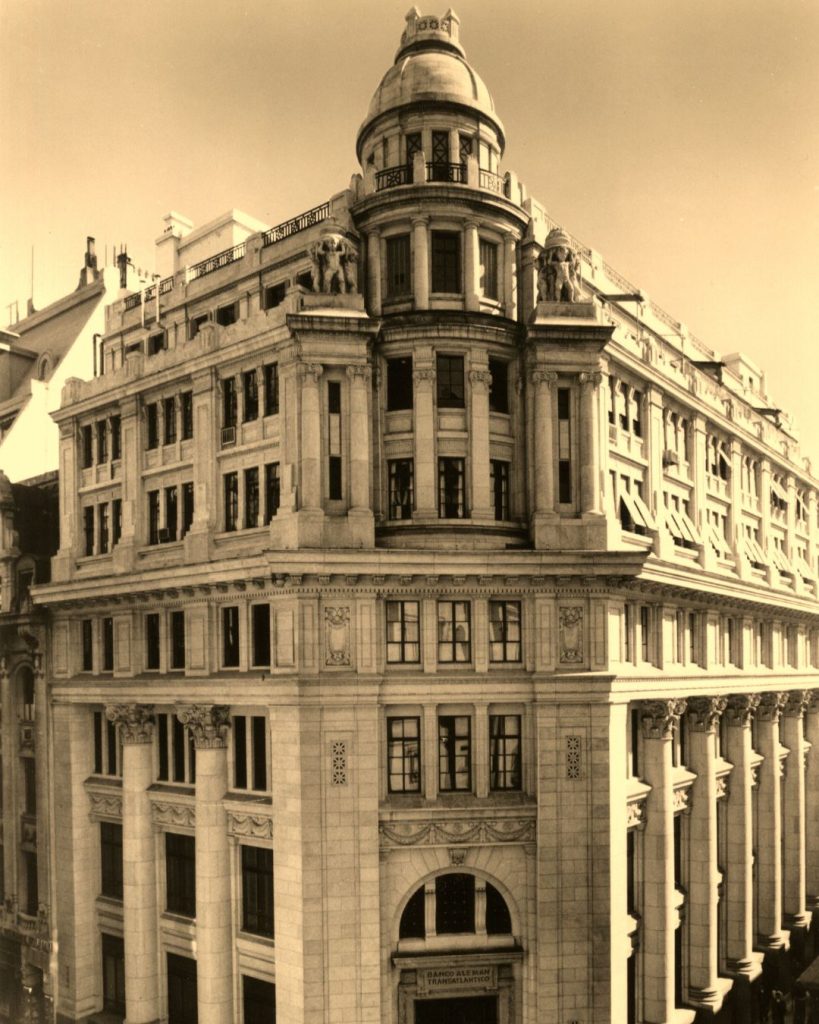
The subsequent decades witnessed methodical expansion into Buenos Aires in 1887, reflecting the bank's recognition of South American wealth and agricultural commerce. Tianjin, established in 1890, deepened the bank's penetration of northern China, whilst Calcutta in 1896 represented a gateway to the subcontinent's emerging merchant class and colonial trade networks. Each location was carefully selected to serve the international needs of merchants, industrialists and financiers whose operations transcended national boundaries.

Foundations of Modern International Banking
These far-flung branches were more than symbolic gestures of ambition. They served as operational nodes in a nascent system of international finance that made possible the settlement of transactions, the arrangement of credit lines and the facilitation of trade across vast distances and unfamiliar legal systems. For private clients of substantial means, Deutsche Bank's presence in these centres provided a tangible assurance that their international interests could be managed with expertise and discretion.
The legacy of this pioneering era extends beyond historical archive. It established a governance model and operational philosophy that contemporary wealth managers and private banking clients continue to recognise: an institution conversant in multiple markets, responsive to local conditions, yet bound by consistent standards of service and integrity. The very act of establishing these branches demanded not only financial acumen but also cultural fluency—qualities that remain essential in the modern practice of private banking across diverse jurisdictions.

A Continuing Cosmopolitan Mandate
Deutsche Bank's reflection on this expansionist epoch serves as more than nostalgic commemoration. It underscores a conviction that international outlook and cross-border capability are not incidental to its offering, but foundational to it. For ultra-high-net-worth individuals and family offices navigating the complexities of global wealth—from succession planning across jurisdictions to the deployment of capital across multiple markets—such a pedigree carries considerable resonance.
The bank's historical willingness to venture into unfamiliar territories, to invest in infrastructure and expertise in distant cities, and to maintain consistent standards across vastly different commercial environments speaks to an institutional temperament that resonates with contemporary private clients whose lives and interests span continents. In an era when international diversification remains a cornerstone of prudent wealth stewardship, Deutsche Bank's long history of serving clients across global markets positions it as an institution shaped by, and committed to, precisely such imperatives.
Deutsche Bank's journey from Frankfurt to the world's major financial centres represents a sustained commitment to understanding and serving clients whose ambitions and interests transcend borders. More than a century and a half later, that same internationalist outlook continues to define the institution's approach to private banking and wealth management.
Key Facts
- Year of founding: 1870
- First international expansion: 1872, Yokohama and Shanghai
- London branch opened: 1873
- Other major centres established: Buenos Aires (1887), Tianjin (1890), Calcutta (1896)
- Years of continuous international presence: Over 150 years

The Simply Luxury View
Deutsche Bank's commemorative reflection on its 19th-century global expansion speaks to a fundamental truth recognised by discerning wealth holders: institutional continuity of purpose matters. An organisation willing to invest in distant markets during an era of considerably greater uncertainty and friction demonstrates an embedded commitment to international finance that cannot be replicated by institutions that entered those markets only when they had become fashionable.
For today's ultra-high-net-worth clients, this history carries practical significance. It signals an institution whose operational sophistication, market knowledge and cross-jurisdictional expertise have been refined through 150 years of uninterrupted engagement with complex, multi-border transactions. The capacity to serve private clients across continents is not a contemporary innovation at Deutsche Bank; it is an elemental expression of how the institution understands its role.
Official brand website: deutschebank.com
Imagery is used for editorial purposes. All rights remain with the respective owners, photographers and licensors.

Imagery courtesy of Deutsche Bank (@deutschebank).