Constance Le Chaland: A Contemporary Sanctuary on Mauritius’s Untamed Southeast Coast
AI-assisted voice playback. Starts only when you choose Play.
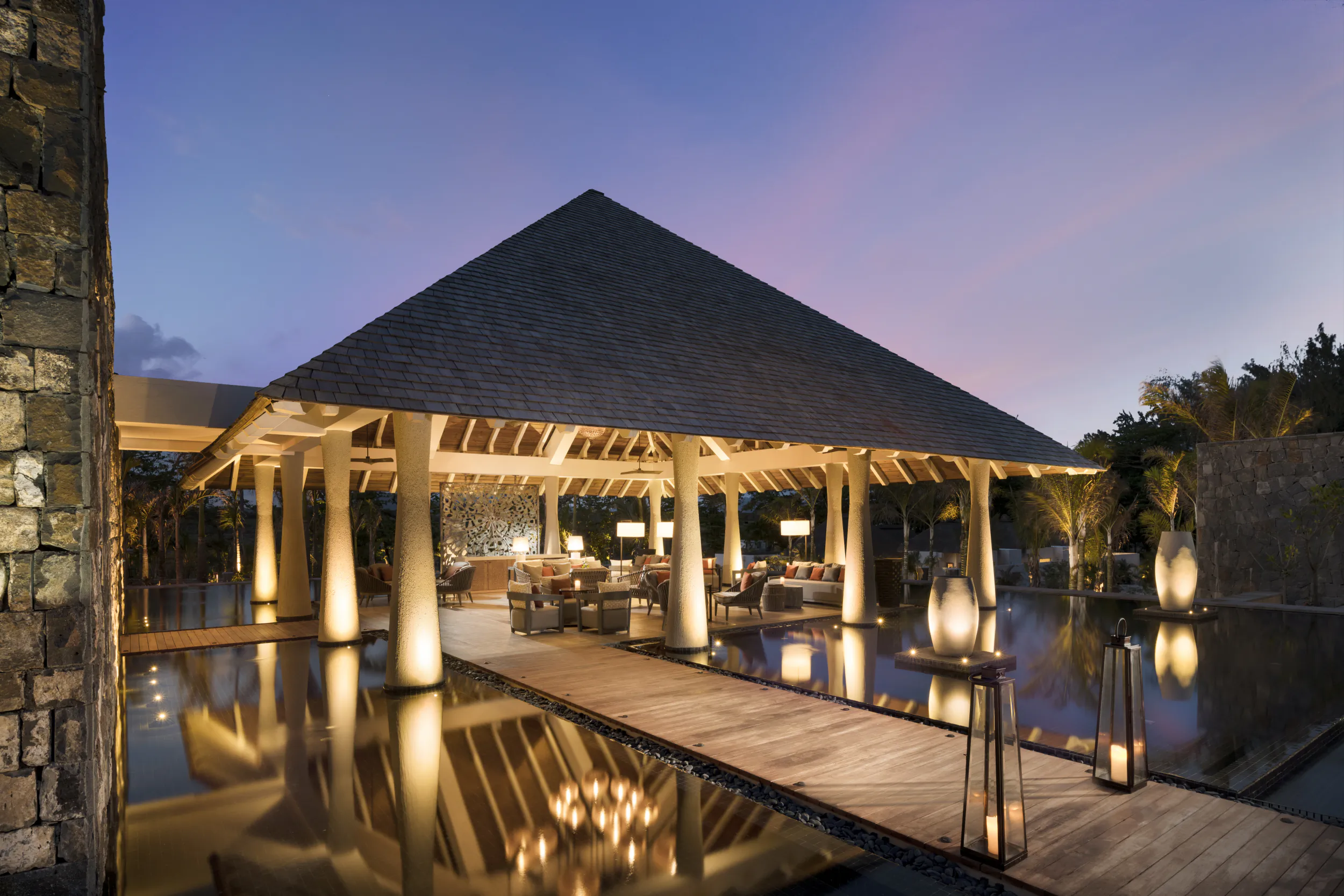
The southeast coast of Mauritius holds a particular kind of magic—one that refuses refinement. It is raw, wind-swept, edged with sugarcane fields and village life, and it is precisely this untamed quality that distinguishes Constance Le Chaland from the island's more manicured offerings. Situated merely ten to fifteen minutes from the airport, this contemporary resort has been conceived not as an exercise in landscape taming, but as a dwelling within one. The approach itself signals intention: the journey winds through modest settlements and rustling agricultural land, a deliberate unwinding that prepares guests for what awaits.
Geography and Ground Design
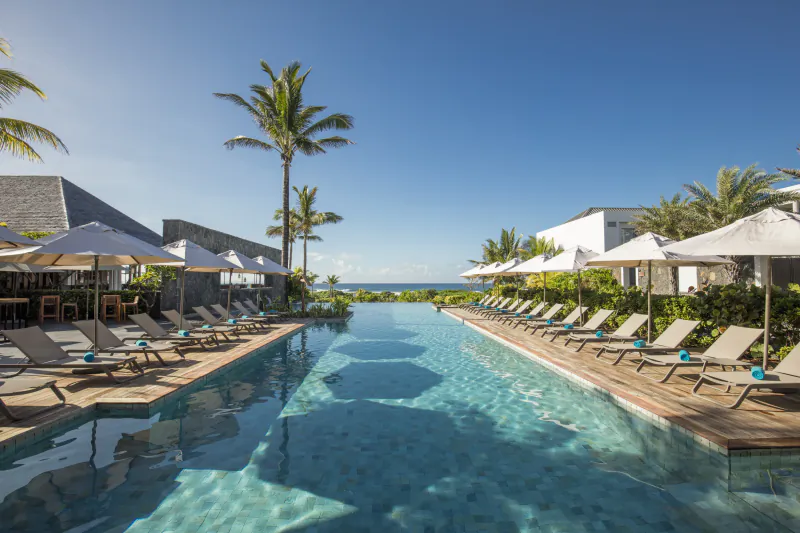
The property occupies a generous stretch of the island's southeastern flank, where the Indian Ocean meets a broad lagoon of extraordinary turquoise clarity. Dense tropical vegetation cloaks the grounds—not in the manicured rows of colonial estates, but in the organic abundance of naturally regenerating forest. Pathways meander through this verdant density, emerging eventually onto white sand that curves toward the water's edge. This interplay between density and openness, between protected interior and exposed shoreline, constitutes the resort's primary architectural gesture.
Adjacent to the property lies La Cambuse Beach, a local favourite that shares the same waters and sand. Rather than sequester guests behind private barriers, the resort's positioning acknowledges this shared geography. It is a philosophical choice that speaks to contemporary luxury's evolving relationship with place—the understanding that exclusivity need not mean isolation, and that authentic luxury often inheres in genuine connection to landscape rather than separation from it.
The Contemporary Vision
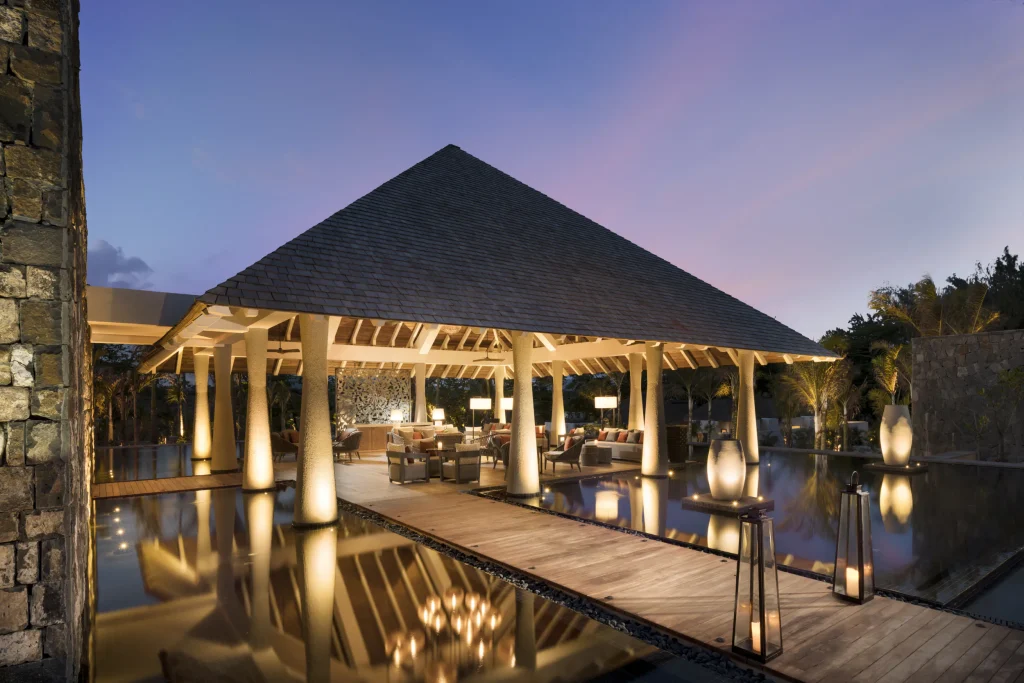
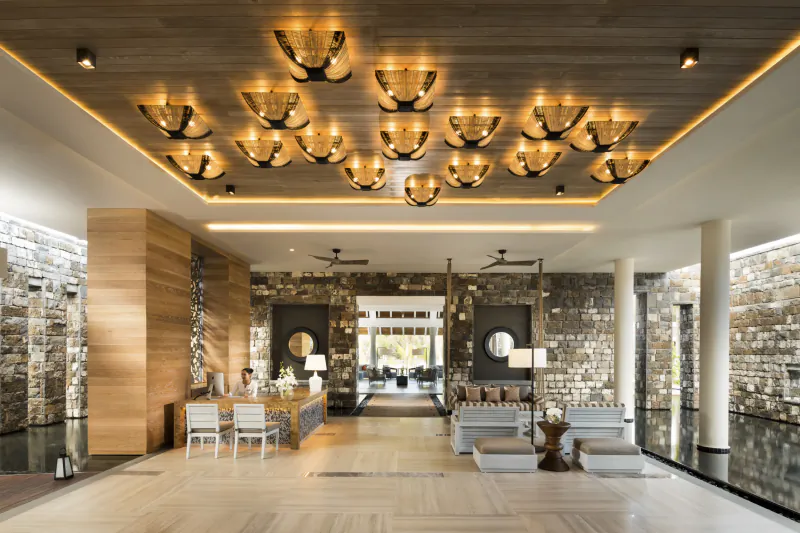
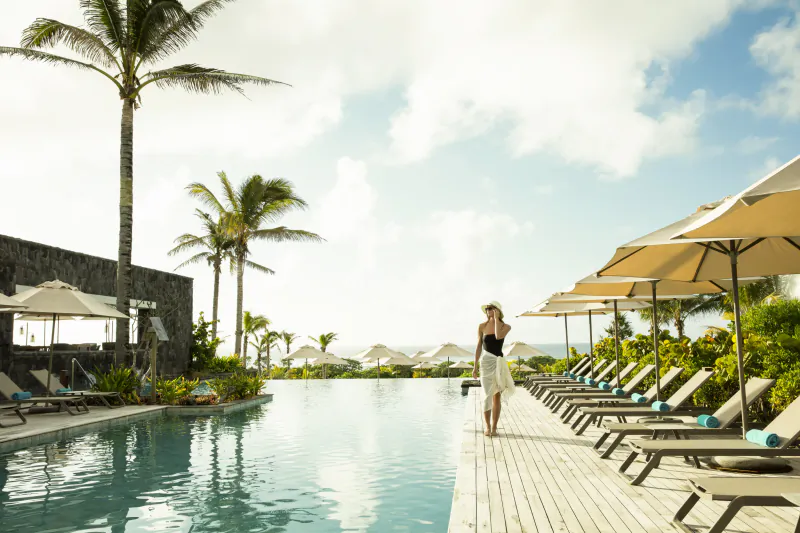
Constance Le Chaland embodies a deliberate restraint in its architectural vocabulary. The resort does not impose dramatic forms upon its setting; rather, it settles into it. Contemporary design here means clarity of line, honesty of material and proportion scaled to human inhabitation rather than monumental effect. This approach proves particularly effective in tropical contexts, where excessive ornamentation rapidly succumbs to salt air and humidity, and where simplicity of form allows landscape to remain the primary visual element.
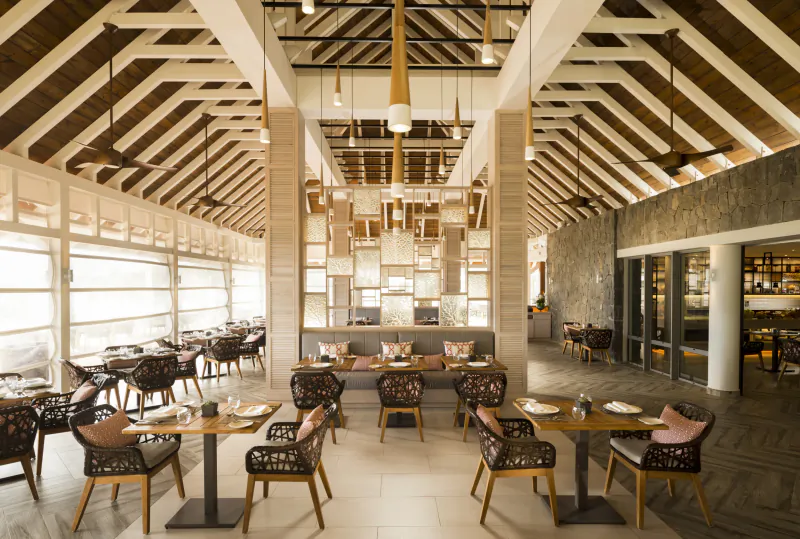
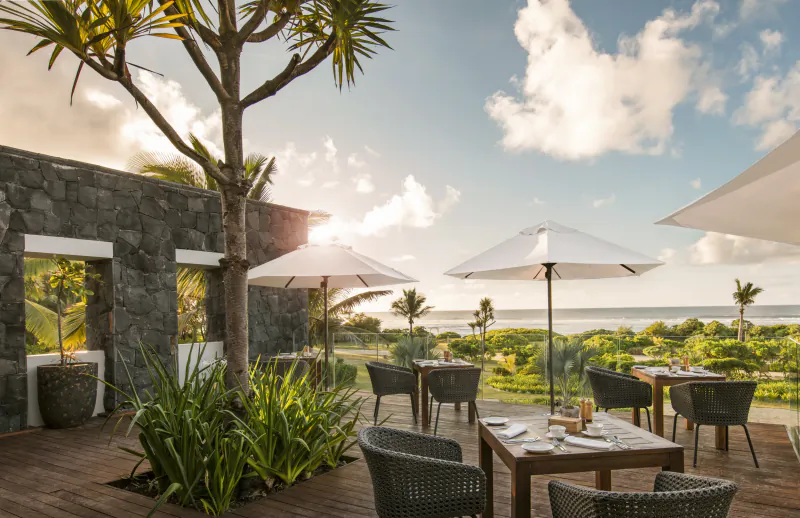
Guest accommodation and public spaces follow this principle consistently. The design maximises views toward water and vegetation whilst minimising visual competition with the natural surroundings. Large glazed surfaces frame the lagoon and shoreline; terraces and verandahs extend the inhabited zone toward the landscape rather than fortifying it against intrusion. This transparency—both literal and conceptual—represents a marked departure from the fortress aesthetics that characterised luxury resort design through the 1990s and 2000s.
Connectivity and Practical Advantage
The proximity to Sir Seewoosagur Ramgoolam International Airport—a fifteen-minute drive at most—carries practical implications that discerning travellers will immediately recognise. Mauritius remains a long-haul destination from Europe and North America; minimising transfer time means arriving refreshed rather than depleted, particularly valuable for families with young children or those travelling on brief schedules. This geographical advantage has been wisely positioned not as a compromise but as a feature, the gateway transit transformed into a seamless arrival rather than an endurance test.
The island's southeast region itself merits particular attention from those familiar with Mauritius's geography. This coast receives the trade winds that sweep across the Indian Ocean, lending the air a particular clarity and vigour absent from the more sheltered western and northern shores. For those seeking an active engagement with the environment—water sports, coastal walking, observation of authentic local life—this positioning proves superior to the resort concentrations found elsewhere on the island.
The Constance Heritage
Constance Hotels & Resorts maintains a portfolio concentrated primarily across the Indian Ocean—properties in Mauritius, Seychelles and the Maldives that share a certain philosophical consistency regarding landscape integration and contemporary design. Le Chaland represents the group's continued refinement of this approach, applying accumulated knowledge of tropical hospitality to a new setting. The brand's restraint in architectural expression and emphasis on natural advantage rather than artificial spectacle have become increasingly distinctive as other luxury operators pursue ever-greater architectural and decorative assertiveness.
Constance Le Chaland succeeds because it understands that luxury in a tropical context need not announce itself. The white sand, the turquoise lagoon, the trade wind, the density of vegetation and the genuine proximity to local life constitute riches sufficient unto themselves. The resort's role is to facilitate engagement with these elements rather than to compete with them. For the discerning traveller—particularly those with families, or those seeking a retreat that prizes authenticity and landscape over architectural theatre—this represents a singularly attractive proposition within the contemporary Indian Ocean market.
Key Facts
- Location: Southeast coast, Mauritius; approximately 10–15 minutes by car from Sir Seewoosagur Ramgoolam International Airport
- Adjacent Beach: La Cambuse Beach, popular with local visitors
- Architectural Character: Contemporary design with emphasis on landscape integration; dense tropical vegetation; white sand beach and turquoise lagoon
- Operator: Constance Hotels & Resorts
The Simply Luxury View
Constance Le Chaland arrives at a moment when luxury hospitality increasingly recognises that restraint often conveys greater sophistication than elaboration. The resort's commitment to landscape integration rather than domination, and its refusal of architectural grandstanding, position it as philosophically aligned with contemporary taste amongst the international cognoscenti. The fifteen-minute airport proximity, often treated as mere logistical convenience, becomes a genuine strategic advantage when combined with the property's location on an authentic, working coastline rather than a hermetically sealed resort zone.
Within the Constance group's portfolio, Le Chaland represents a maturation of principles established across its Seychelles and Maldives properties. The brand's consistent emphasis on contemporary design, landscape respect and operational transparency has accumulated into a recognisable house style—one increasingly rare amongst Indian Ocean operators, many of whom remain wedded to either heritage colonial pastiche or architectural excess.
Official brand website: constancehotels.com
Imagery is used for editorial purposes. All rights remain with the respective owners, photographers and licensors.