
Could this be the most valuable piece of Indian Art in the world? Made from Gold Silk, Emeralds, Rubies and Pearls!
Five years of handwork. An estimated 5,000–7,000 carats of gemstones. Emerald cabochons of extraordinary size. As The Vase by Sheikh Shams Uddin approaches a proposed auction with an anticipated reserve of at least US$5 million, this remarkable creation invites a much bigger question: could it enter the US$20 million league of Indian art?
AI-assisted voice playback. Starts only when you choose Play.
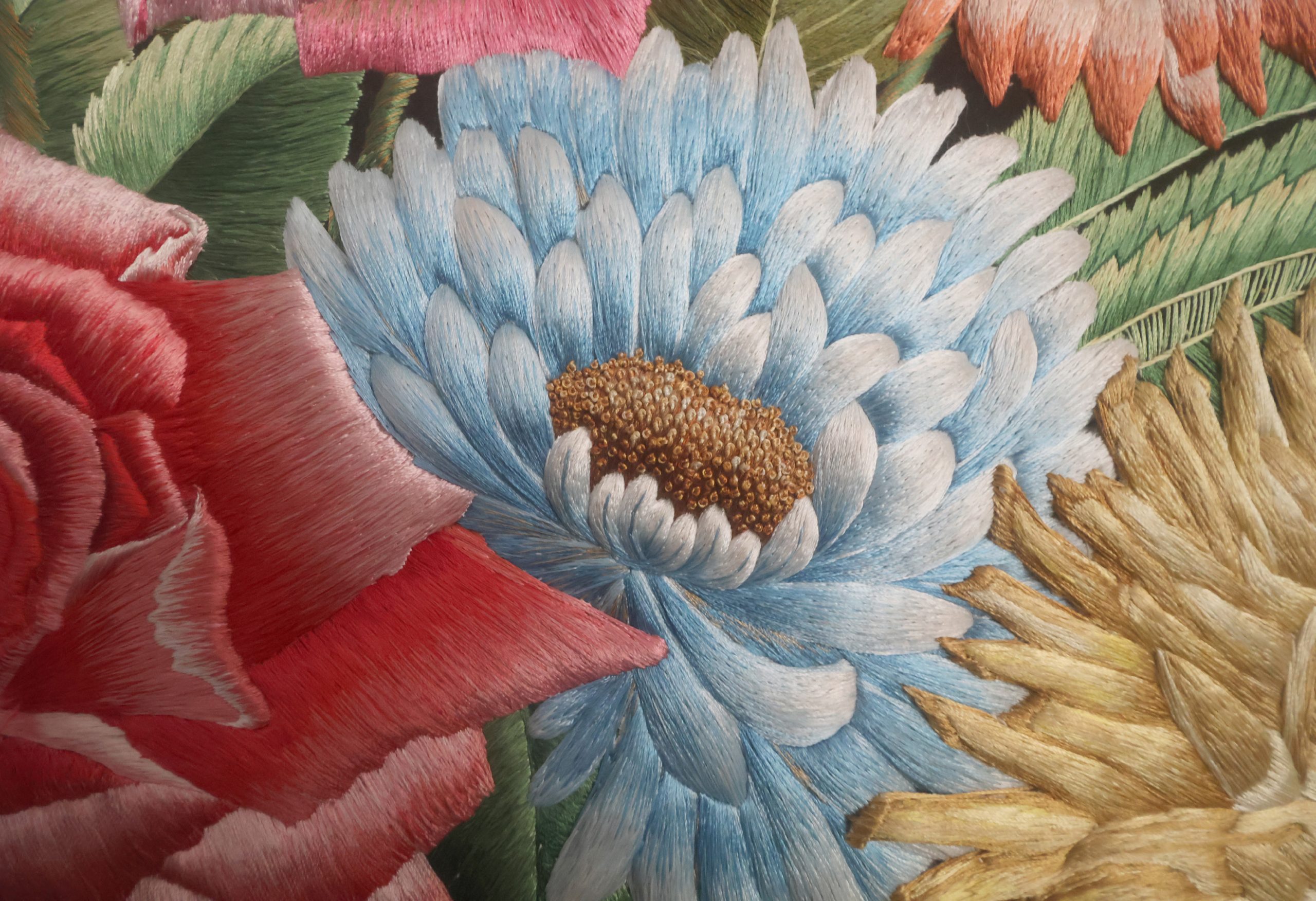
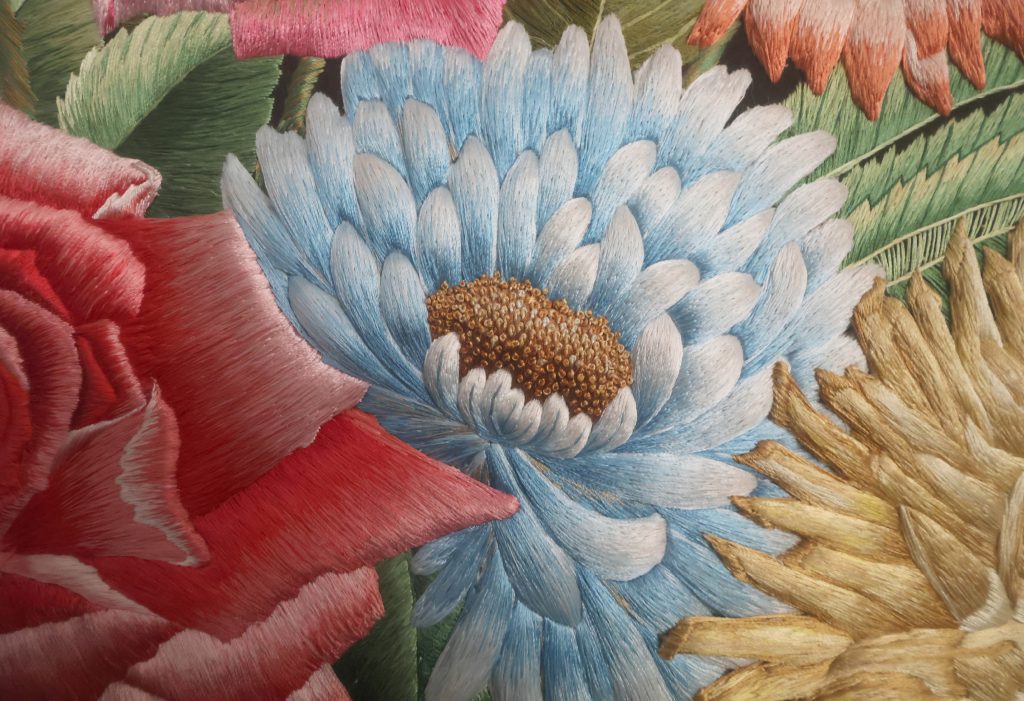
Some artworks command attention from across a room. Shams Uddin’s The Vase rewards every step closer.
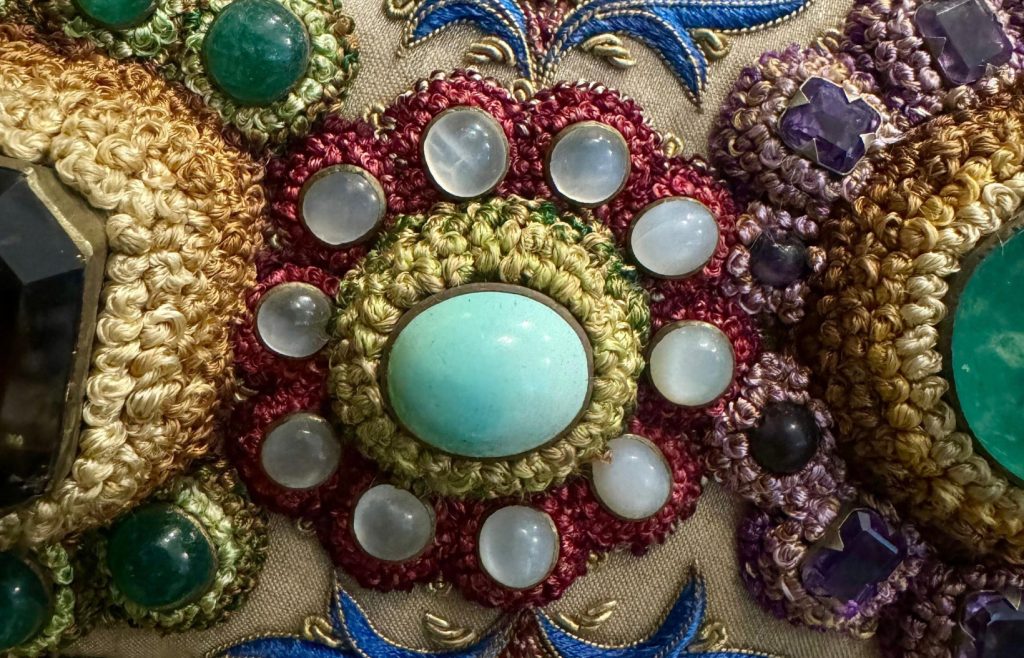
Crimson roses unfold in silk. Pale blue petals gather around golden centres. Leaves curve across a dark background, their surfaces alive with delicate changes of colour. Beneath this extraordinary bouquet sits a vessel embroidered with gold thread and studded with gemstones.
From a distance, it has the grandeur of a ceremonial treasure. Up close, its construction becomes almost bewildering. Every petal, curve and jewelled surround reveals the patience of a hand working towards something exceptional.
Standing approximately 205 centimetres high and 128 centimetres wide, The Vase brings together the presence of a monumental artwork and the fascination of high jewellery. Its creator, Sheikh Shams Uddin of Agra, became celebrated for transforming embroidery into three-dimensional art. Forbes India called him the “Michelangelo of Zardozi.” Forbes India
Now held in a private collection belonging to a UAE resident, The Vase is expected to come to auction. Auctioneers and art valuers consulted about the proposed offering anticipate a reserve of at least US$5 million.
That places it firmly in the multimillion-dollar conversation. Its ambition reaches further.
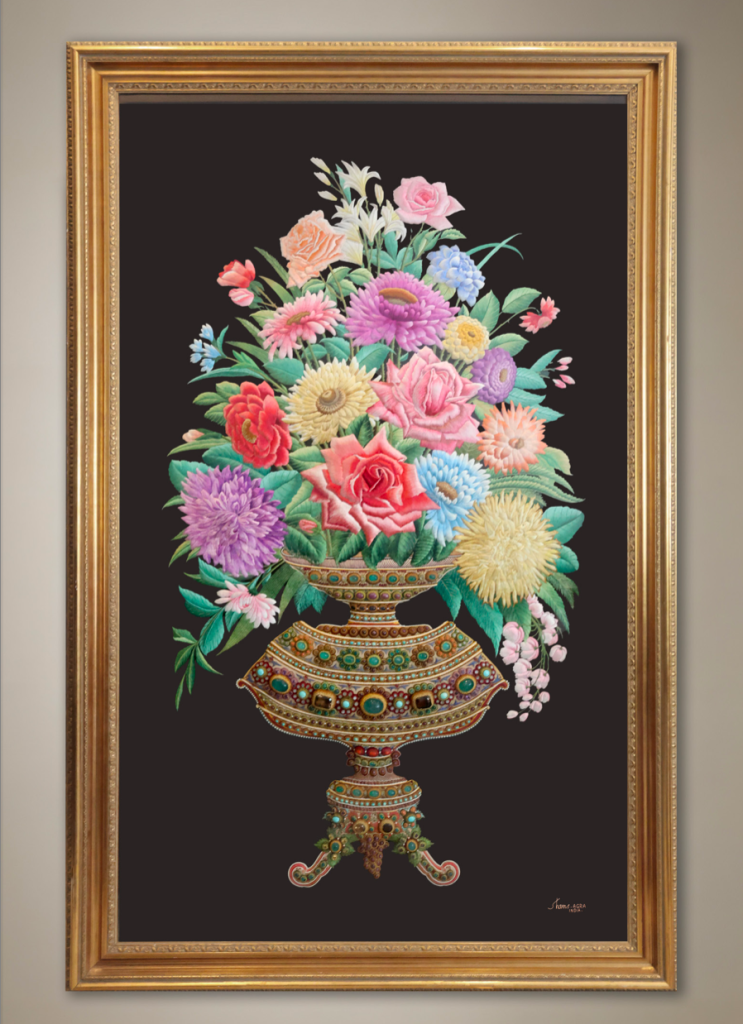
Shams Uddin’s The Vase: five years captured in silk and gold
Created over approximately five years and dated in its collection history to the 1970s, The Vase belongs to a world in which the most precious resource was the maker’s time.
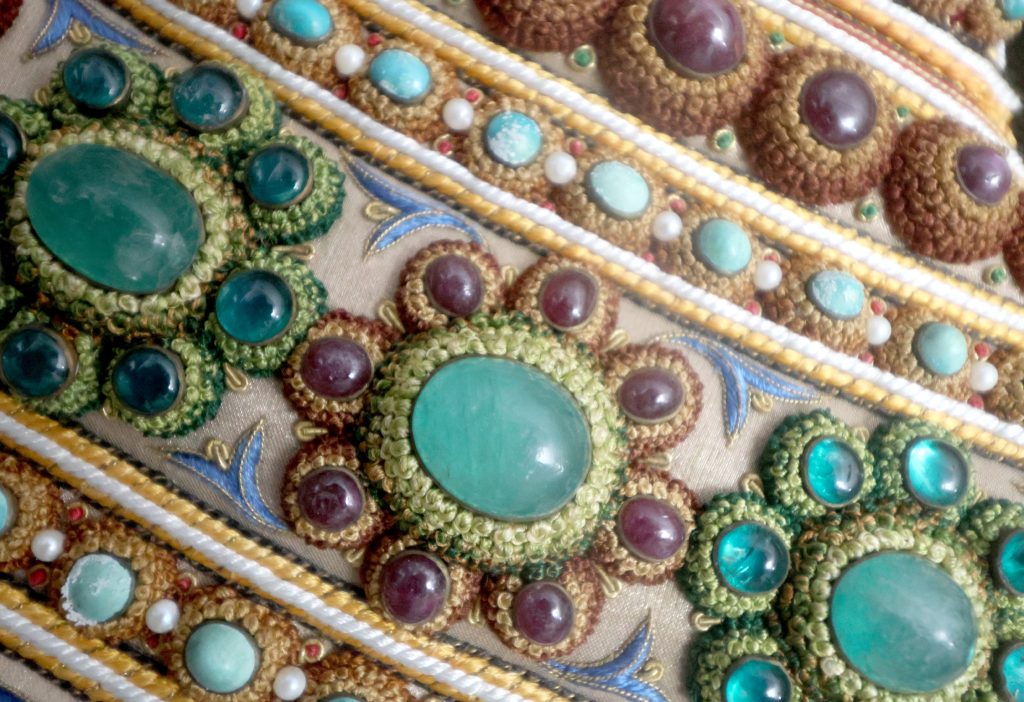
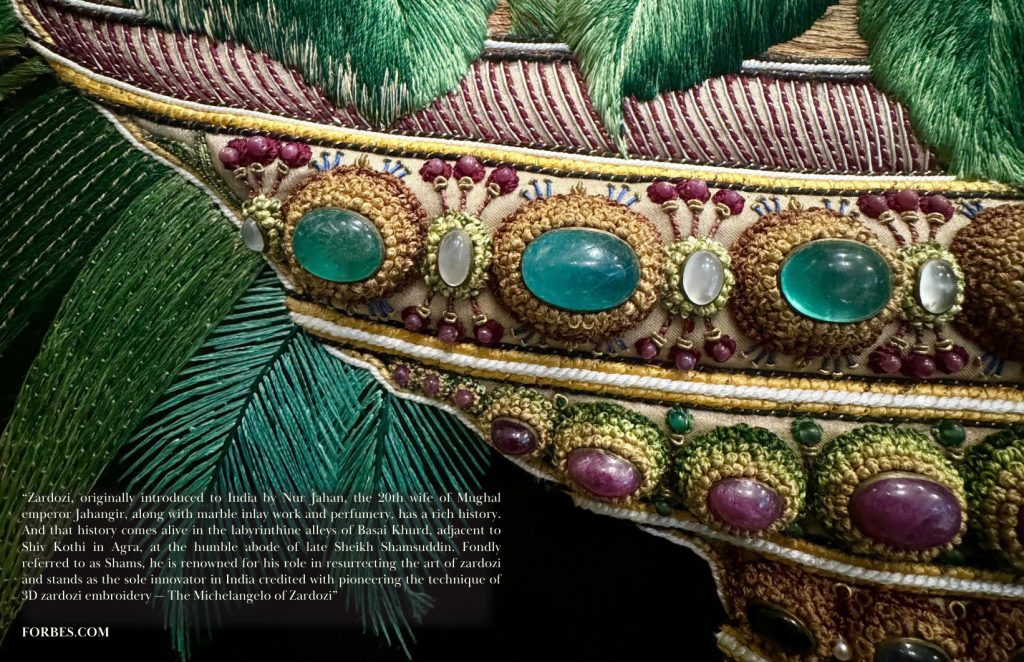
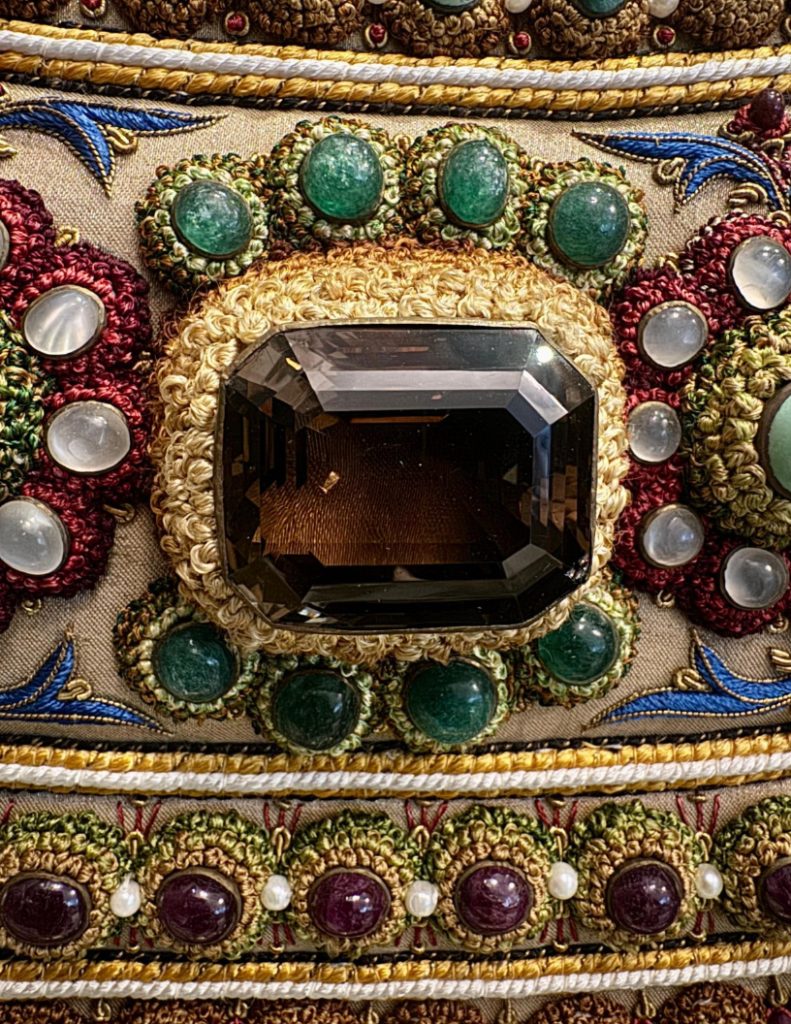
Shams Uddin built depth through successive layers of embroidery. Flowers rise from the surface. Petals overlap and turn towards the light. Gold threadwork traces the vessel beneath them, surrounding gemstones with elaborate borders and miniature flourishes.
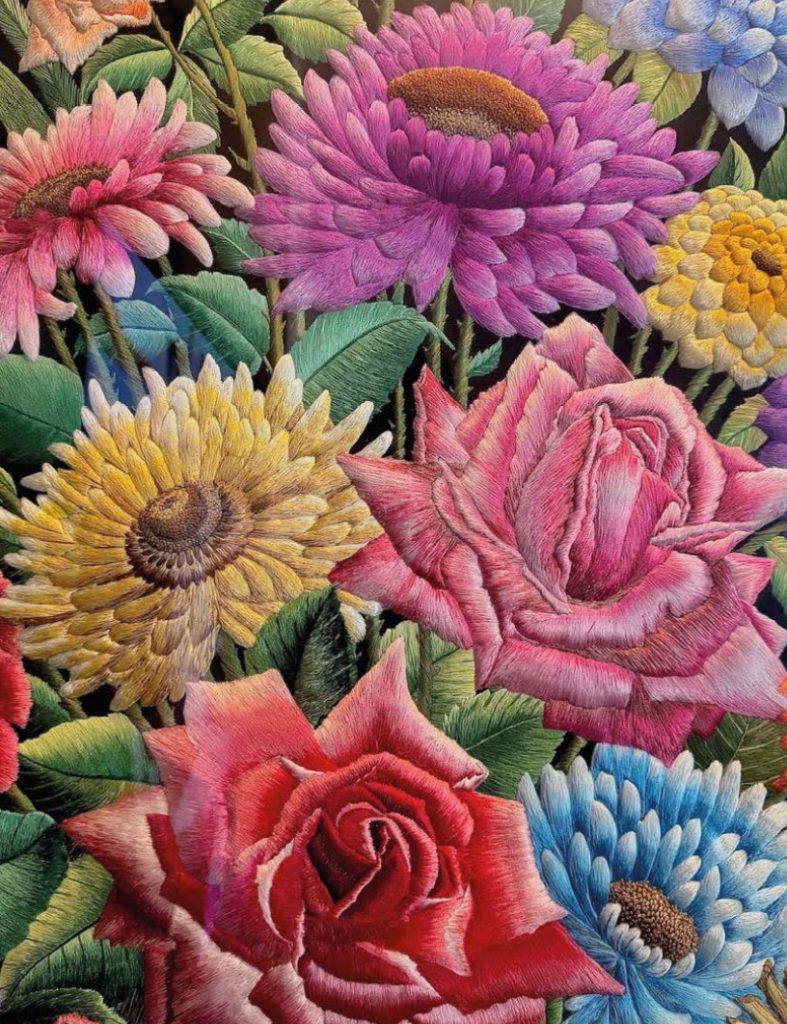
The effect is sculptural. Yet it retains the softness and lustre that make silk so compelling.
Consider the concentration required to sustain that precision across a composition more than two metres tall. A single bloom contains shifts of colour, texture and direction. Together, the flowers form an arrangement that feels abundant without losing its balance.
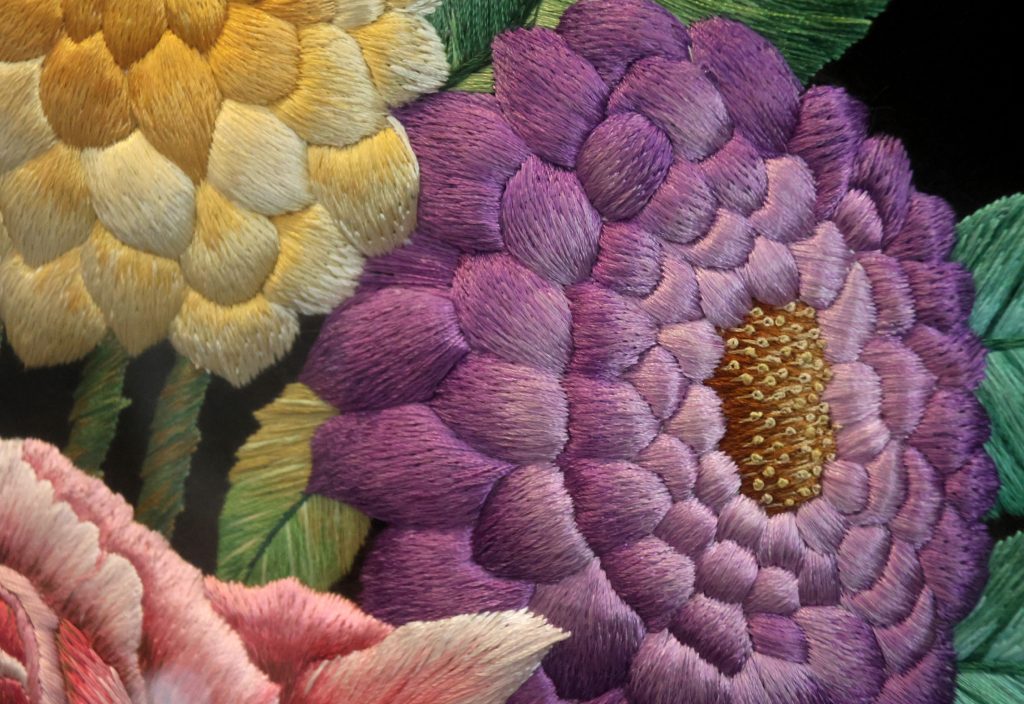
For a collector, those five years remain present in the finished work. They can be seen in the smallest details: the fold of a rose, the edge of a leaf, the embroidered setting around an emerald.
This is the luxury of something that could only emerge slowly.
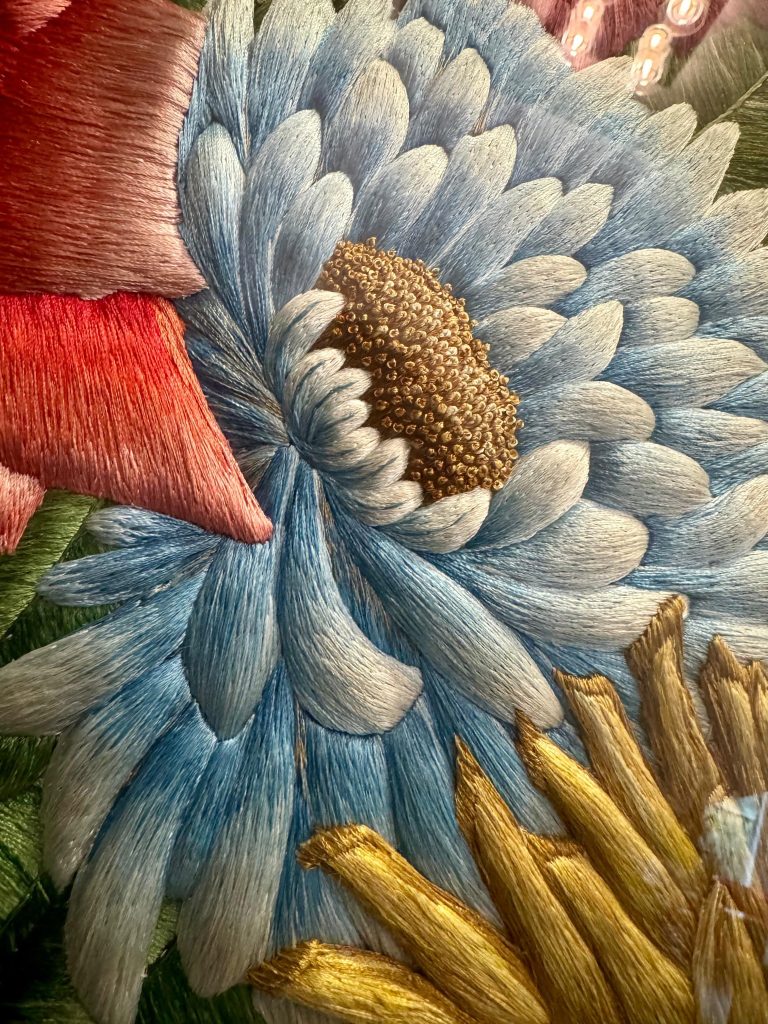
Thousands of carats—and emerald cabochons of exceptional scale
The Vase’s gemstone content is estimated at 5,000–7,000 carats, incorporating emeralds, rubies and a rich variety of other gem materials.
Among its most striking features are the emerald cabochons, with individual examples described as exceeding 200 carats. Their smooth, rounded surfaces give the embroidered vessel an unmistakably regal character.
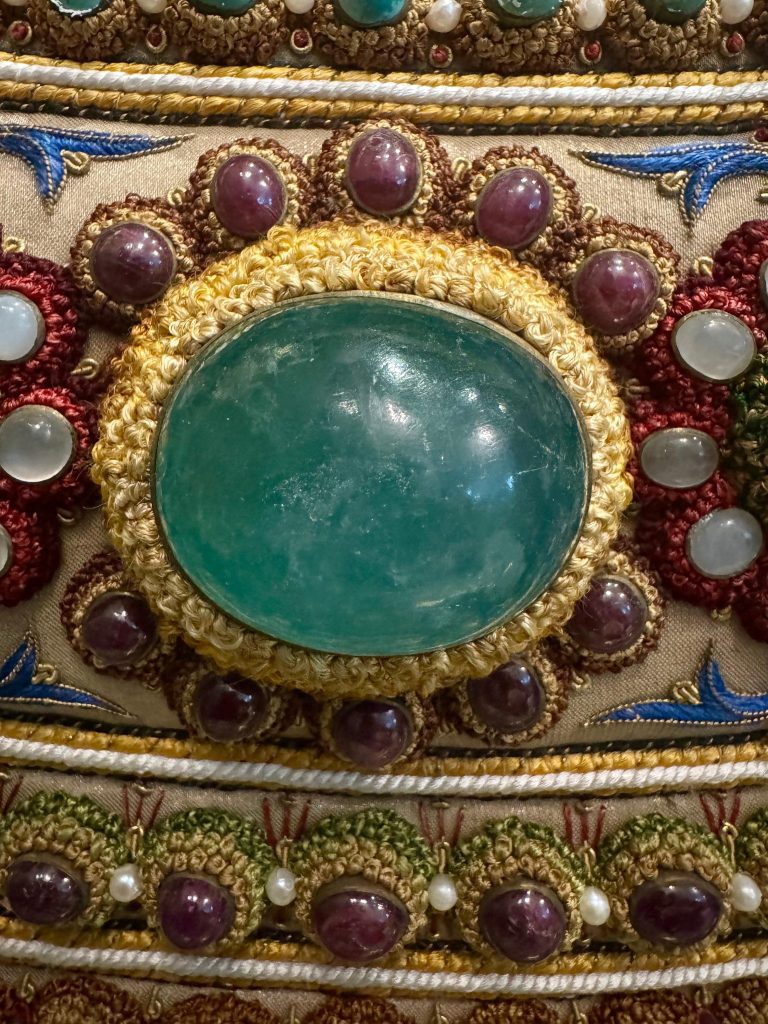
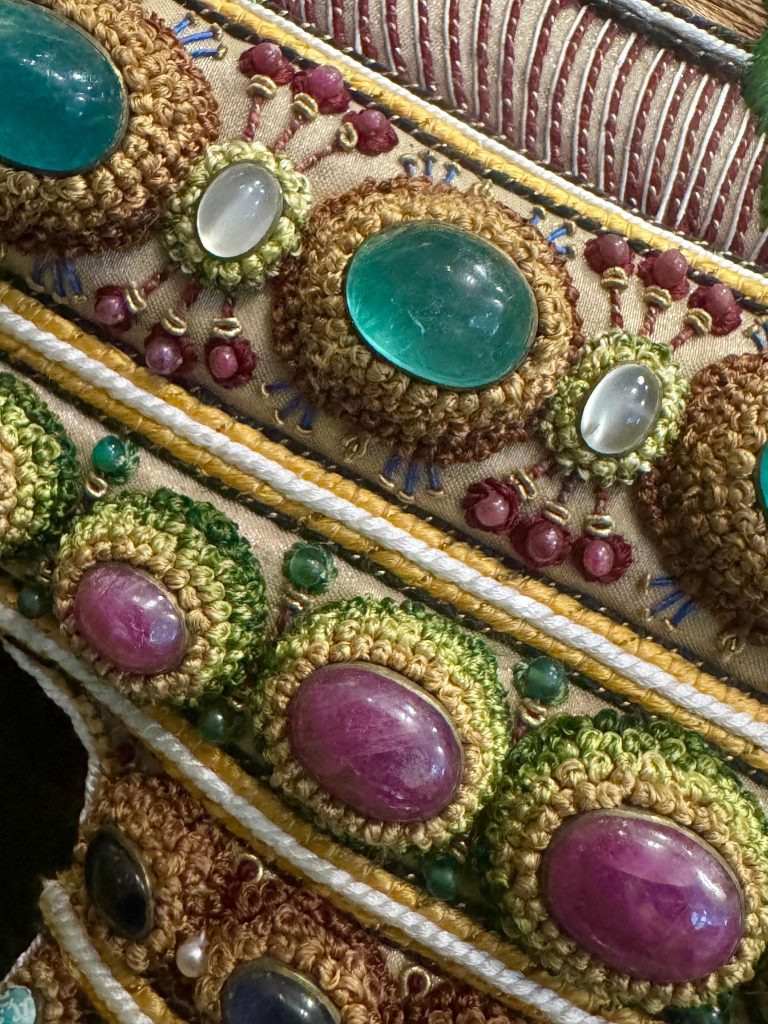
Rubies bring deep colour. Turquoise introduces vivid blue. Pearls, moonstone, amethyst and other materials create changes of light across the composition. Each contributes to a larger decorative rhythm.
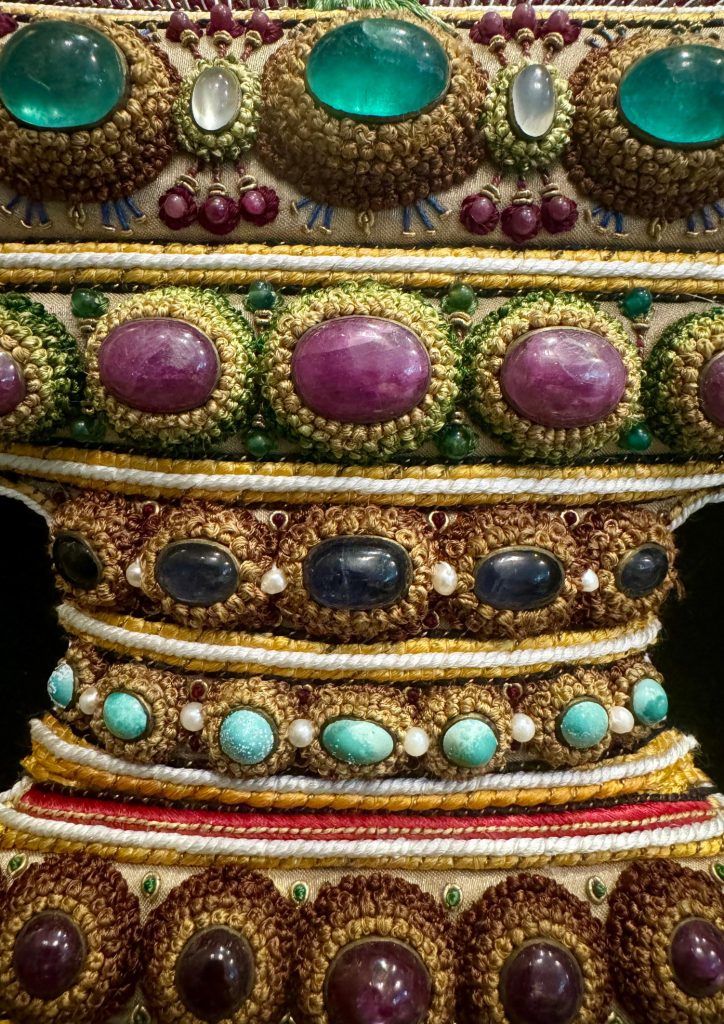
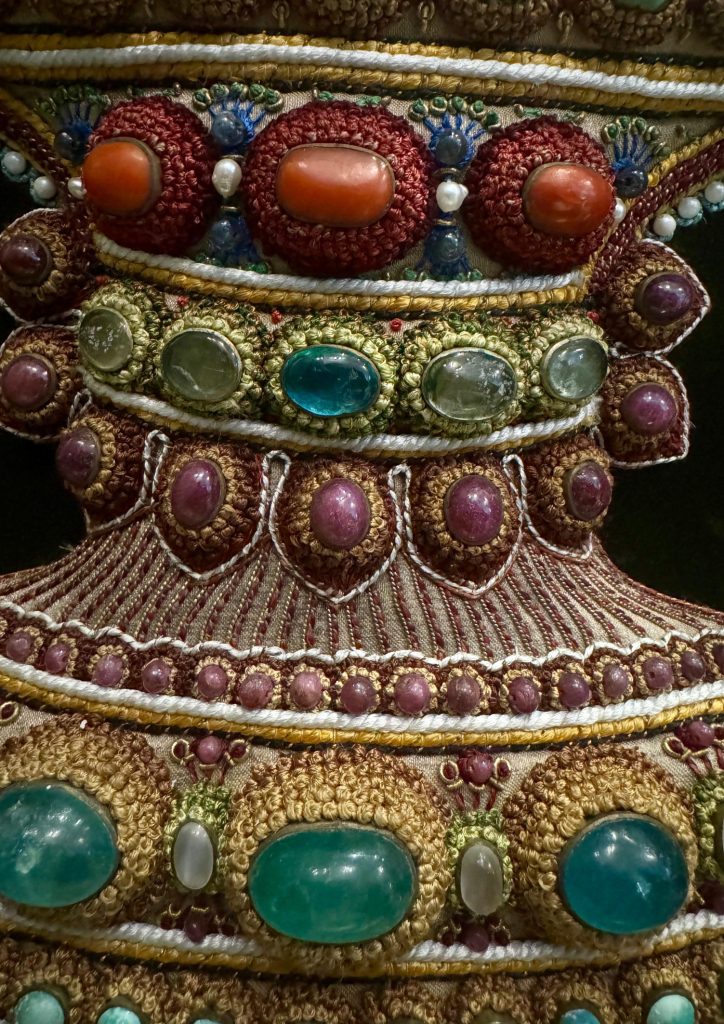
Allegedly, the stones alone could exceed US$1,000,000 in value.
That possibility adds a powerful dimension to the work’s appeal. Here, the collector encounters precious materials within a substantial artistic achievement. The gemstones belong to a composition whose identity also rests on its age, authorship, craftsmanship and place within Agra’s decorative traditions.
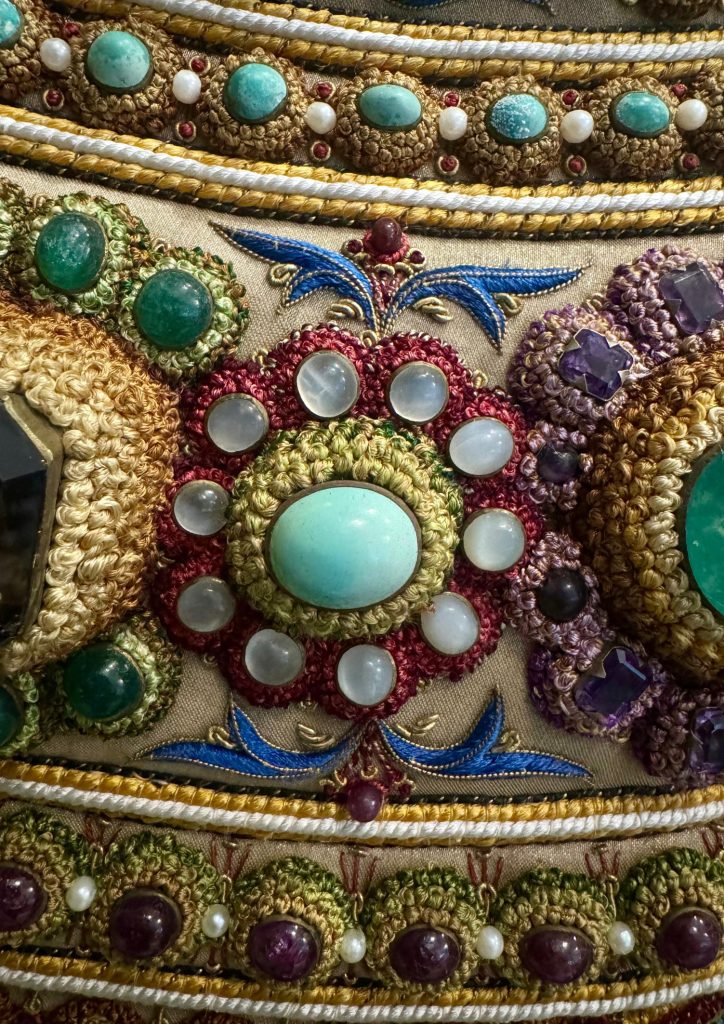
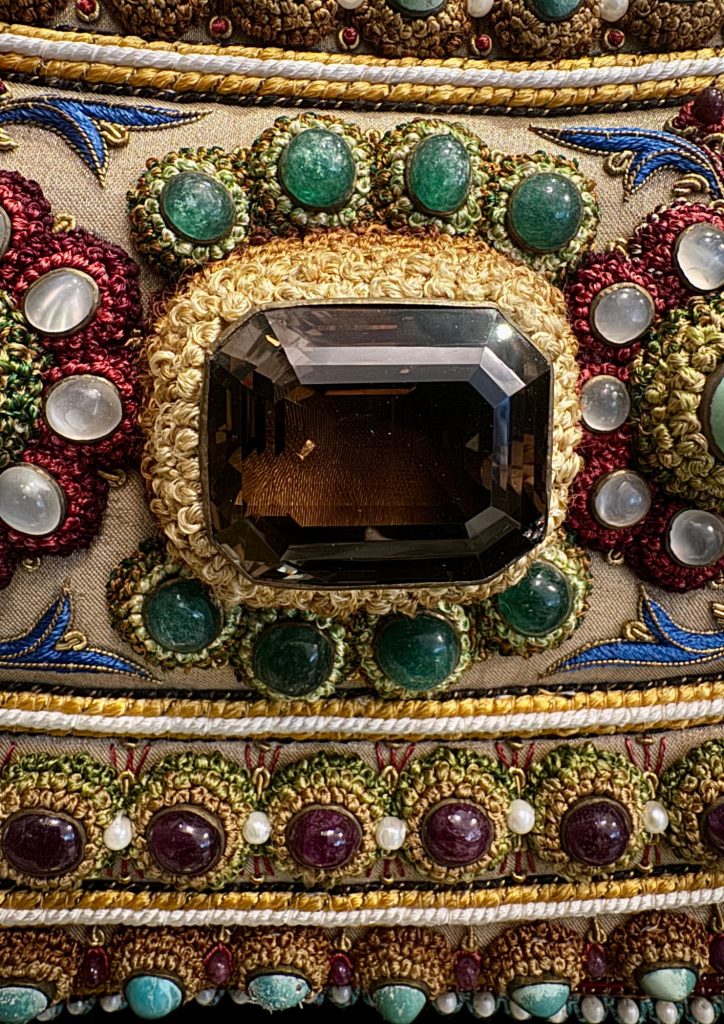
Its richness is immediately visible. Its finer pleasures take longer to discover.
Agra, the Taj Mahal and a dynasty of royal embroiderers
Agra understands the power of extraordinary craftsmanship.
The city of the Taj Mahal carries centuries of expertise in stone, jewels, textiles and ornament. Its finest workshops developed a language of beauty through minute detail, repeated patiently until it became something monumental.
Shams Uddin emerged from that tradition.
Born in 1917, he belonged to a family of master embroiderers whose history included work for the British monarchy. Accounts of the dynasty connect Ustad Habib Baksh and its royal craftsmanship with ceremonial garments and coronation embroidery for King George V. Forbes India recounts this association with the Delhi Durbar and the splendour of imperial dress. Forbes India
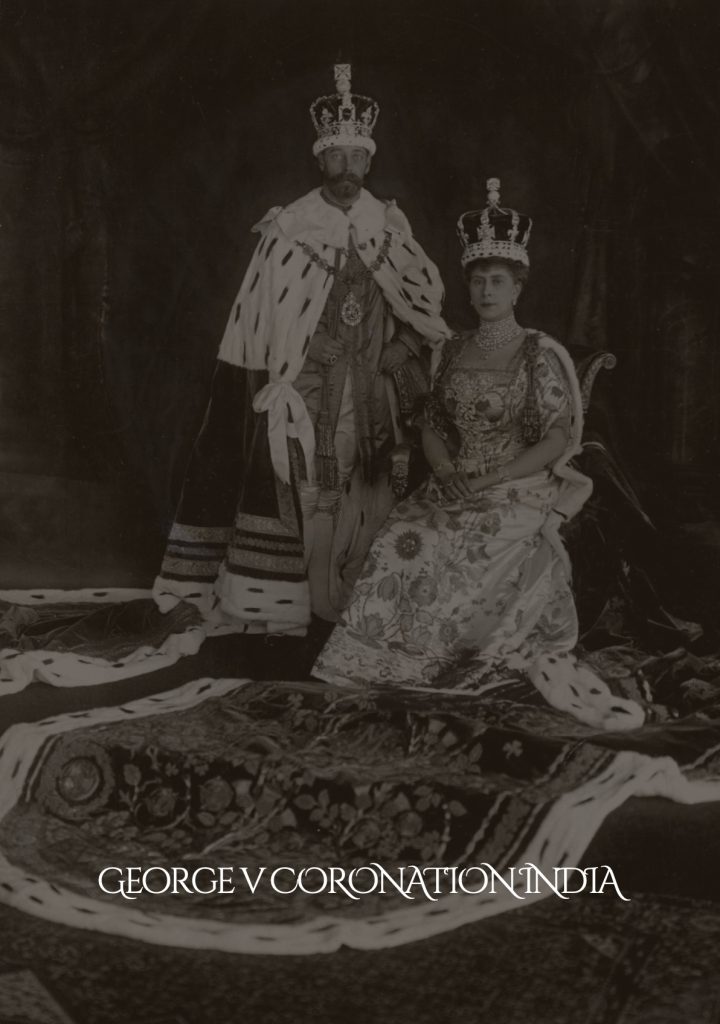
That heritage gives The Vase a compelling context. Skills once used to enrich royal garments found a new expression in Shams Uddin’s ambitious pictorial works.
He gave silk volume, gold thread structure and gemstones a place within an intricate visual narrative.
The wider story survives through published accounts, family knowledge and conversations across generations, including those with the artist’s grandson. It is a living history of workshops, commissions and techniques passed from one pair of hands to another.
Examples of Shams Uddin’s work can also be encountered in Agra’s Kohinoor Museum, associated with Kohinoor Jewellers. Its collection preserves the close relationship between elaborate embroidery and the world of jewels. Kohinoor Museum account
Honoured by Indira Gandhi, recognised by Ronald Reagan
Shams Uddin’s achievements brought recognition at the highest levels.
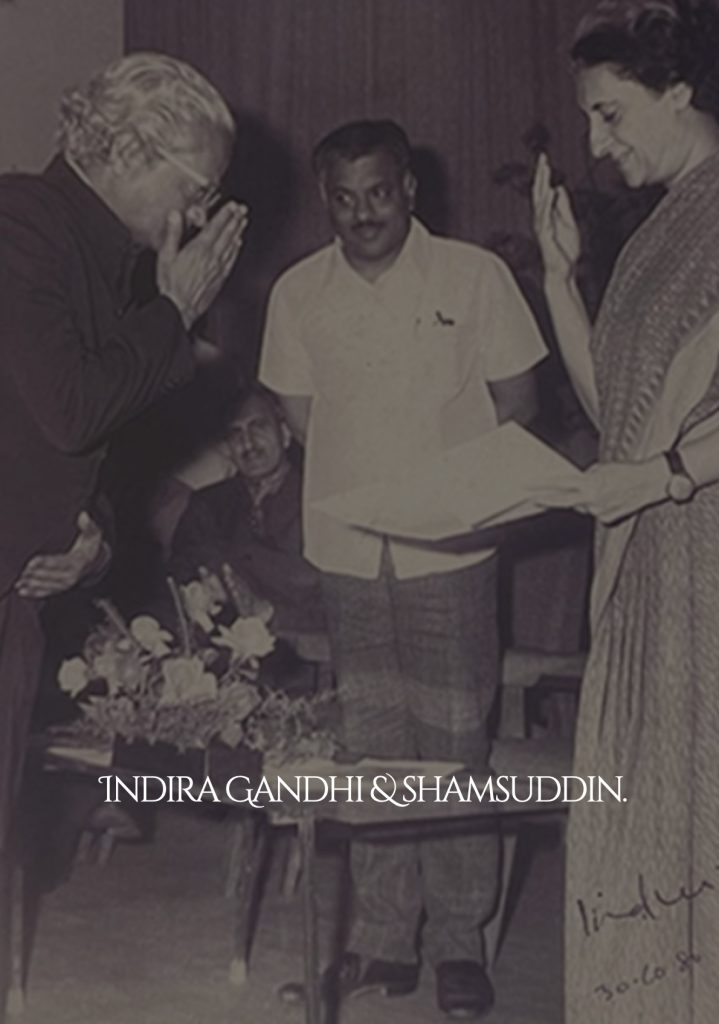
On 23 March 1973, Indira Gandhi, then prime minister of India, presented him with an award for his embroidery. The historical photograph of their meeting captures a remarkable moment: a master craftsman receiving national recognition for an art built stitch by stitch. Forbes India
His honours later included the Padma Shri in 1989. Government of India’s Padma Awards directory
His international story also reaches the White House. Accounts of his life describe three presidential invitations and a specially embroidered portrait for Ronald Reagan. A published account of a visit to the family workshop mentions the Reagan portrait, while Condé Nast Traveller independently records that Reagan honoured Shams Uddin. Workshop visit · Condé Nast Traveller
The family’s wider history places examples of his work in royal and presidential collections, with Buckingham Palace, the White House and other palaces among the destinations remembered in those accounts.
For collectors, this is a fascinating journey: an intimate art practised in Agra, carried into the worlds of royalty, diplomacy and international patronage.
The artist who gave his sight to his work
Behind the splendour lies a deeply human story.
Shams Uddin devoted years to compositions of extraordinary complexity. Published accounts connect the creation of his monumental Moses with the loss of his eyesight—a devastating personal cost behind a work of immense ambition. Forbes India
In 1996, India Today reported a US$3 million asking price for Moses. India Today
The multimillion-dollar conversation around his greatest works therefore stretches back three decades.
That history changes the experience of looking at The Vase. The eye moves across thousands of small decisions, each requiring judgement and concentration. Its beauty carries the weight of a life devoted to making.
Around ten monumental works—and every one different
The family history accompanying The Vase places it within an exceptionally small group: around ten works, possibly fewer, of comparable scale and ambition.
Each composition is different.
For a collector pursuing rarity, that distinction matters. The opportunity concerns a particular arrangement of flowers, gemstones and embroidery, created through years of work by a particular artist.
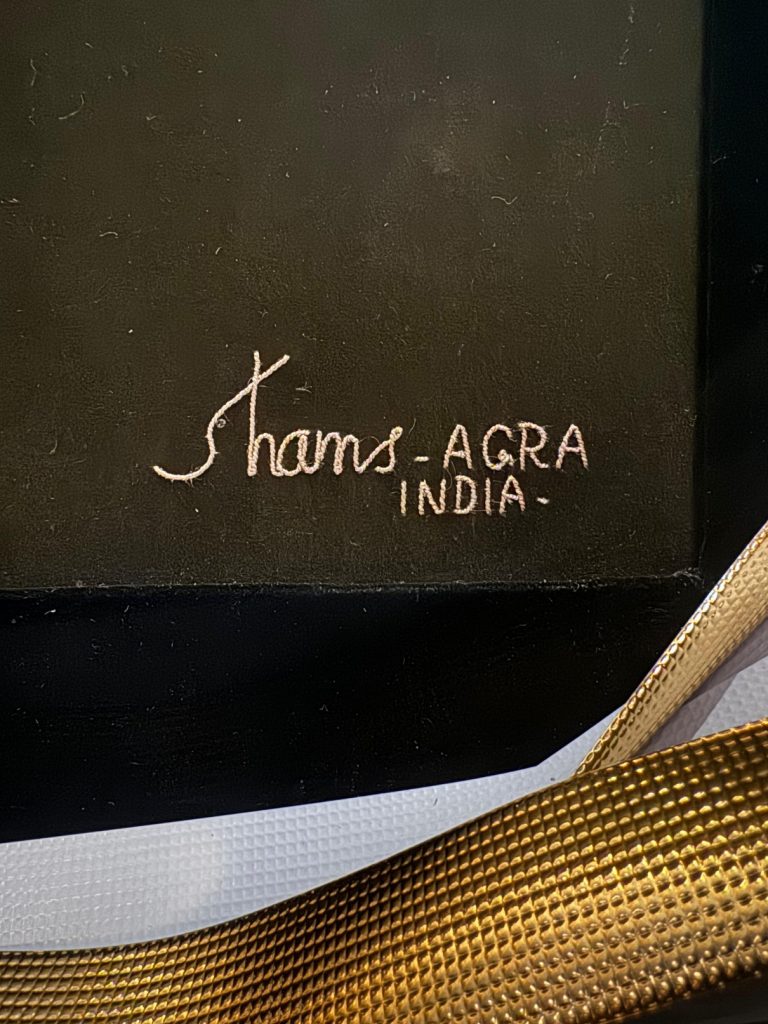
The Vase’s recorded provenance traces its acquisition directly to Shams Uddin, followed by continued private family custody. At its lower edge, the embroidered signature reads “Shams, Agra, India.”
After the extravagance of its flowers and jewels, those few words bring the entire composition back to its maker.
Could The Vase enter the US$20 million league?
Indian art has already demonstrated its ability to command extraordinary prices.
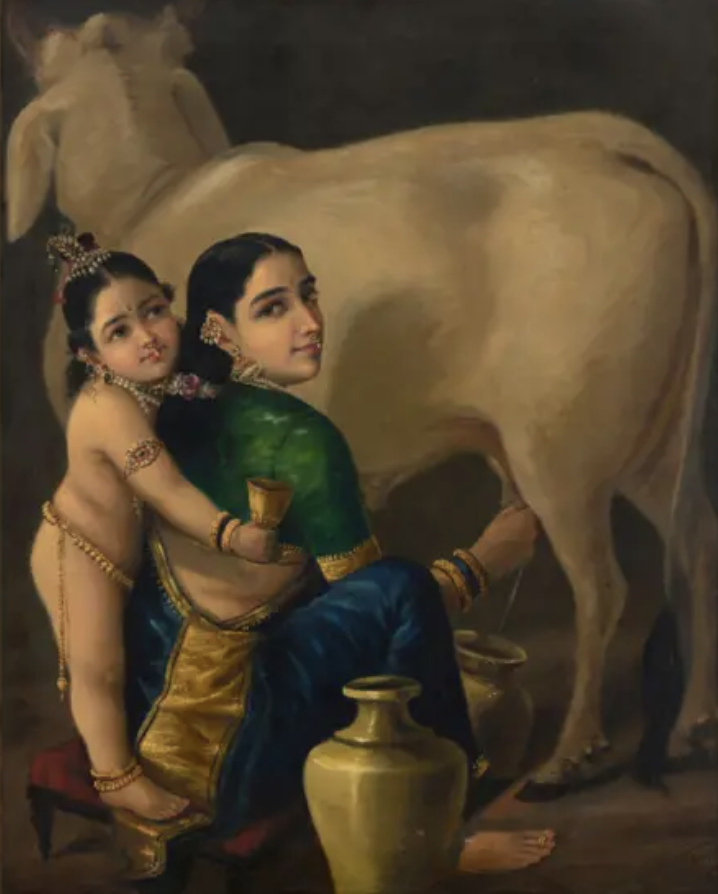
On 1 April 2026, Raja Ravi Varma’s Yashoda and Krishna sold at Saffronart for US$17.9 million, approximately ₹167.2 crore, including fees. Acquired by Cyrus Poonawalla, the painting established a new auction record for an Indian painting. The Art Newspaper
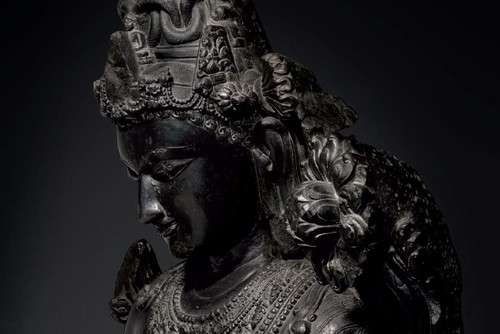
The broader market has reached higher still. In 2017, Christie’s sold a twelfth-century Indian sculpture of Lokanatha Avalokiteshvara for US$24,663,500. Christie’s
These results show the scale of collecting ambition surrounding exceptional Indian works.
The Vase brings a different proposition to that conversation: monumental embroidery, thousands of carats of gemstones, a celebrated maker and a connection to generations of royal craftsmanship.
Could competitive bidding carry it beyond US$20 million?
That is the tantalising possibility. Such a result would take it above the recent painting benchmark, while the wider record for Indian art presents a still higher target.
Its anticipated US$5 million reserve establishes the proposed starting threshold. The eventual auction would reveal how far collectors are prepared to follow its extraordinary combination of artistry, materials and rarity.
Ten landmark Indian painting sales
These selected auction results illustrate the market surrounding major Indian works, across different years and artistic traditions.
1. Raja Ravi Varma — Yashoda and Krishna. US$17.9 million. Saffronart, 2026.
2. M. F. Husain — Untitled (Gram Yatra). US$13.75 million. Christie’s, 2025.
3. Amrita Sher-Gil — The Story Teller. US$7.45 million. Saffronart, 2023.
4. V. S. Gaitonde — Untitled, 1961. US$5.55 million. Saffronart, 2021.
5. Amrita Sher-Gil — In the Ladies’ Enclosure. US$5.14 million. Saffronart, 2021.
6. V. S. Gaitonde — Untitled, 1974. ₹36.8 crore. Pundole’s, 2020.
7. V. S. Gaitonde — Untitled, 1995. Approximately US$4.4 million. Christie’s, 2015.
8. Francis Newton Souza — Birth. US$4.085 million. Christie’s, 2015.
9. Tyeb Mehta — Untitled (Kali). ₹26.4 crore. Saffronart, 2018.
10. S. H. Raza — Saurashtra. £2.393 million. Christie’s, 2010.
A work for the collector who wants something singular
For collectors who follow Sotheby’s, Christie’s, Phillips and Bonhams, The Vase invites a broader view of what a major acquisition can be.
Its appeal crosses Indian art, historic textiles, jewellery and the decorative arts. It could become the centrepiece of a private gallery, a collection devoted to exceptional craftsmanship, or a residence shaped around objects with a powerful cultural identity.
Its scale gives it presence. Its detail gives it intimacy.
A collector can stand back and take in the complete composition, then spend time with a single flower or emerald cabochon. That movement between grandeur and detail is one of its greatest pleasures.
There is also the opportunity to bring a remarkable artistic achievement before a wider audience. A new custodian would become part of the work’s continuing history, carrying an Agra master’s vision into another generation.
Five years to create. A lifetime to discover.
Across the dark ground of The Vase, the flowers remain luminous.
Silk catches the light. Gold thread draws the eye towards the jewelled vessel. Emerald cabochons lend weight and richness to a composition that combines lavish materials with astonishing patience.
Its proposed auction may eventually supply a number. The experience of the work begins long before that moment.
For the collector seeking an acquisition with beauty, scale, rarity and a deeply Indian artistic identity, The Vase by Shams Uddin offers a compelling invitation.
To look closer. To recognise the hand behind the splendour. And perhaps to own the work that brings that hand to the attention of the world.