
Dolce & Gabbana’s Handcrafted Virtuosity Takes Centre Stage at Vogue World Milano
AI-assisted voice playback. Starts only when you choose Play.
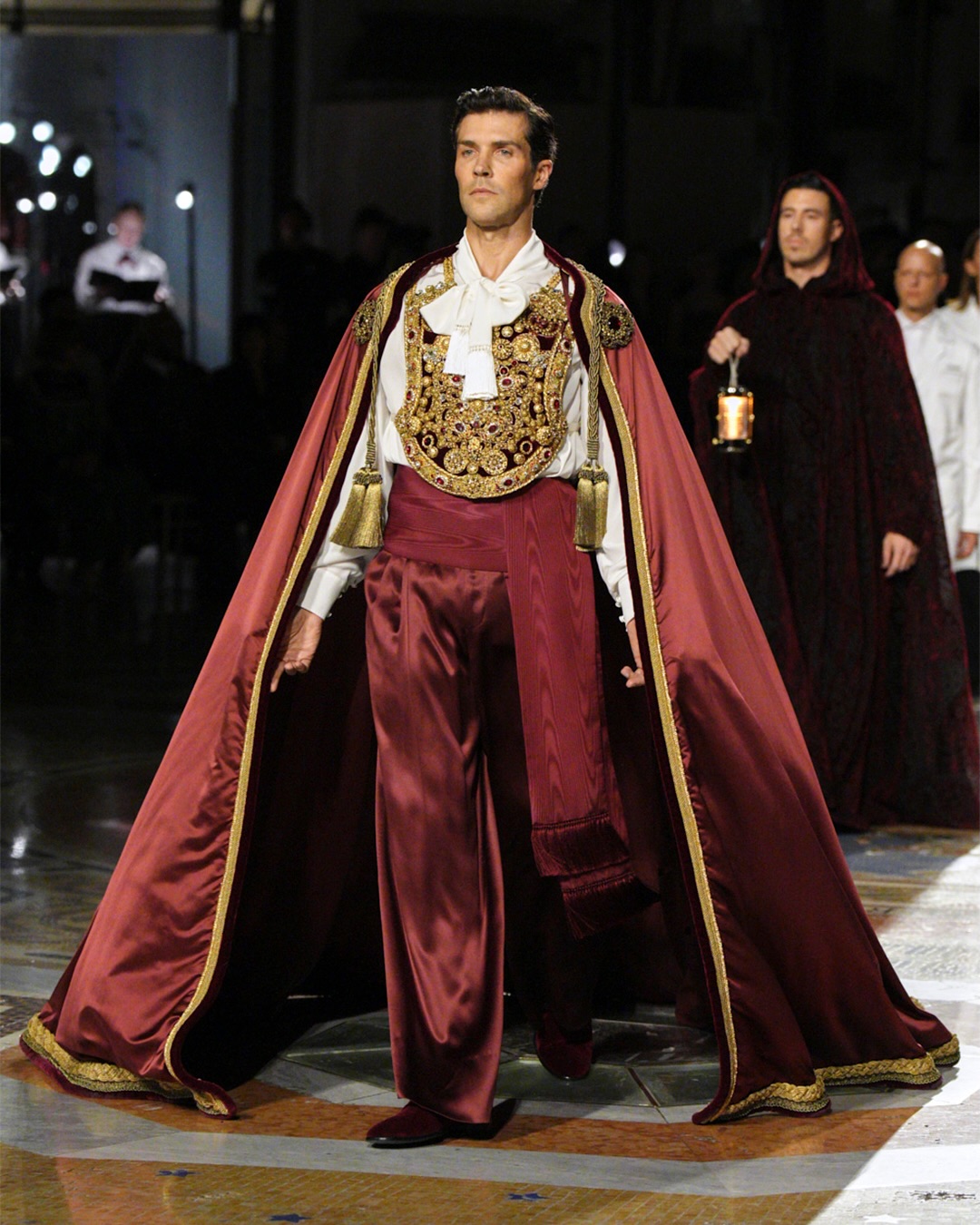
On the evening of 23 September 2026, Dolce & Gabbana illuminated Milan's most iconic architectural space, the Galleria Vittorio Emanuele II, as part of Vogue World Milano. The runway presentation demonstrated the house's unwavering commitment to artisanal craftsmanship, spotlighting pieces from its DG Alta Sartoria and DG Alta Moda collections—the pinnacle of the Milanese house's design philosophy.
The collection's narrative centred on the concept of DG Fatto a Mano (Made by Hand), emphasising the labour-intensive techniques and meticulous attention to detail that distinguish Dolce & Gabbana's most elevated offerings from mass-produced luxury.
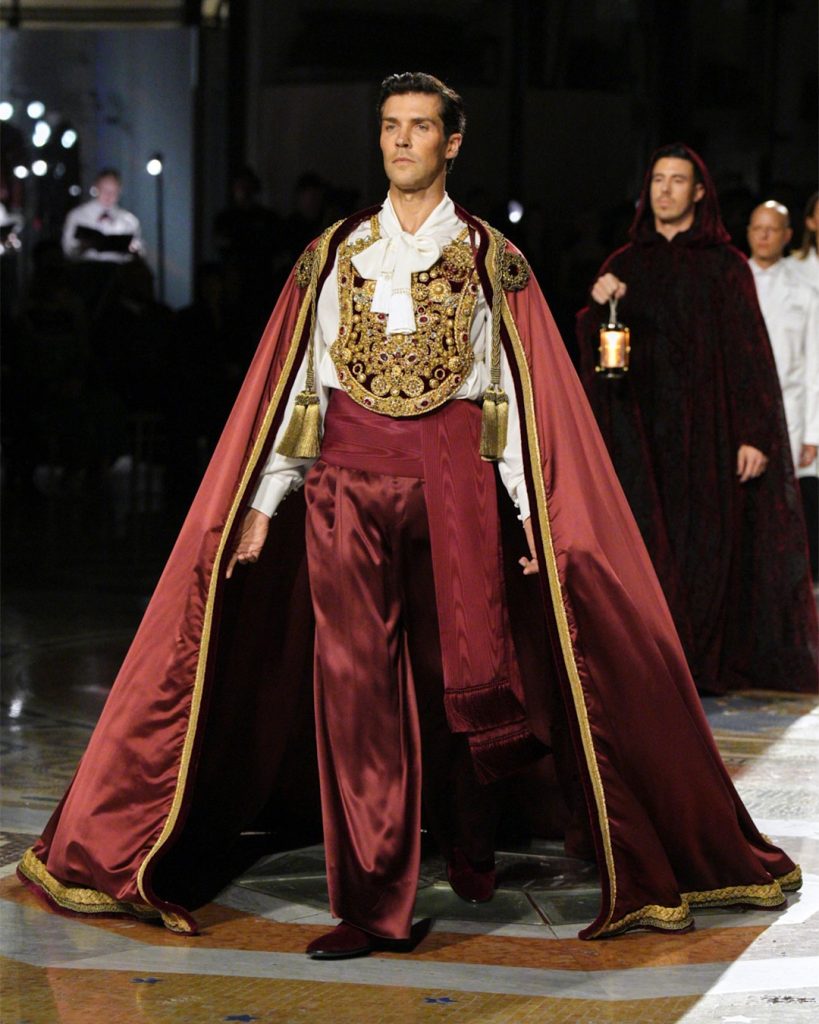
Architectural Grandeur in Tailoring
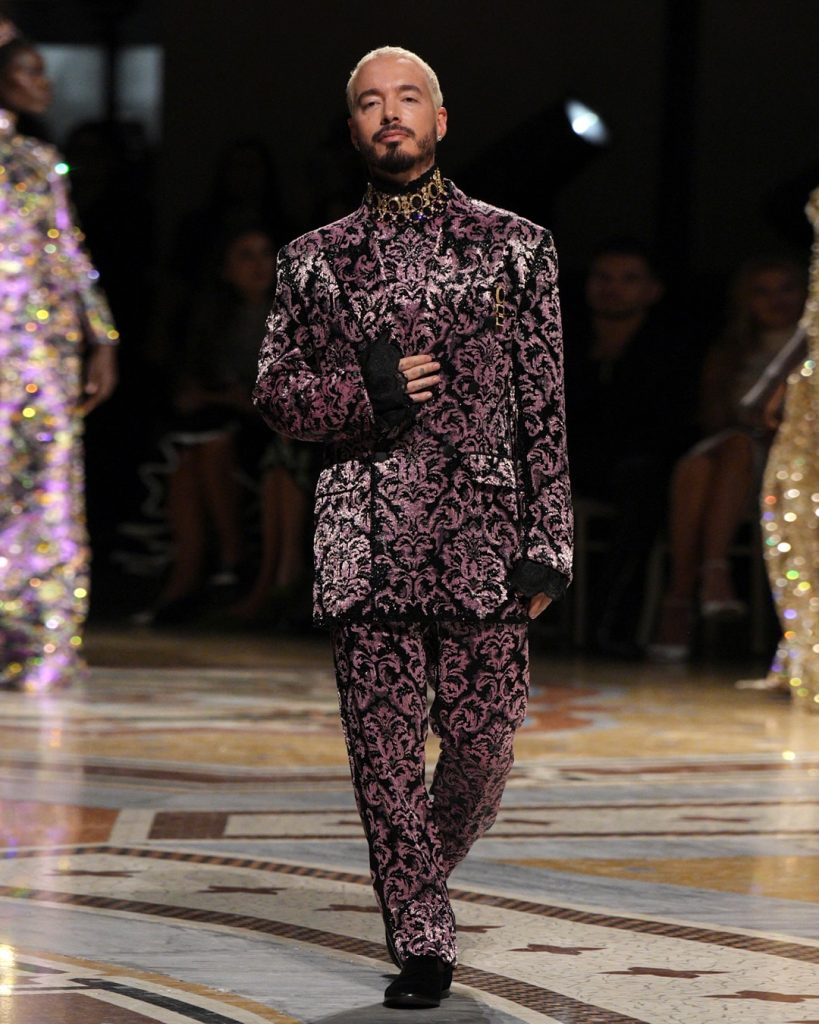
The DG Alta Sartoria collection presented an exploration of structured silhouettes infused with dramatic embellishment. One standout ensemble, worn by international entertainer J Balvin, consisted of a double-breasted jacket distinguished by sharp peak lapels and sculpted shoulders, rendered entirely in heraldic jet bead embroidery. The three-dimensional beadwork created visual depth across the jacket's surface, whilst coordinating slim-cut trousers mirrored the intricate pattern, producing a cohesive sense of grandeur.
Elsewhere, a satin cape layered over a burgundy velvet harness bustier demonstrated the house's mastery of fabric layering. The cape was embellished with gold passementerie, decorative tassels and embroidery, finished with a silk crêpe de Chine shirt featuring an oversized bow and hand-knotted fringe, alongside a moiré silk sash with matching hand-knotted detailing. Such compositions transcend conventional tailoring, approaching wearable sculpture.
Haute Couture Embellishment and Textile Innovation
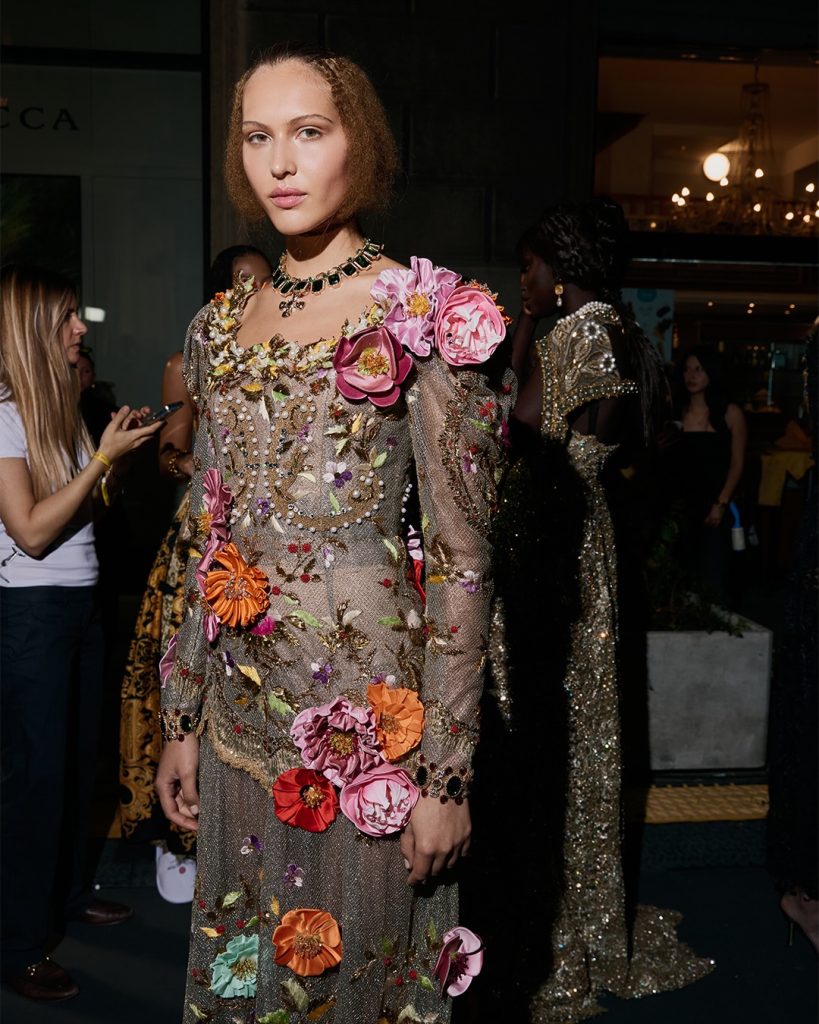
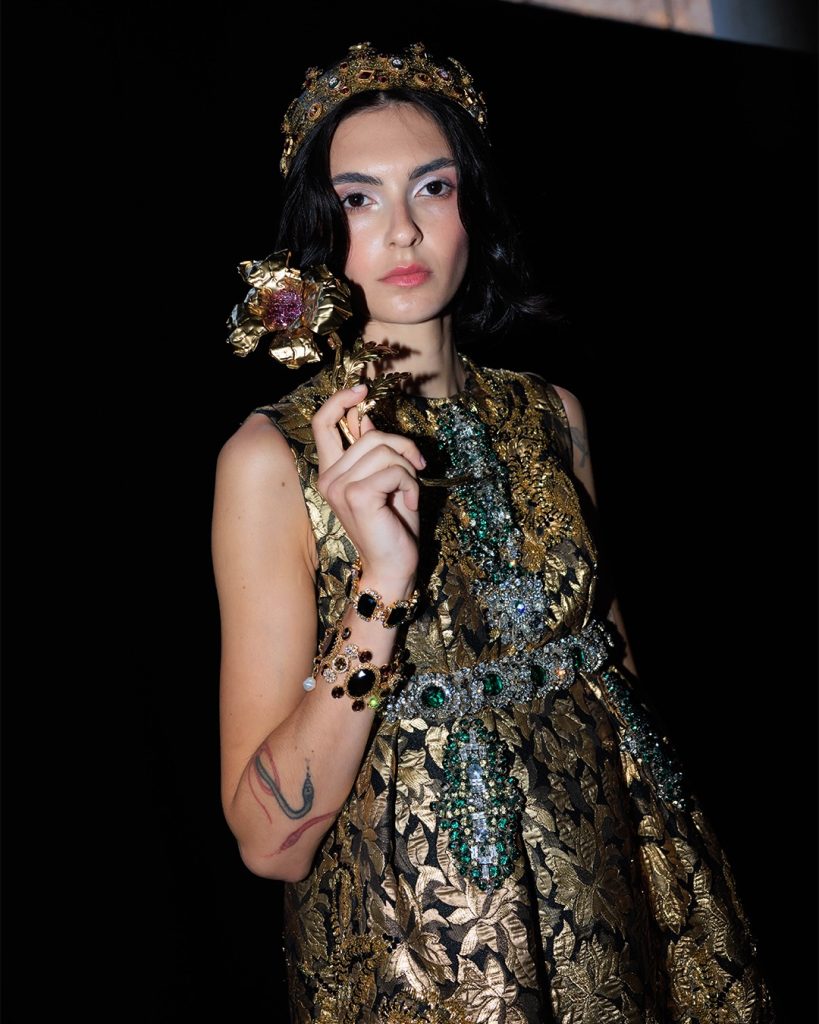
The DG Alta Moda gowns showcased an extraordinary breadth of embellishment techniques. One dress featured a lurex mesh corset adorned with shuttle-lace ruffles and extensive hand-embroidery executed in lurex thread, silk thread, soutache, crystals, pearls and stones, complemented by three-dimensional floral elements constructed from duchesse and double organza.
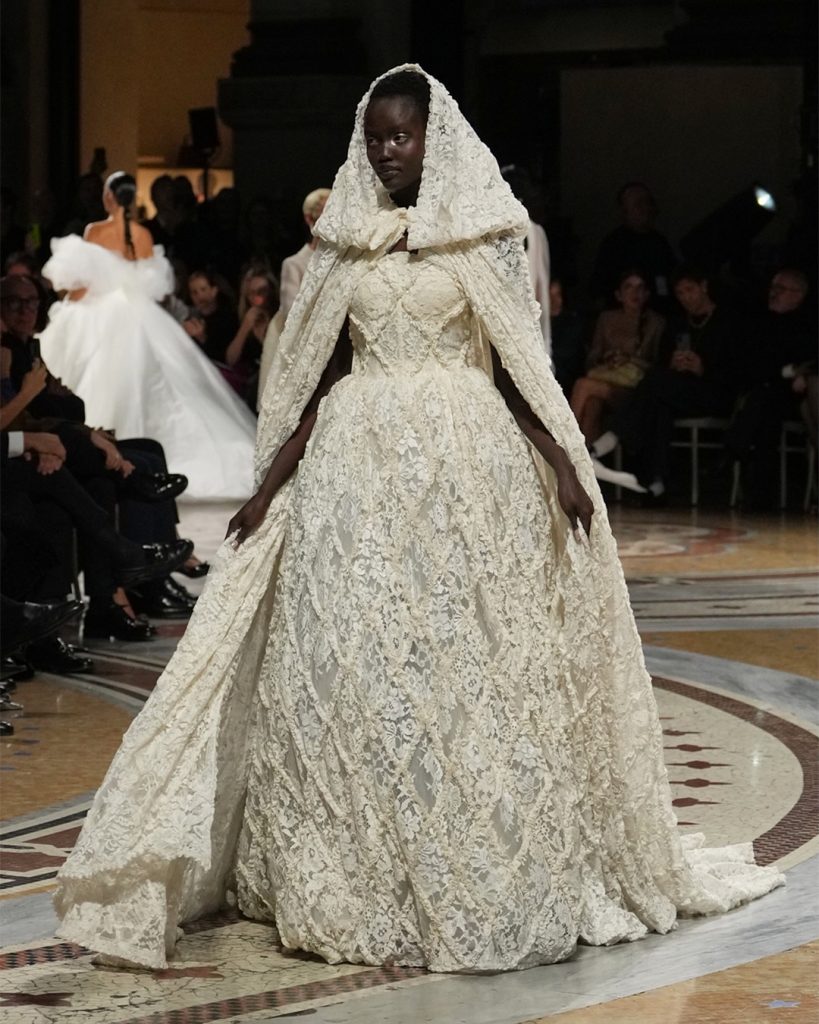
A strapless gown in patchwork diamond-pattern lace presented a more geometric interpretation of ornamentation, with a ribbed corset fastened by a satin ribbon lace-up detail at the back, paired with a matching hooded cape. A closer study of another piece revealed intricate crystal embroidery layered across luminous lurex brocade, a combination of materials that captures and refracts light with particular luminosity.
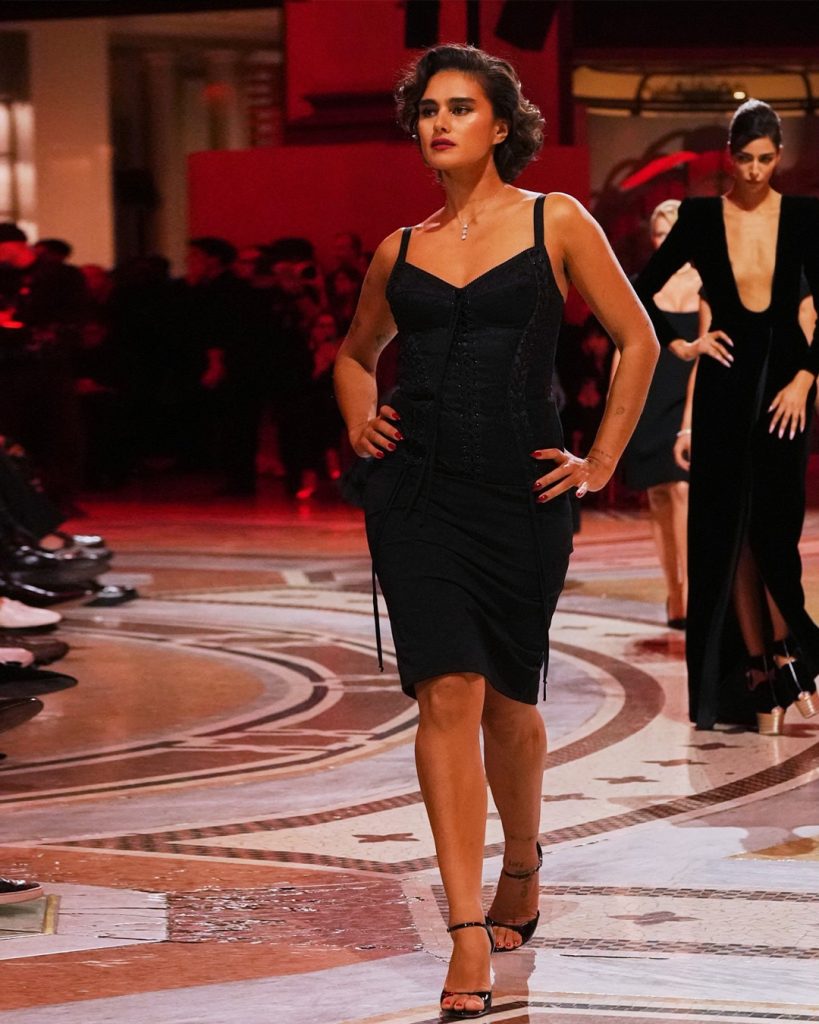
The collection also referenced archival pieces, including a jacquard powernet mini dress, suggesting a continuum between historical codes and contemporary expression within the house's design vocabulary.
Ready-to-Wear Refinement
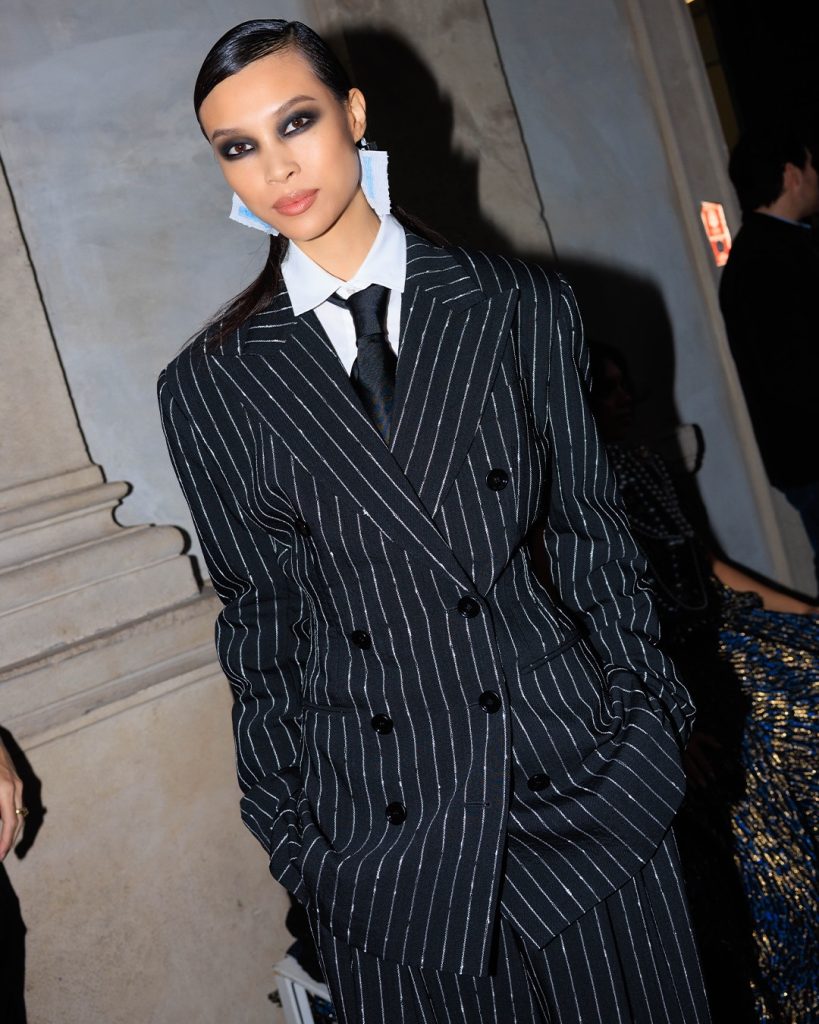
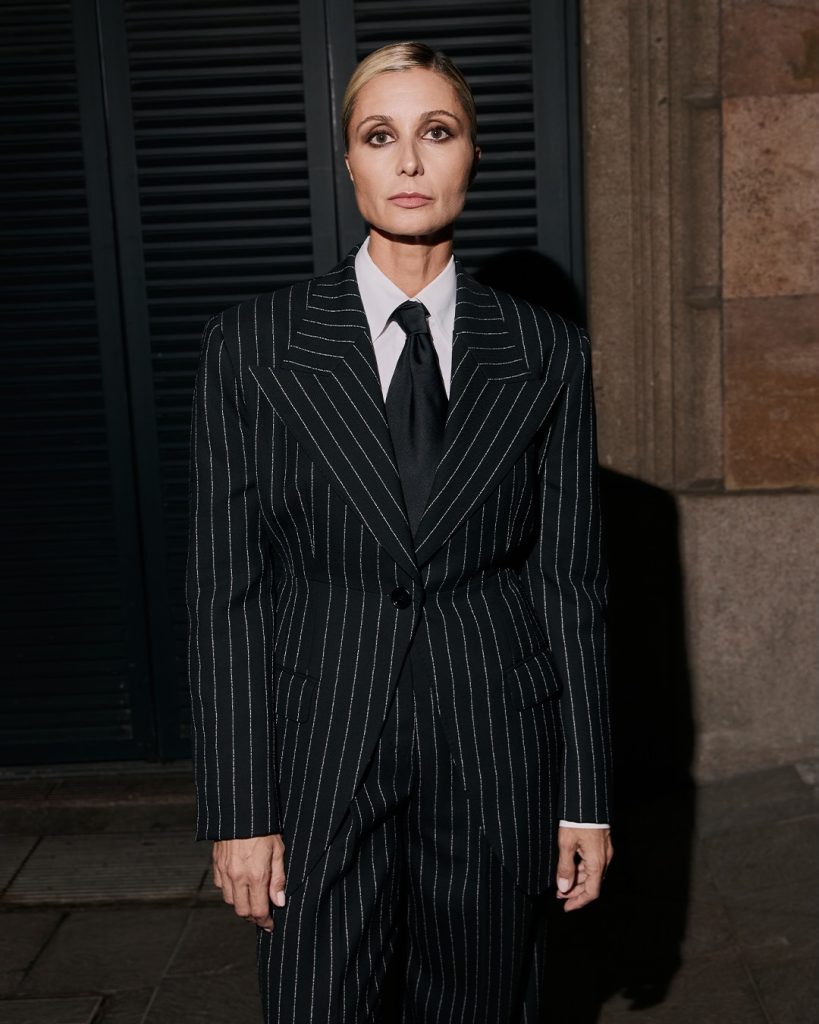
Dolce & Gabbana's ready-to-wear offering, represented by a double-breasted jacket in refined wool gabardine, demonstrated how the principles of DG Fatto a Mano extend beyond haute couture into the realm of accessible luxury. The tailoring exemplified the house's signature construction methods, with careful attention to proportions and finish that elevates professional dressing beyond the ordinary.
The Vogue World Milano presentation affirmed Dolce & Gabbana's enduring position as custodians of Italian craftsmanship at its most rarefied. By situating these collections within the soaring iron and glass splendour of the Galleria Vittorio Emanuele II—a monument to 19th-century design and commerce—the house reinforced its narrative of contemporary luxury rooted in historical continuity and manual mastery. Each piece emerged not as a consumable object, but as evidence of the time, skill and aesthetic conviction invested in its realisation.
Imagery is used for editorial purposes. All rights remain with the respective owners, photographers and licensors.
Imagery courtesy of Dolce&Gabbana (@dolcegabbana).