
Ginori 1735: The Artisanal Promise of Florentine Porcelain
AI-assisted voice playback. Starts only when you choose Play.
Ginori 1735 has long inhabited a particular corner of European luxury—one where industrial precision yields to the irregularity of human touch, where tradition resists the pressure to economise on labour, and where a single porcelain vessel might pass through the hands of a dozen craftspeople before it leaves the workshop.
A recent statement from the Florentine house underscores this philosophy afresh: the assertion that nothing in its production escapes consideration, that chance plays no part in the finished work. It is both a clarification and a reminder of what distinguishes this maker from competitors whose output relies more heavily on moulds and mechanical repetition.
The Grammar of Handmade Ceramics
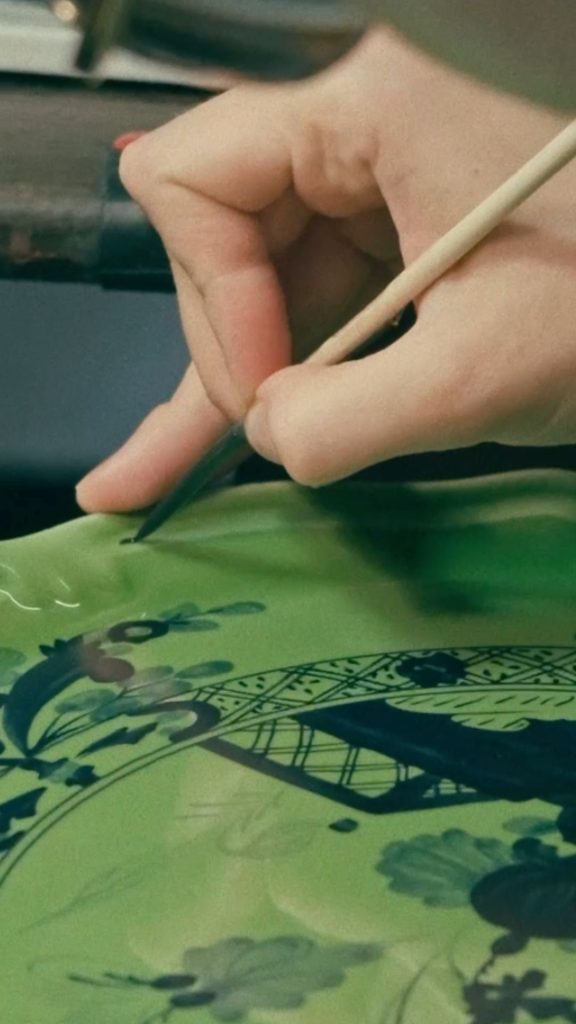
The creation of fine porcelain involves several irreducible steps: the shaping of clay, the application of glaze, the selection and mixing of colour, and the exposure to kiln temperatures that both test and transform the material. Ginori 1735's assertion—that every piece receives identical attention at each stage—speaks to a particular luxury proposition: consistency achieved not through standardisation but through sustained craft.
The shaping phase remains, as it has for nearly three centuries, fundamentally dependent on skill acquired through apprenticeship and repetition. A potter's hand must read the clay's plasticity, adjust pressure and speed, and anticipate how the form will contract in the kiln. Likewise, the application of colour demands knowledge of how pigments behave under extreme heat, how they interact with glaze chemistry, and which hues will emerge as intended from the firing chamber.
Fire as Creative Medium
The kiln represents both threat and opportunity in ceramic manufacture. Temperatures exceeding 1,200 degrees Celsius transform raw materials into glass-like surfaces and create permanent bonds between body and glaze. Yet this same process introduces variables—slight fluctuations in temperature, humidity within the chamber, the proximity of pieces to heat sources. Manufacturers of lesser ambition accept these as acceptable losses; Ginori 1735's historical practice suggests otherwise.
The house has maintained production facilities in Florence and in Doccia, a nearby district with centuries of ceramic heritage. Both locations remain active, preserving methods that privilege quality over volume and ensuring that the maker's eye—not algorithmic sorting—determines which pieces meet the standard for sale.
Colour as Signature
Within the lexicon of fine tableware and decorative ceramics, colour serves as both functional and aesthetic language. Ginori 1735's palette ranges from restrained neoclassical greys and whites—echoing the house's 18th-century origins under the patronage of Florence's merchant elite—to more daring contemporary hues. The decision to deploy boldness in colour requires confidence in craft; a poorly executed glaze or uneven firing renders audacious pigmentation inelegant or worse.
The brand's recent messaging emphasises this willingess to take chromatic risks, suggesting that the consistency of its process permits experimentation that smaller or less disciplined makers cannot safely attempt.
For collectors and those who commission bespoke services, Ginori 1735's reaffirmation of artisanal method offers something increasingly rare: a maker whose scale permits neither corners to be cut nor decisions to be deferred. The house remains a repository of Florentine craft tradition and a working proof that luxury in ceramics, as in other domains, ultimately rests on the willingness to invest labour where machines might substitute.
Key Facts
- Founding: 1735
- Primary Manufacture Location: Florence and Doccia, Tuscany
- Core Product Category: Handmade porcelain tableware and decorative ceramics
- Production Method: Artisanal, hand-shaped and hand-finished pieces
The Simply Luxury View
Ginori 1735's statement arrives at a moment when 'handmade' has become a marketing descriptor, often applied loosely to goods that incorporate only nominal human input. This house's clarification matters because it rejects the paradox that has compromised much contemporary luxury: the simultaneous pursuit of exclusivity and volume. By insisting that every piece receives identical attention across all stages, Ginori 1735 addresses a discerning collector's legitimate scepticism about whether artisanal claims are substantive or merely cosmetic.
Within the broader context of Florentine design heritage—a lineage that includes glassmaking, metalwork and textiles alongside ceramics—Ginori 1735 occupies a position of particular responsibility. As one of the few remaining large-scale porcelain workshops in Italy that has not outsourced production or substantially mechanised processes, it serves as a practical model for what sustained craftsmanship at commercial scale can achieve.
Official brand website: ginori1735.com
Imagery is used for editorial purposes. All rights remain with the respective owners, photographers and licensors.
Imagery courtesy of GINORI 1735 (@ginori1735).