
McQueen’s Renaissance: Angel Motifs and Heritage Tailoring Return to the Runway
AI-assisted voice playback. Starts only when you choose Play.
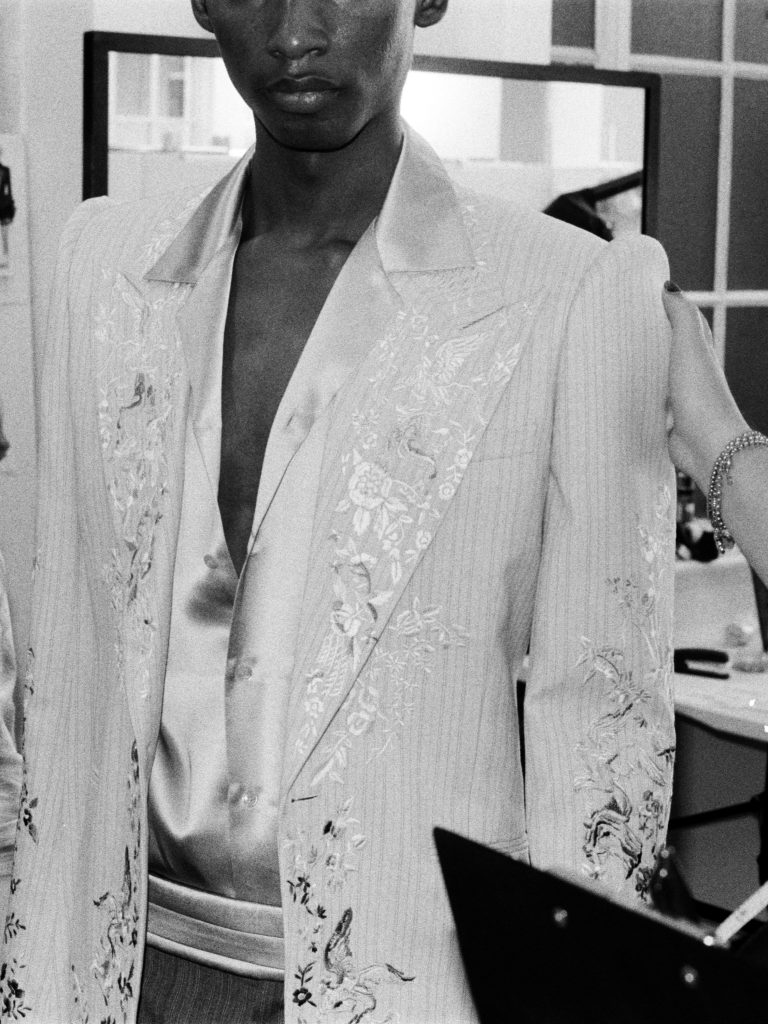
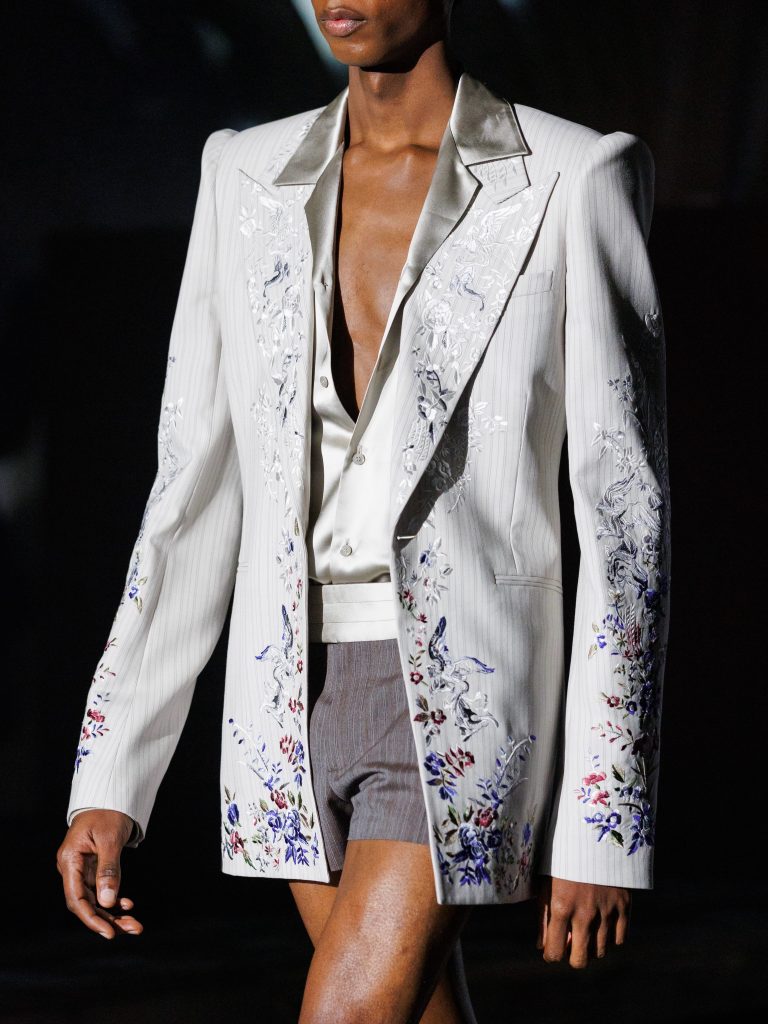
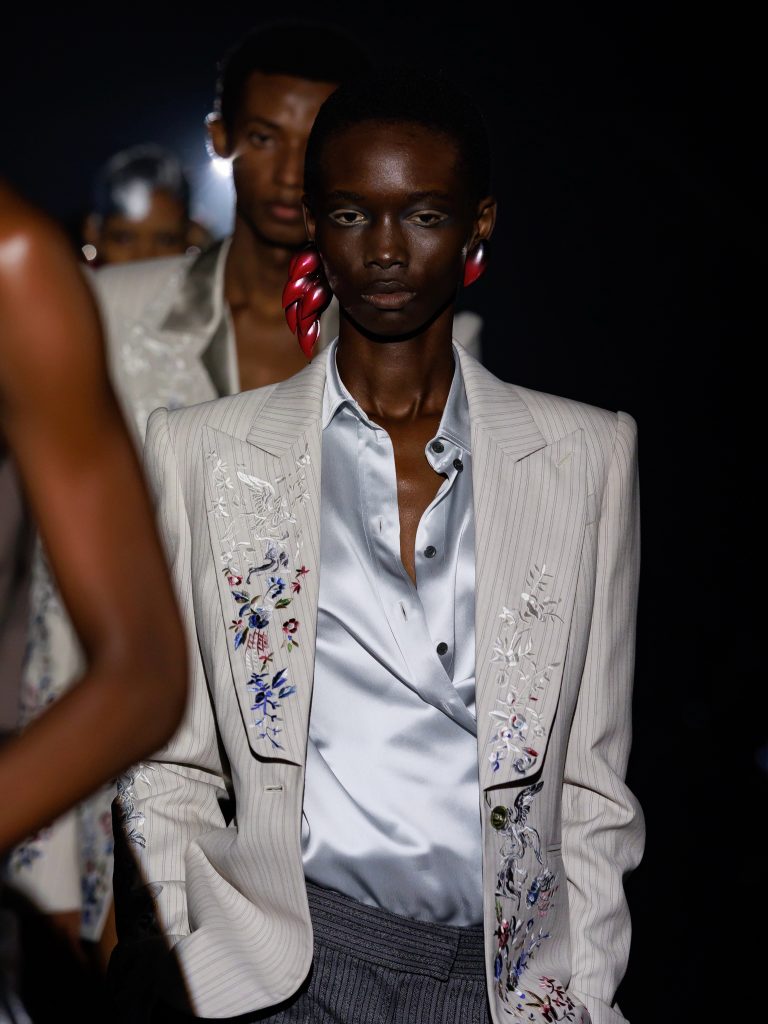
Alexander McQueen has long positioned itself at the intersection of British heritage craft and theatrical vision. The house's latest presentation—Looks 19 and 20 from the current collection—exemplifies this tension with particular grace: signature tailoring silhouettes rendered in heritage British wool, their severity interrupted by passages of exquisite hand embroidery.
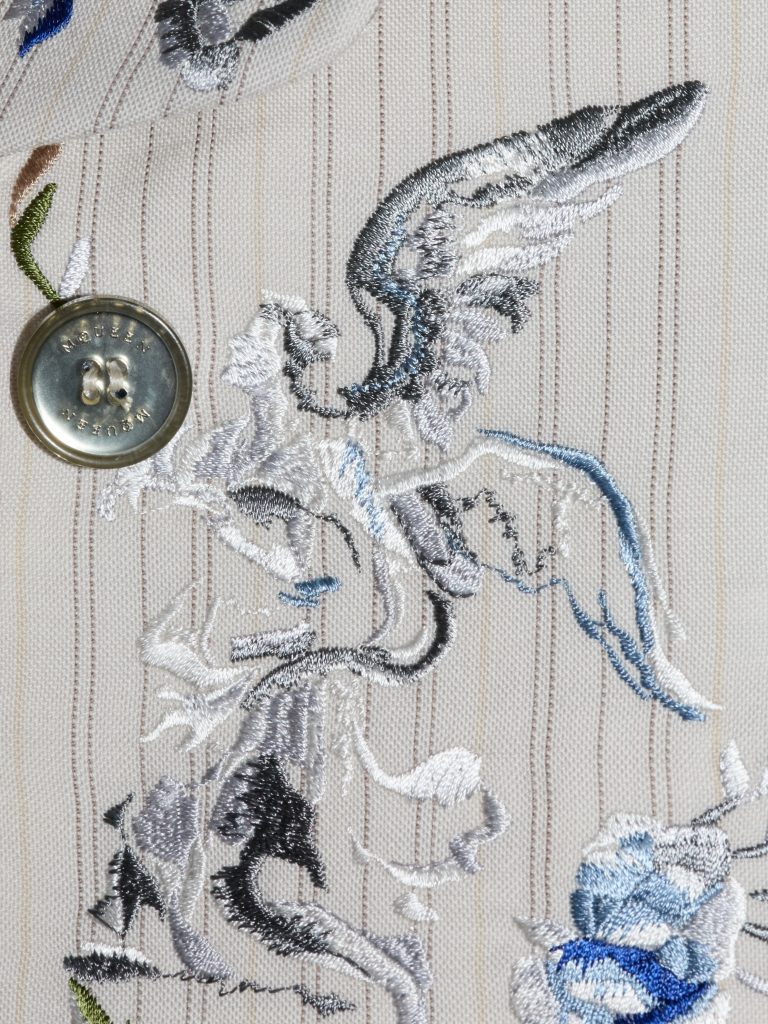
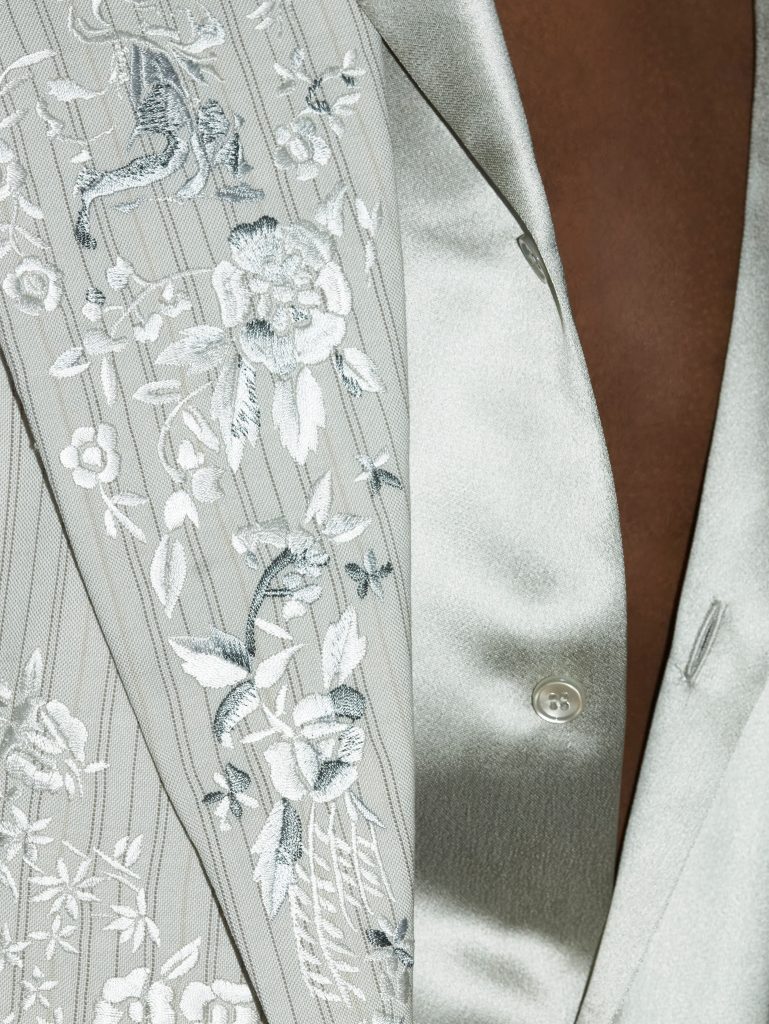
The collection's defining detail is a series of dégradé angel motifs, satin-stitched in a palette of colours drawn from Renaissance painting. This technique transforms garments that might otherwise read as austere into something more mystical and layered.
Craft and Composition
The construction speaks to McQueen's foundational philosophy. Heritage British wool—a material with deep roots in the tailoring traditions of Savile Row and beyond—provides the structural foundation. The choice is neither nostalgic nor purely technical; it signals a commitment to materials with provenance and performance.
Where the tailoring alone might evoke institutional severity, the embroidered angels introduce a competing aesthetic. The satin stitching creates subtle dimension and luminosity, catching light differently depending on viewing angle and distance. The Renaissance palette—likely drawing from hues found in Renaissance masters' pigments and dyes—softens what might otherwise be a austere formal vocabulary.
Direction and Visual Storytelling
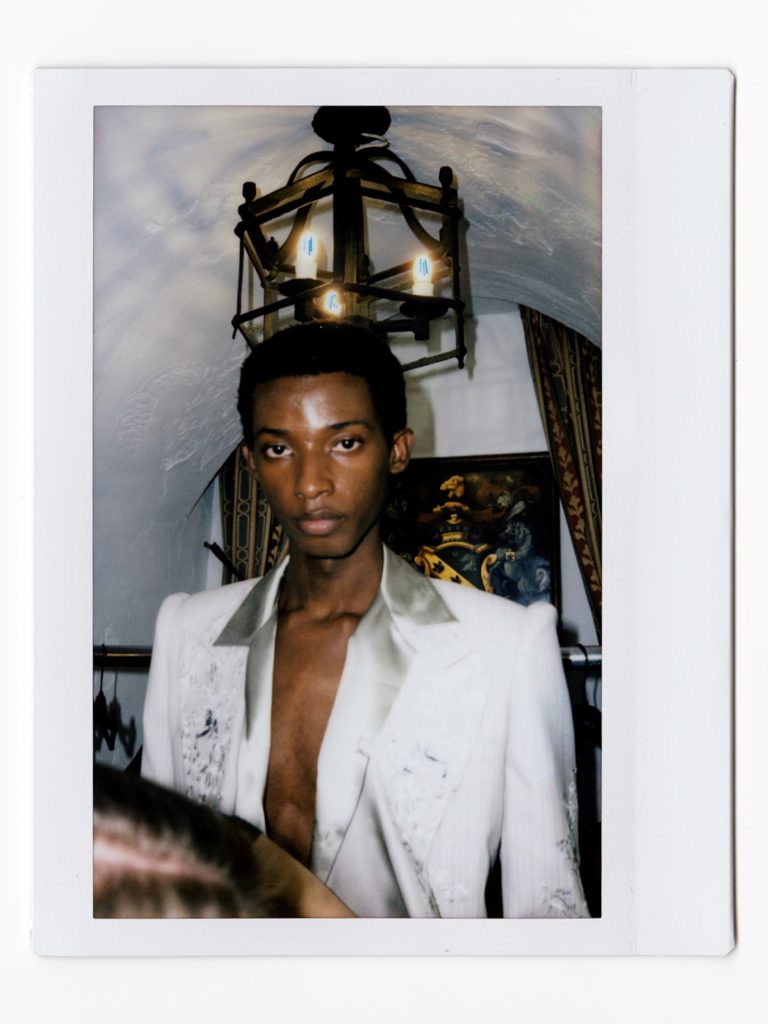
Creative Director Sean McGirr has shaped the presentation with meticulous attention to visual grammar. The campaign imagery, photographed by Ana Martí, Bettina Pittaluga, and Chris Shaw, positions these garments within carefully composed tableaux. The styling by Camille Waddington opts for clarity over embellishment, allowing the tailoring and embroidery to command full attention.
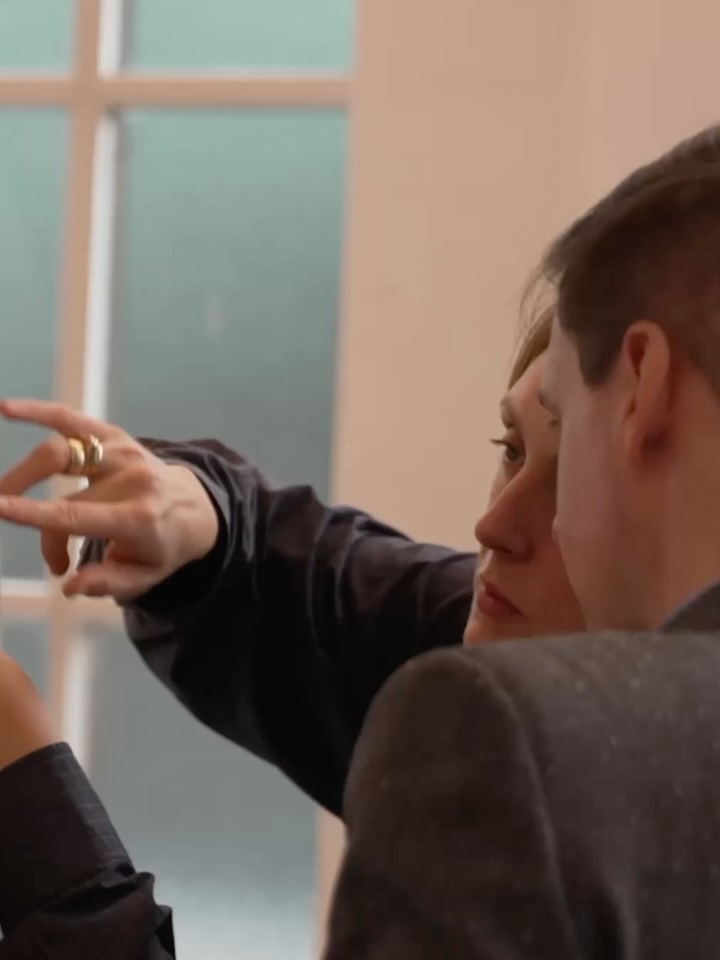
The production design, conceived by Tom Scutt and realised by La Mode en Images and Farago Projects, establishes an environment that feels neither runway-bound nor entirely theatrical. Lighting design by Matt Dawson emphasises the three-dimensionality of both fabric and stitch, whilst movement direction by Ryan Chappell introduces a considered physicality to the presentation.
Sensory and Narrative Dimensions
The collection benefits from an unusually layered production apparatus. Music composed by AG Cook, accompanied by Shards Voices choir, introduces an aural dimension that complements rather than overwhelms the visual language. The choice of choir—an ensemble form associated with institutional and sacred spaces—adds a counterpoint to the garments' earthly materiality.
These Looks represent a McQueen iteration that privileges restraint and precision. The devil, as ever in high fashion, resides in detail: in the density and colour modulation of the embroidery, in the fall of fabric that has been carefully cut and constructed, in the relationship between surface ornament and underlying structure. It is an approach that rewards close examination and sustained wear.
For a house that has built its reputation on dramatic presentation and technical virtuosity, this collection demonstrates that neither quality has dimmed. Rather, they have matured into something more considered. The angel motifs might read as historical quotation, yet their execution speaks to contemporary ambition: heritage materials and Renaissance colour palettes filtered through twenty-first-century sensibility and production values.
The result is tailoring that asks questions about ornamentation, materiality, and the relationship between classical restraint and embellished surface. In an era when luxury fashion often defaults to maximalism or minimalism, McQueen charts a more nuanced course.
Key Facts
- Primary Material: Heritage British wool
- Defining Detail: Dégradé angel motifs, satin-stitched in Renaissance-inspired colour palette
- Creative Direction: Sean McGirr
- Collection Reference: Looks 19 and 20
- Production Design: Tom Scutt
The Simply Luxury View
These Looks represent McQueen at a confident juncture: secure enough in its identity to reference both British tailoring traditions and Renaissance painting without apology or pastiche. The choice of heritage British wool signals seriousness of intent, whilst the dégradé angel embroidery—labour-intensive and detail-rich—reflects a belief that luxury resides in craft and precision rather than in novelty or volume.
For the discerning collector or wearer, the significance lies not in a single garment but in the philosophy it expresses. McQueen continues to argue that high fashion can absorb historical reference—whether material, artistic, or cultural—and render it contemporary through rigorous execution. The angel motifs are neither costume nor pastiche; they are an earnest exploration of how embellishment and tailoring might coexist.
Official brand website: alexandermcqueen.com
Imagery is used for editorial purposes. All rights remain with the respective owners, photographers and licensors.
Imagery courtesy of McQueen (@alexandermcqueen).