
Miró’s Paradox: When the Painter Who Vowed to Destroy Painting Returns to Canvas
AI-assisted voice playback. Starts only when you choose Play.
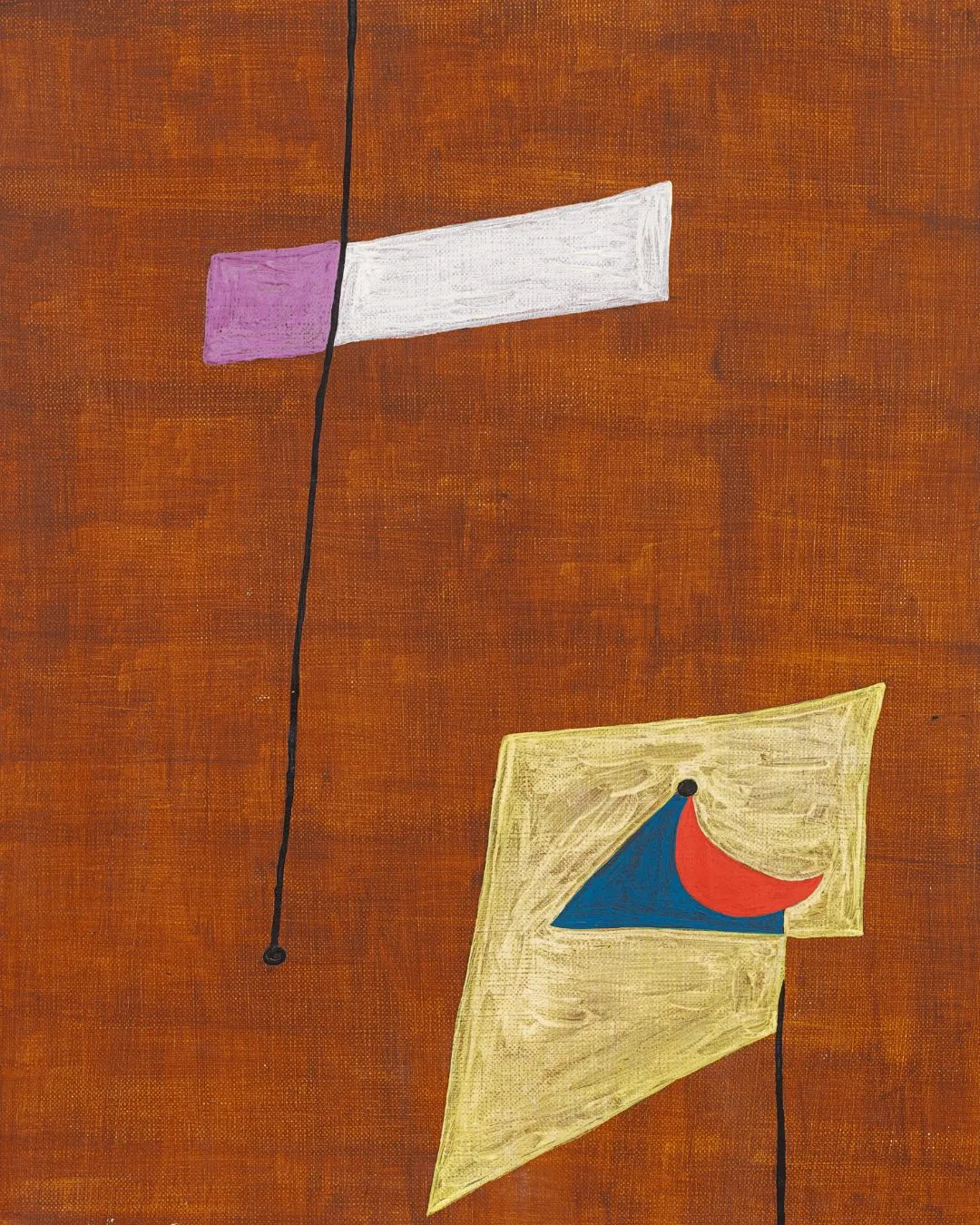
In the late nineteen twenties, Joan Miró stood at a precipice of his own making. Dissatisfied with the conventions of representational form, he declared war on the very materials that had defined his practice: brush, canvas, oil. He would assassinate painting itself, he vowed, and in its place conjure new languages from collage, from unconventional surfaces, from the liberation of constraint.
Yet the paradox that would haunt and ultimately define his creative life emerged almost at once. For even as he turned his back on traditional painting, even as he experimented with materials and approaches that seemed to render the canvas obsolete, he could not help but return. The brush would find him again. The oil would beckon. Because, as he himself admitted with characteristic clarity, he could be nothing other than a painter.
The Work of Resistance
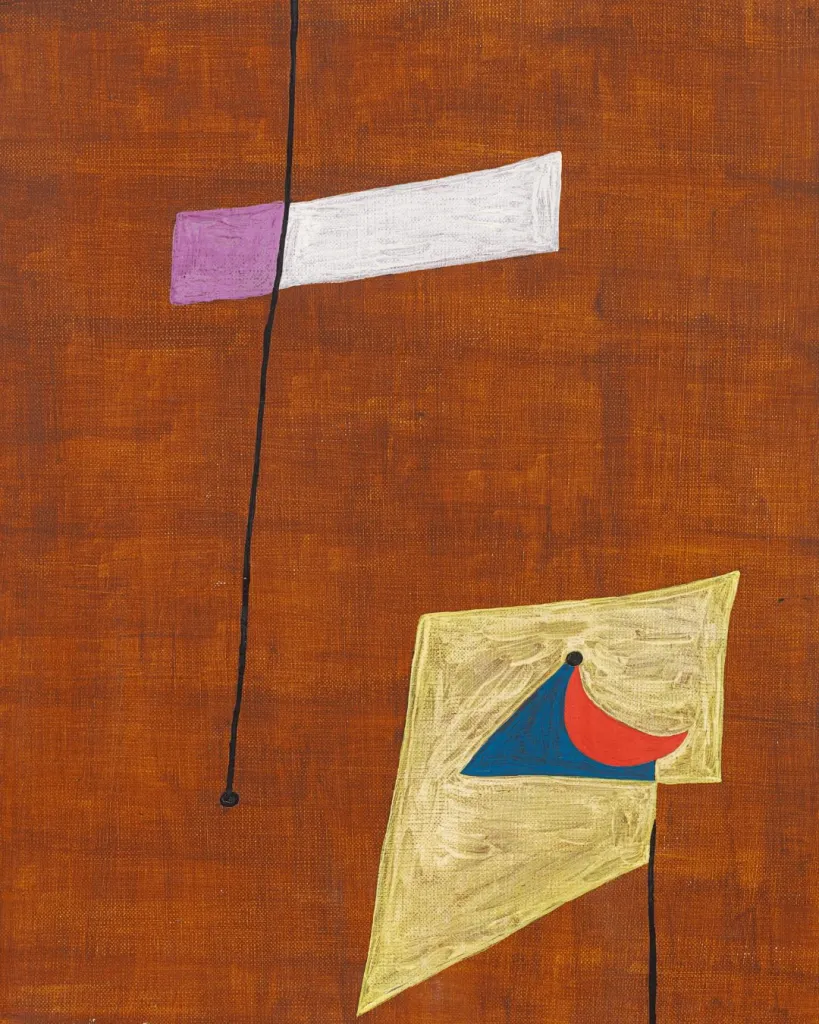
Peinture, executed in 1930 during this turbulent moment of aesthetic self-interrogation, belongs to a rare constellation of oil paintings Miró created precisely when his declaration of war against painting was at its most fervent. What emerges is luminous, ethereal, vivid, and unbroken—evidence that his rejection of representational realism had not emptied the canvas of poetry, but rather had intensified it. The work contains none of the narrative figuration that had occupied his earlier years, yet it vibrates with colour and form arranged in compositions that possess their own urgent logic.
This is not painting abandoned. This is painting reimagined from within its own materials. Miró's insistence that 'every challenge to painting is a paradox' becomes not a contradiction but a confession: the struggle with one's own medium, the refusal to accept its inherited language, can paradoxically deepen one's commitment to it. The artist does not escape painting by rejecting it. He saves it by forcing it to justify itself anew.
Provenance and Rarity
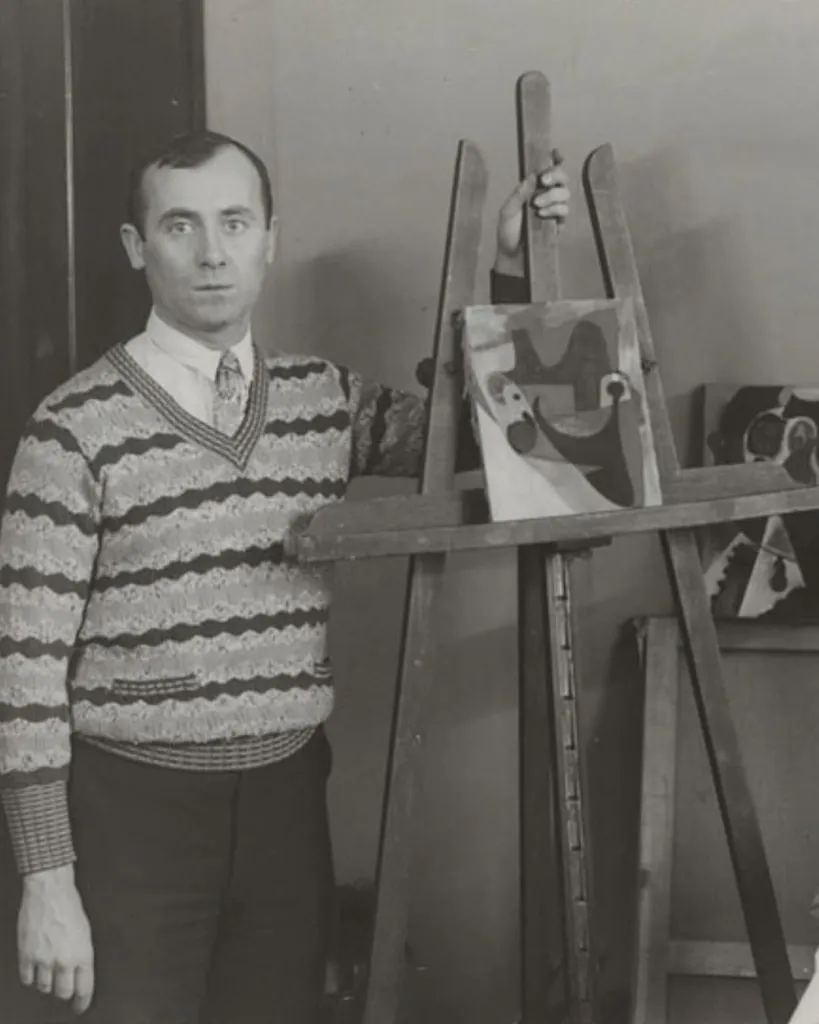
The painting's journey through the twentieth century speaks to the esteem in which it has long been held by those positioned to recognise its significance. It passed into the collection of Louis Clayeux, the early champion of Miró's work at Galerie Maeght, before moving to the distinguished collector Marcel Brient, in whose care it remained. That it has remained absent from public auction for nearly a century underscores both its rarity and the security of its stewardship within private hands.
Phillips will present Peinture at its Vente Art Moderne & Contemporain et Design in Paris on 21 October, offering collectors the rare opportunity to acquire a work that encapsulates one of modernism's most intellectually compelling moments: when an artist's rebellion against his own practice became, paradoxically, the vehicle for its deepest renewal.
The sale speaks not to market appetite alone, but to the enduring power of works that document artistic conviction at its most uncompromising. Miró's Peinture stands as proof that the greatest challenges to a medium need not diminish it. They can, instead, elevate it beyond the reach of convention altogether.
Key Facts
- Artist: Joan Miró
- Title: Peinture
- Date: 1930
- Sale: Vente Art Moderne & Contemporain et Design, Phillips Paris
- Date of Sale: 21 October 2026
- Previous Owners: Louis Clayeux (Galerie Maeght); Marcel Brient
The Simply Luxury View
This sale represents a significant moment for collectors and institutions tracking the evolution of early modernism. A painting from Miró's most conceptually experimental period, executed in oil at the moment when he was theoretically rejecting the medium, offers rare insight into the tension between artistic philosophy and creative instinct. Works from this specific moment—the early 1930s—are seldom offered, making this emergence particularly noteworthy.
The provenance through Clayeux and Brient establishes this as a work of recognised importance within advanced collecting circles throughout the twentieth century. Its nearly century-long absence from the market underscores both its rarity and the quality of stewardship it has received. For serious collectors of modernism, the opportunity to acquire a work of such historical significance and documented pedigree remains exceptionally uncommon.
Official brand website: phillips.com
Imagery is used for editorial purposes. All rights remain with the respective owners, photographers and licensors.
Imagery courtesy of Phillips (@phillipsauction).