
Piaget’s Gems Pop Ring: Colour as High Jewellery Philosophy
AI-assisted voice playback. Starts only when you choose Play.
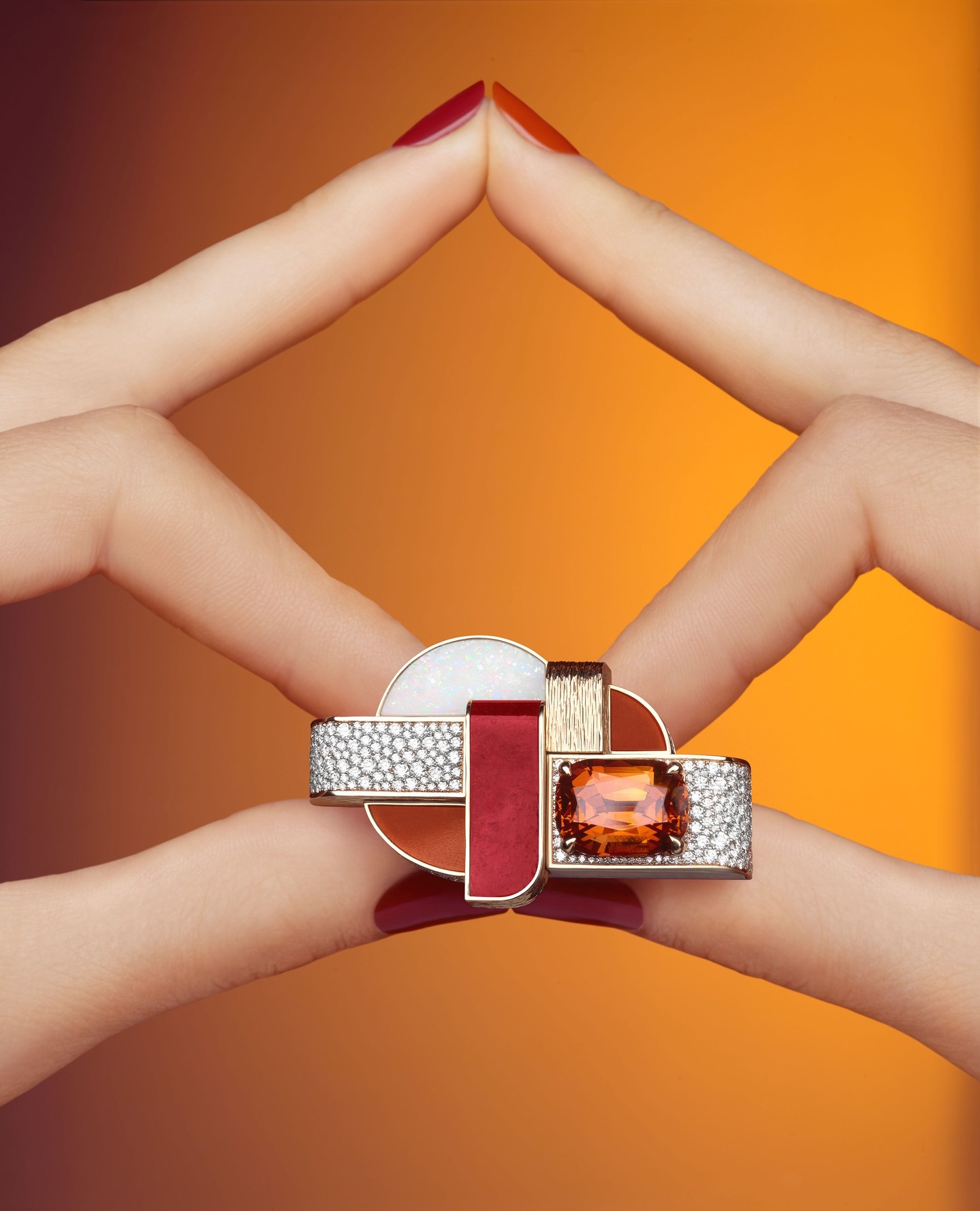
Piaget has long embraced chromatic intensity as a signature of its high jewellery vocabulary. The newly unveiled Gems Pop ring extends that philosophy into a composition of unapologetic colour—a convergence of five distinct gemstones that speak to the maison's confidence in mineral diversity and the interplay of hue.
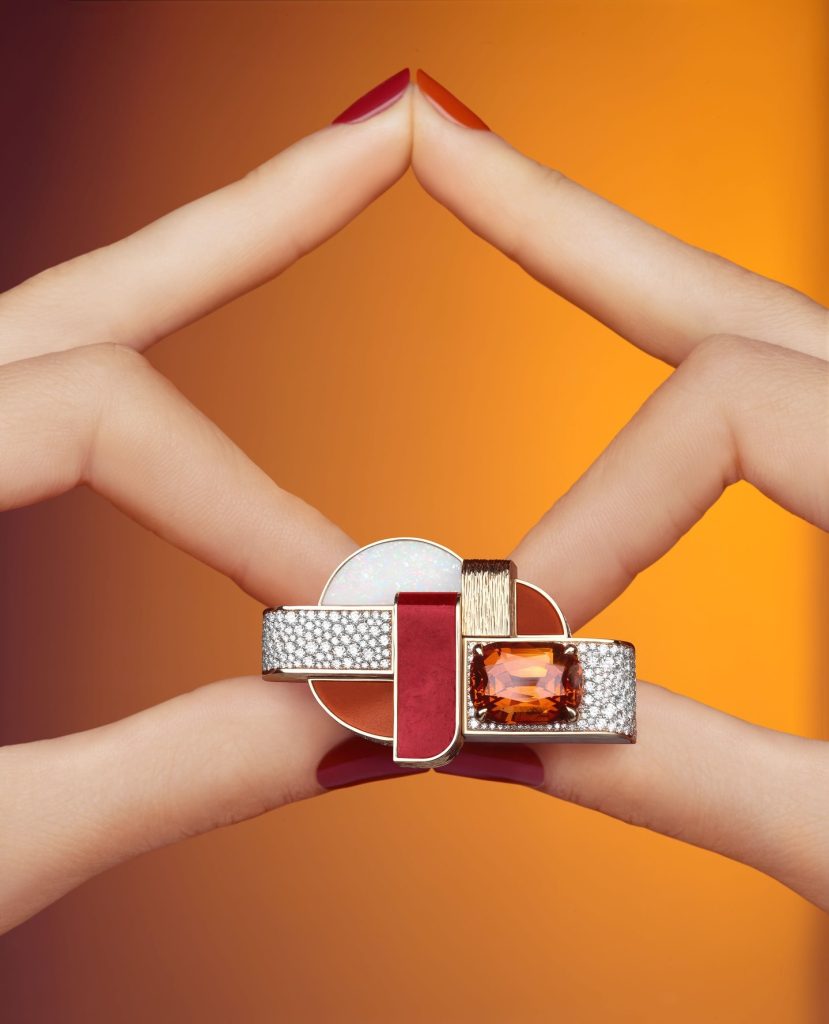
The ring brings together spessartite garnet, aventurine, orange thulite, white opal and diamond. Each stone carries its own optical character: the warm fire of spessartite, the subtle inclusions of aventurine, the peachy warmth of thulite, the milky diffusion of opal, and the structural clarity of diamond. Their assembly signals not restraint, but rather a deliberate rejection of it.
A Study in Gemstone Choreography
Where many contemporary high jewellers pursue monochromatic or strictly complementary palettes, Piaget's design approach here reads as deliberately playful. The term 'Pop' in the ring's name carries both visual and conceptual weight: these are colours that announce themselves, stones selected for saturation rather than subtlety. Yet the result avoids chaos, suggesting instead a carefully orchestrated dialogue between warm tones and contrasting luminosity.
The inclusion of aventurine—a quartz variety prized for its subtle, spangled appearance—introduces a textural counterpoint to the more vivid neighbouring stones. Thulite, a pink-to-orange variety of tourmaline, bridges spessartite's deeper warmth with opal's cooler iridescence. Diamond anchors the composition with traditional brilliance, grounding the chromatic experimentation in jewellery's most established form of luxury.
Piaget's Ongoing Relationship with Colour
The Gems Pop ring positions itself within a broader narrative at Piaget, where colour has never been incidental. The maison's high jewellery ateliers have consistently demonstrated technical mastery in stone setting, equally at home with sapphire, emerald and tourmaline as with the less predictable choices presented here.
This design reflects a contemporary sensibility within haute joaillerie: the notion that luxury and restraint are not synonymous, and that a collector's taste need not apologize for vibrancy. The ring's visual language—described by the maison as displaying 'character'—acknowledges that modern ownership of fine jewellery often favours personality over convention.
The Gems Pop ring exemplifies a particular moment in high jewellery where technical excellence and chromatic boldness converge. It is jewellery designed not to whisper, but to resonate—a statement that colour, in the hands of a maison with Piaget's heritage, remains one of luxury's most powerful narratives.
Key Facts
- Primary Gemstones: Spessartite garnet, aventurine, orange thulite, white opal, diamond
- Collection: Piaget High Jewellery
- Design Name: Gems Pop Ring
- Launch Date: September 2026
The Simply Luxury View
For the discerning collector, the Gems Pop ring represents a calculated departure from monolithic colour narratives in fine jewellery. Piaget's decision to unite five distinct gemstones—each with distinct optical properties and geological origins—speaks to a maison unafraid to challenge the minimalist aesthetic that has dominated luxury jewellery discourse. This is not novelty for its own sake; rather, it reflects a mature understanding that chromatic complexity, when executed with technical precision, reads as sophisticated rather than uncertain.
The ring signals a broader shift within Piaget's haute joaillerie practice: a recognition that contemporary ownership of fine jewellery increasingly values personality and visual presence. Where previous generations of high jewellery emphasised restraint and singular stone focus, designs like Gems Pop suggest that the next chapter privileges the dialogue between multiple materials. It is, in essence, a reclamation of colour as a legitimate and powerful expression of luxury.
Official brand website: piaget.com
Imagery is used for editorial purposes. All rights remain with the respective owners, photographers and licensors.
Imagery courtesy of Piaget (@piaget).