
Porsche’s Winter Wheel-and-Tyre Strategy: Engineering Composure Through Season
AI-assisted voice playback. Starts only when you choose Play.
The transition from autumn into winter demands a fundamental shift in how a motor car meets the road. Porsche, long schooled in the principle that chassis and tyre work as a unified system, has now crystallised that philosophy into dedicated winter wheel-and-tyre specifications—offerings built expressly for the unpredictability that defines the colder months.
Rather than present winter tyres as a grudging compromise, Porsche frames them as essential engineering: components calibrated to maintain the handling precision and stability for which the marque is known, even when frost and variable surfaces test that composure.
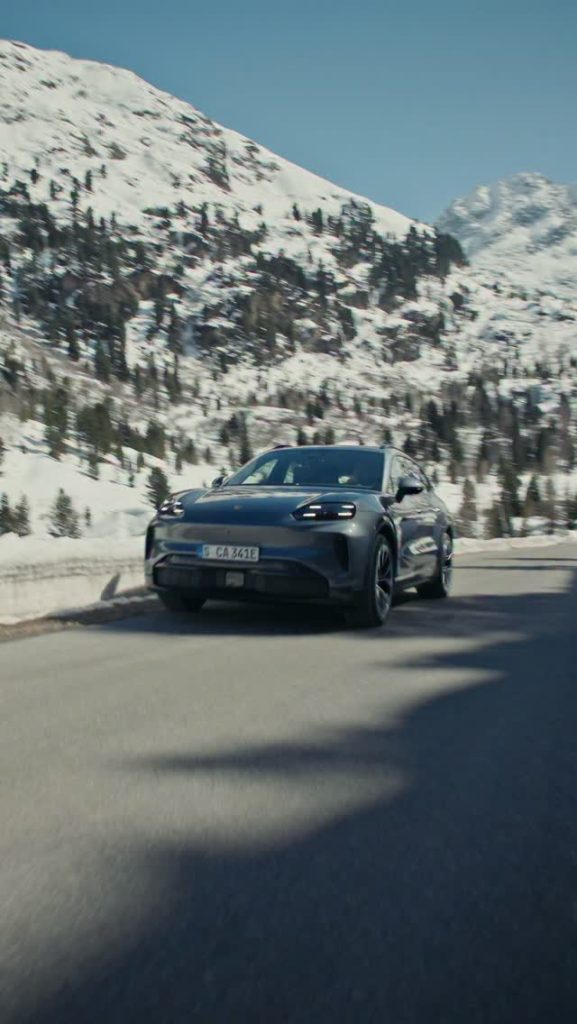
Engineering for Thermal Transition
Winter driving introduces a series of physical challenges that summer and all-season compounds cannot adequately address. Rubber formulations harden in colder air; grip diminishes on ice and compacted snow; wet surfaces present their own adhesion curves. Porsche's winter sets acknowledge these shifts not as minor inconveniences but as design parameters that demand their own solutions.
The engineering brief centres on three interlocking demands: control, stability and what Porsche terms 'driving confidence.' These are not marketing abstractions but measurable properties—braking distances, cornering grip, traction under acceleration, and the tactile feedback through steering and chassis that allows a driver to sense the limit before crossing it. Winter tyres optimised for lower temperatures begin to perform at their best precisely where summer compounds falter.
The Cayenne Electric Context
The announcement accompanies the Cayenne Electric, Porsche's fully electric interpretation of its flagship sport utility vehicle. The Cayenne Electric consumes 19.7 to 21.8 kWh per 100 kilometres (WLTP combined) and emits zero grams of CO₂—performance metrics that situate it within the top efficiency classification available.
The pairing of winter wheels and tyres with the electric Cayenne underscores a broader truth: that seasonal tyre changes remain relevant even as powertrains evolve. The electric platform does not diminish the physics of cold-weather grip; if anything, the instant torque delivery of electric motors makes precise tyre response—and the stability that winter specifications provide—still more consequential.
Seasonal Duty and Practical Ownership
For owners in climates where winter arrives with severity, the decision to adopt dedicated wheel-and-tyre sets has long been both practical and legally mandated across much of Europe and North America. Porsche's approach formalises this into an integrated offering rather than leaving owners to source components independently.
The concept appeals to a particular type of owner: one for whom the Porsche remains a year-round instrument rather than a fair-weather plaything. The winter sets allow that continuity of character—the responsiveness, the composed grip, the confidence—to persist through the season when conditions would otherwise demand compromise.
Winter wheel-and-tyre engineering may lack the aesthetic drama of a new body colour or interior trim, yet it represents where Porsche's thinking has long resided: in the unglamorous, exacting disciplines of suspension geometry, rubber compound, and the marriage between car and road. That such sets now appear as a formal product offering merely acknowledges what discerning owners have understood for years—that true performance, season to season, begins at the point of contact.
Key Facts
- Product: Porsche winter wheel-and-tyre sets
- Application: Cayenne Electric
- Efficiency (Cayenne Electric): 19.7–21.8 kWh/100 km (WLTP combined); 0 g/km CO₂ emissions
- Engineering Brief: Control, stability, and driving confidence in colder temperatures and changing surfaces
The Simply Luxury View
For the owner of a high-performance Porsche in a climate where winter demands respect, the availability of factory-endorsed wheel-and-tyre specifications represents not luxury but necessary stewardship. It reflects a manufacturer confident enough in its engineering to extend its precision into the overlooked realm of seasonal equipment.
The Cayenne Electric's inclusion in this narrative is noteworthy: it signals Porsche's conviction that the transition to electrified powertrains does not diminish the relevance of tyre engineering or the expectation of year-round capability. Winter specifications become, in essence, a prerequisite to the promise of control and stability that defines the marque—a promise that the electric age does not retire.
Official brand website: porsche.com
Imagery is used for editorial purposes. All rights remain with the respective owners, photographers and licensors.
Imagery courtesy of Porsche (@porsche).