
Prada Galleria: A Century Rendered as Living Archive
AI-assisted voice playback. Starts only when you choose Play.
Within the dense intellectual geography of Milan, Prada has opened another room—not to sell, but to think. The Prada Galleria represents something the house has long understood: that luxury, at its finest, is not a fixed monument but a living conversation. Here, more than a hundred years of Prada's family archive and creative endeavour are not merely preserved but activated, allowed to breathe and exchange with the present moment.
The space embodies a principle that has quietly governed the house since its founding: that Prada exists in dialogue, not isolation. With artists, architects, filmmakers, athletes—the full spectrum of human culture. The Galleria is the physical manifestation of that belief.
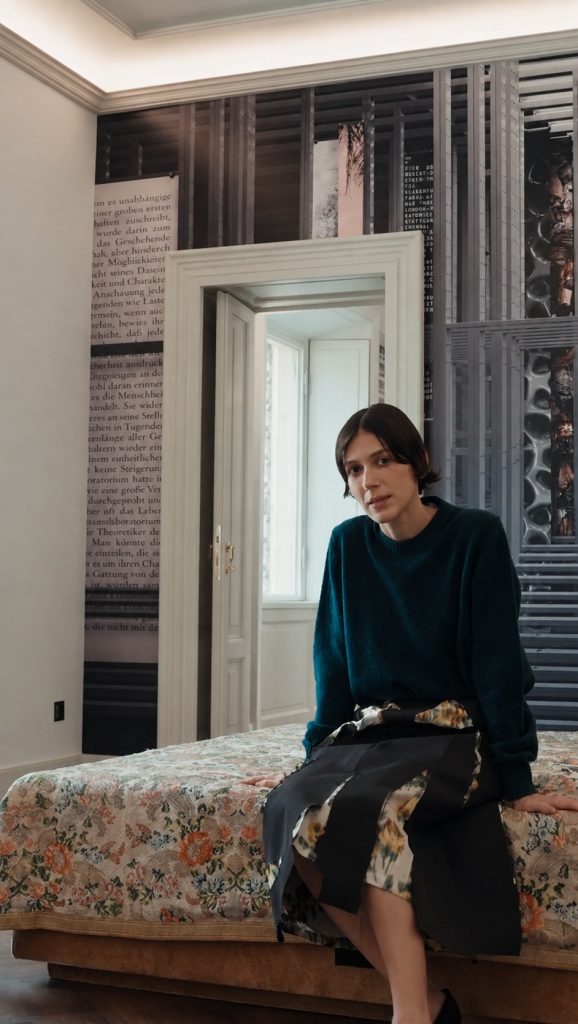
Architecture as Philosophy
What distinguishes the Galleria from a conventional archive or museum is its animating principle: it functions as an extension of Prada's design practice rather than a retrospective holding pattern. The building itself becomes part of the conversation—its architecture not a neutral container but an active participant in how history and innovation are perceived.
The Milanese setting is deliberate. Milan has long been Prada's laboratory, the city where the house's DNA was first synthesized and from which its aesthetic principles radiate outward. To open the Galleria here acknowledges both gratitude and rootedness, whilst asserting that Prada remains fundamentally committed to the intellectual and creative milieu that made it possible.
Continuous Exploration
The Galleria's curatorial ambition mirrors what Prada has articulated through its collections and patronage for decades: the house does not regard itself as a fixed identity awaiting preservation but as an experiment in perpetual motion. Each season, each collaboration, each exhibition represents a new interrogation of form, material, meaning and possibility.
By opening this space, Prada invites visitors—whether collectors, curators, students of design or simply the curious—to witness that process. The Galleria becomes a place where the archive is not sealed off behind museum glass but activated through encounter with contemporary art, film, sport and thought. It is stewardship of the past conceived as a platform for the future.
A Venue for Dialogue
The inaugural collaboration with Tuba Avalon signals the Galleria's intention to engage with voices beyond fashion. Avalon's practice—rooted in visual culture, performance and conceptual rigour—represents exactly the kind of artistic intelligence the house seeks to amplify. The pairing suggests that the Galleria will function as a laboratory for cross-disciplinary exchange rather than a monument to commercial achievement.
In this respect, the Galleria joins a lineage of Prada initiatives—the Fondazione Prada in Venice, the brand's long engagement with cinema, its commissioning of architects and artists—that reveal the house's fundamental conviction: that luxury culture is most vital when it remains porous, curious and willing to be changed by what it encounters.
The opening of the Prada Galleria marks not an endpoint but a threshold. It declares that for a house now in its second century, history is not a weight to be carried but a catalyst for continued invention. In Milan, Prada has given itself a new instrument—a space in which to think, exhibit, provoke and imagine what comes next.
Key Facts
- Location: Milan
- Brand Heritage: Over one century of family and company history
- Inaugural Collaboration: Tuba Avalon
- Core Principle: Dialogue with art, architecture, cinema, culture and sport
The Simply Luxury View
The Prada Galleria represents a sophisticated evolution in how established luxury houses engage with their own heritage. Rather than creating a conventional corporate museum, Prada has conceived a venue rooted in active curation and artistic exchange—one that treats its century-long archive as a living resource rather than a sealed historical artifact. This approach reflects a broader luxury ethos: that true legacy accrues not through static preservation but through dialogue with contemporary culture.
For collectors and patrons of contemporary art, the Galleria's significance lies in its commitment to cross-disciplinary engagement. By commissioning artists like Tuba Avalon to respond to and reinterpret the Prada archive, the house signals that it views its own history as material for creative interrogation. It is a model increasingly adopted by heritage luxury brands seeking to remain culturally vital without abandoning the intellectual and material foundations that made them possible.
Official brand website: prada.com
Imagery is used for editorial purposes. All rights remain with the respective owners, photographers and licensors.
Imagery courtesy of Prada (@prada).