
Six Decades of Distinction: Four Seasons Marks 65 Years of Redefining Luxury Hospitality
AI-assisted voice playback. Starts only when you choose Play.
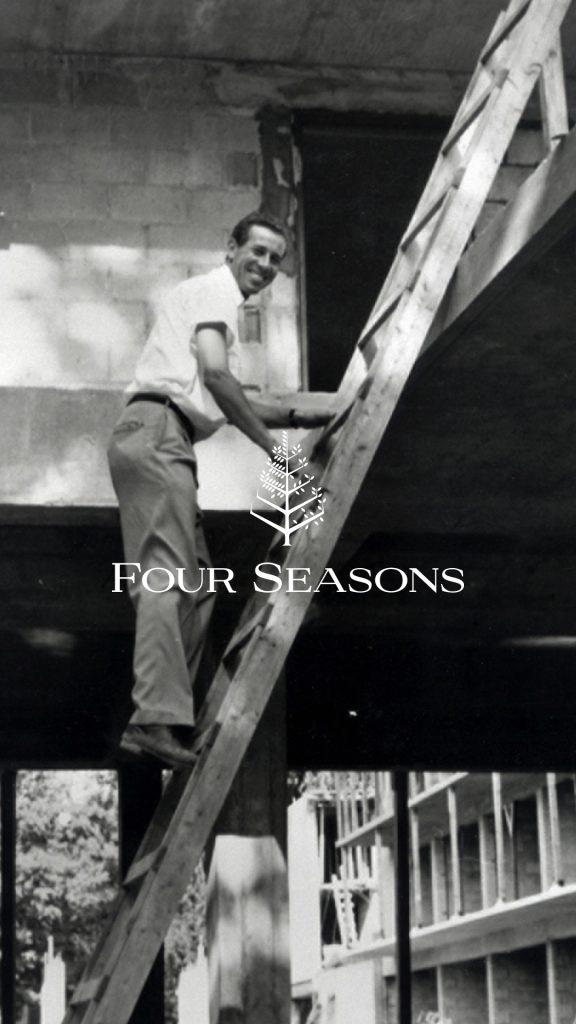
In 1961, when Isadore Sharp opened the doors of the first Four Seasons in Toronto, he articulated a vision that departed fundamentally from the transactional nature of conventional hospitality. Rather than conceiving of a mere hotel—a functional shelter for the travelling public—Sharp imagined an environment where genuine care would underpin every interaction, where staff would recognise guests not as room numbers but as individuals worthy of intentional attention.
Nearly seven decades later, that founding principle endures as the philosophical bedrock of a global luxury institution, now marking its 65th anniversary with a quiet acknowledgement of the distance travelled and the philosophy that has remained unshaken.
The Architecture of Care
What distinguished Four Seasons from its competitors was not architectural grandeur alone, though that would follow, but rather an operational commitment to what might be termed 'deep personalisation'. Long before contemporary hospitality spoke of bespoke experiences or algorithmic personalisation, Four Seasons trained its staff to observe, remember and anticipate—to transform anonymity into recognition.
This philosophy manifested across every operational domain: from housekeeping protocols that treated each room as an extension of the guest's own home, to concierge services that prioritised solving problems over selling services, to culinary teams who understood that luxury dining transcends menu engineering and resides in the quality of attention paid to individual preference and dietary nuance.
Global Expansion and Consistency
The expansion from Toronto across continents presented an intricate challenge: how to maintain a philosophy rooted in personal attention within an organisation that would eventually encompass dozens of properties across multiple continents, each operating within distinct cultural and regulatory environments.
Rather than dilute the founding vision through inevitable compromise, Four Seasons established itself through meticulous recruitment, extensive staff training programmes and a decentralised operational model that empowered property-level leadership to adapt the philosophy to local contexts whilst preserving its essential character. This balance between consistency and contextual adaptation became the company's defining operational characteristic.
A Forward-Looking Legacy
The 65th anniversary marks not a retrospective pause but a moment of reflection upon principles that continue to guide future expansion. As the contemporary luxury market fragments into competing models—the boutique, the experiential, the ultra-high-net-worth exclusive—Four Seasons has maintained its heterodox position: accessible luxury predicated upon service excellence rather than scarcity or architectural spectacle.
Looking forward, the organisation continues to extend its vision toward an ideal where every destination engagement, every journey, and every experience bears the imprint of individual consideration. In an era of increasing standardisation and digital mediation of hospitality, this commitment to knowledge of the guest—to being truly known—represents a positioning that grows more distinctive, not less.
The milestone reflects not the achievement of a final destination but the refinement of a commitment that began in Toronto and continues to shape the expectations of discerning travellers worldwide. Four Seasons' 65 years represent a sustained argument for the enduring value of genuine care within the luxury sector—an argument whose resonance shows no sign of diminishing.
Key Facts
- Founded: 1961
- Founding Location: Toronto, Canada
- Founder: Isadore Sharp
- Anniversary Milestone: 65 years (2026)
The Simply Luxury View
Four Seasons' 65th anniversary is significant not for longevity alone but for the consistency with which it has maintained a philosophy fundamentally at odds with the prevailing logic of luxury maximisation. Where competitors pursued scale, signature architecture or celebrity positioning, Four Seasons invested in the intangible—staff training, operational systems designed for personalisation, and a corporate culture that treats service excellence as a non-negotiable baseline rather than a differentiator.
This approach positioned the brand as foundational to the expectations of informed luxury travellers across generations. The company established a template—now widely emulated but rarely matched—in which luxury hospitality derives its primacy from the quality of human attention rather than material extravagance. In 2026, when bespoke and personalised service have become marketing ubiquity, Four Seasons' consistent delivery of that promise across a global estate represents perhaps its most durable competitive advantage.
Official brand website: fourseasons.com
Imagery is used for editorial purposes. All rights remain with the respective owners, photographers and licensors.
Imagery courtesy of Four Seasons Hotels | Resorts (@fourseasons).