
Stefania Arrives in London: Four Generations of Roman Culinary Heritage
AI-assisted voice playback. Starts only when you choose Play.
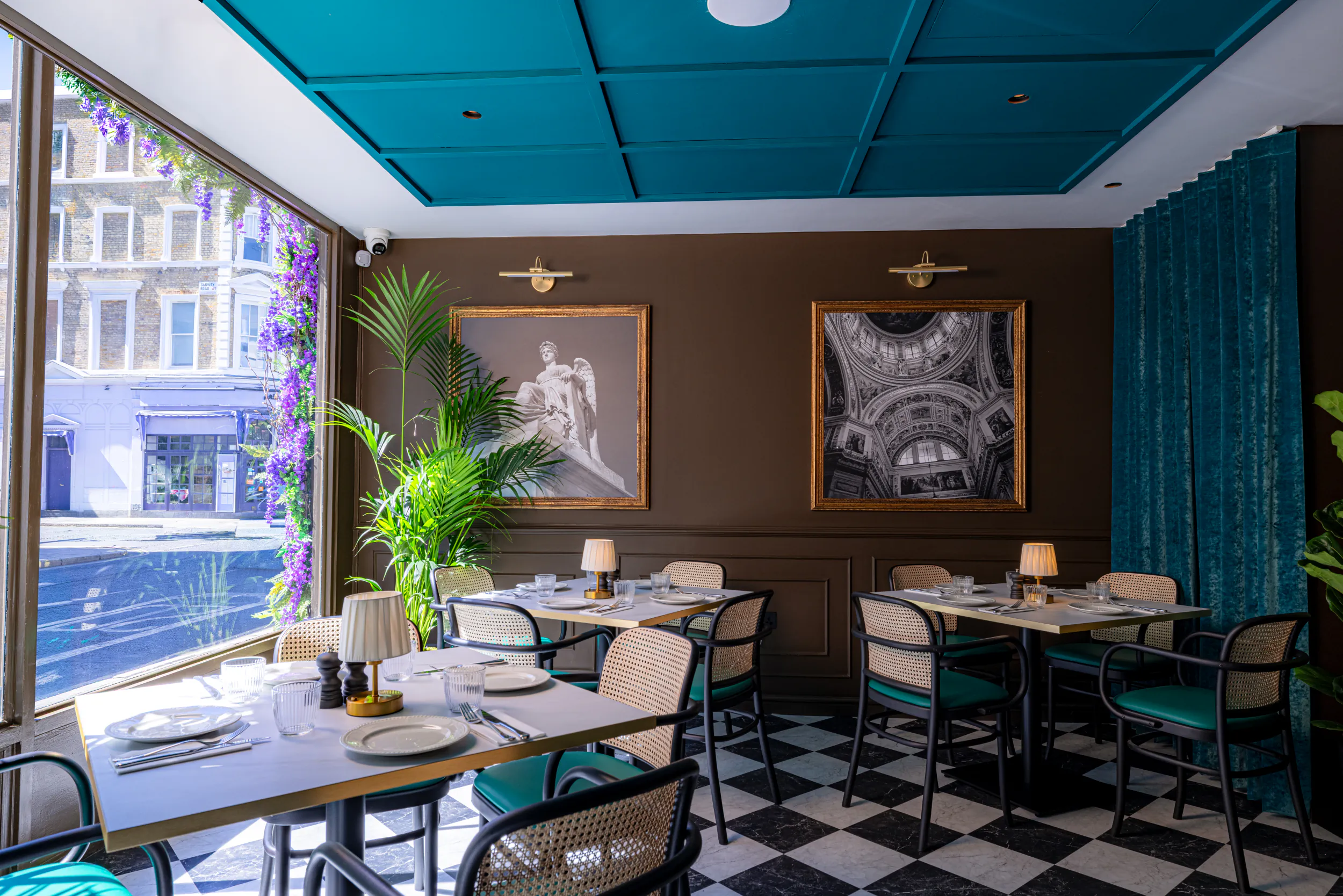
The arrival of Stefania in London's Westbourne Grove represents more than a restaurant opening; it signals the westward passage of a Roman culinary lineage that has quietly flourished across four generations and now reaches beyond its Malaysian stronghold.
Under the stewardship of chef Diego Reali, the restaurant carries forward the exacting standards and deeply rooted techniques learned from his mother, Stefania Cristofari, and his grandmother—custodians of a cooking tradition that traces its origins to Rome itself and extends back to 1958.
A Legacy Rooted in Rome
The Reali family's connection to Italian cooking runs deeper than a profession; it constitutes a domestic inheritance. Born and raised in Rome, Diego Reali acquired his culinary education not through formal training alone, but through years of observation and participation in his family's kitchen. His mother, Stefania Cristofari, and his grandmother represented the living link to Roman cookery—the kind that exists in households, passed between generations through repetition, correction and taste rather than documentation.
The family's founding moment, marked by his great-grandfather's establishment of their culinary venture in 1958, coincided with a particular moment in post-war Rome. That era witnessed both the preservation of traditional Roman dishes and the gradual evolution of how Italian cuisine would be understood and shared beyond Italy's borders. The Reali-Cristofari families chose to maintain fidelity to their Roman roots, resisting the pull towards the more widely recognised Italian culinary narratives that emerged during the latter half of the twentieth century.
The Pork-Free Philosophy
A distinguishing feature of Stefania's approach lies in its commitment to a pork-free menu—a deliberate culinary principle that sets the restaurant apart from conventional Italian dining. Rather than representing a limitation, this framework demonstrates how traditional Roman cooking encompasses considerable breadth and sophistication without relying on the cured meats and pork products that dominate many perceptions of Italian food.
This restriction, rooted in the family's own practices and preferences, necessitates a more imaginative engagement with Rome's culinary traditions. It demands deeper knowledge of fish preparations, vegetable cookery, beef and poultry techniques, and the subtle interplay of herbs, oils and regional ingredients that characterise authentic Roman cuisine at its most refined. The pork-free stance thus becomes not a subtraction but a particular expression of Roman gastronomic identity.
Establishing a Presence Beyond Kuala Lumpur
Stefania's prior success in Kuala Lumpur established the foundation for international expansion. The Malaysian capital, with its discerning international community and receptiveness to authentic global cuisines, proved fertile ground for the family's Roman traditions. The restaurant cultivated a reputation for uncommon fidelity to source recipes and techniques, drawing both Italian expatriates and adventurous local diners seeking the genuine article rather than interpretations.
The decision to establish a London presence follows a carefully considered trajectory. Westbourne Grove, within the Notting Hill precinct, positions Stefania amongst London's established food culture whilst maintaining proximity to a neighbourhood known for independent dining establishments and culinary exploration. London's food scene, increasingly attuned to provenance and authenticity, provides receptive context for a restaurant built upon family recipe and multi-generational technique.
The Fourth Generation's Stewardship
Chef Diego Reali's role as the fourth-generation custodian carries particular significance. Having inherited not merely recipes but a philosophical approach to Roman cooking, he shoulders responsibility for both preservation and subtle evolution. The challenge facing any fourth-generation proprietor involves honouring ancestral practice whilst demonstrating the vitality and relevance of that tradition to contemporary diners.
Reali's positioning of the restaurant under his mother's name—Stefania—constitutes an explicit acknowledgment of his matrilineal culinary inheritance. This naming convention honours the women through whom the family's cooking knowledge passed most directly, whilst simultaneously asserting that Roman cooking, in this family's tradition, belongs to no single gender but represents a shared household practice and patrimony.
What Defines Roman Authenticity
Rome's cuisine carries a particular character within Italy's regional diversity. Unlike the cream-based preparations of the north or the tomato-forward cooking of Naples and the south, Roman food emphasises simplicity, seasonality and the quality of individual ingredients. Dishes tend toward the archetypal: pasta carbonara, cacio e pepe, carciofi alla romana. Yet within this apparent simplicity lies considerable technical refinement.
The Reali family's four-decade tenure in Rome, followed by their Malaysian success, positions them to articulate this specific Roman identity to London diners who may possess only generalised notions of Italian cuisine. The pork-free approach further clarifies their particular Roman vision, demonstrating that authentic regionalism proves more distinctive—and ultimately more interesting—than broad continental statements.
Stefania's London launch represents the culmination of a patient, multi-generational project: the careful transmission of culinary knowledge from household to establishment, and from one city to another, without dilution or compromise.
For London's dining public, the restaurant offers access to a particular and specific vision of Roman cooking—one shaped not by contemporary trends or commercial calculation, but by the accumulated preferences, techniques and standards of a single family across nearly seven decades. In an era of rapid culinary reinvention, such deliberate continuity constitutes its own form of luxury.
Imagery is used for editorial purposes. All rights remain with the respective owners, photographers and licensors.