
Stella McCartney’s Patchwork Denim Merges Artisanal Craft with Environmental Stewardship
AI-assisted voice playback. Starts only when you choose Play.
Stella McCartney has long positioned sustainability as central to her creative vision rather than peripheral to it. Her latest Winter 2026 offering underscores this philosophy through a considered approach to denim construction and accessory design that honours both craft and environmental responsibility.
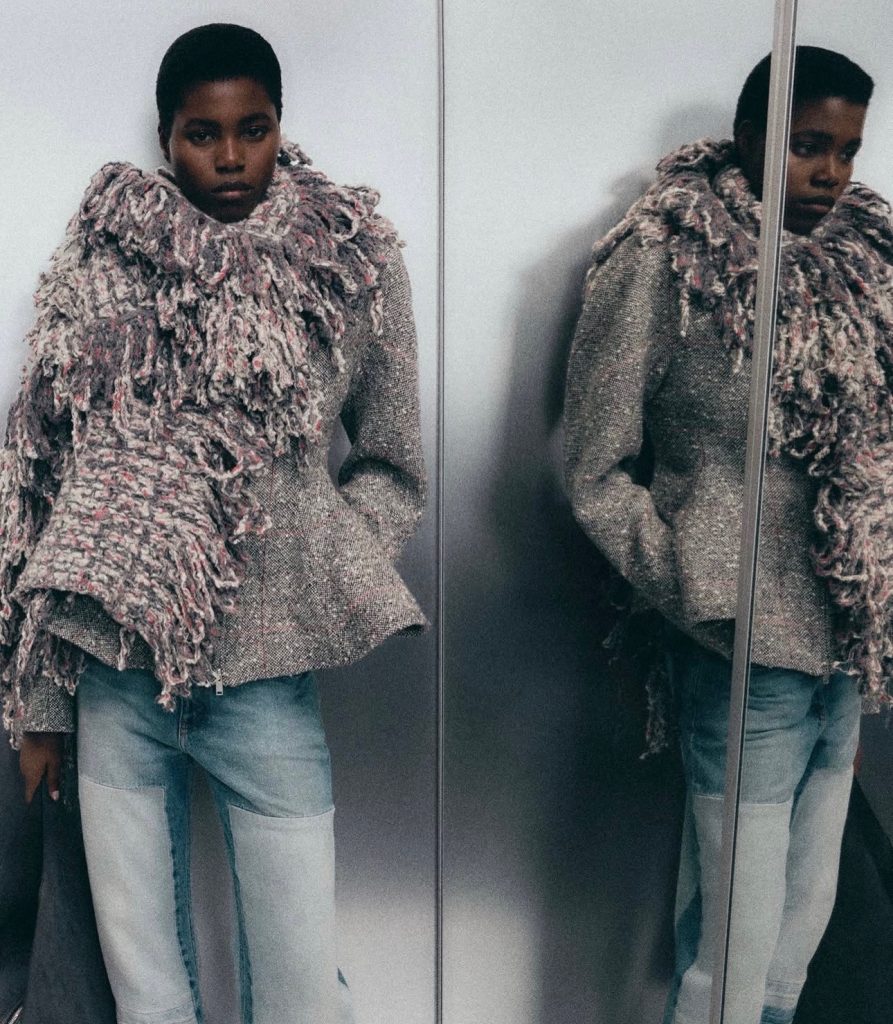
The collection's focal point—a pair of patchwork jeans constructed from contrasting panels of organic cotton denim in light and medium blue vintage washes—represents a deliberate exercise in fabric storytelling. By juxtaposing tonal variations across the garment's silhouette, McCartney moves beyond the conventional monochromatic jean, creating visual complexity through textile dialogue rather than embellishment.
The Case for Organic Cotton
Organic cotton cultivation eliminates synthetic pesticides and chemical inputs that conventional farming relies upon, reducing environmental burden at the source. The production method conserves water—consuming approximately 91 per cent less than conventional alternatives—whilst simultaneously protecting soil integrity and local waterways. For a house built on the principle that luxury need not compromise ecological wellbeing, this choice reflects authenticity rather than marketing gesture.
The vintage wash applied to both panels of the patchwork jean suggests material history without actually requiring archive sourcing. This technique, when executed with precision, imbues a garment with a sense of lived-in authenticity whilst maintaining the consistency required for commercial production.
The Appaloosa and Vegan Innovation
Accompanying the jeans in the presentation is the Appaloosa shoulder bag, handcrafted from vegan alternatives to suede by Italian artisans. The collaboration between design directive and traditional craft represents the brand's ongoing investment in regions historically associated with leather and textile excellence. By employing artisanal techniques whilst substituting animal-derived materials with laboratory-developed alternatives, McCartney sidesteps the false binary between quality and ethics.
The Appaloosa's designation as 'handcrafted' signals that vegan materials do not necessitate industrial automation; skilled labour remains integral to its production. This stands as a rebuttal to the notion that sustainable fashion requires compromise on construction or tactile refinement.
Styling as Narrative
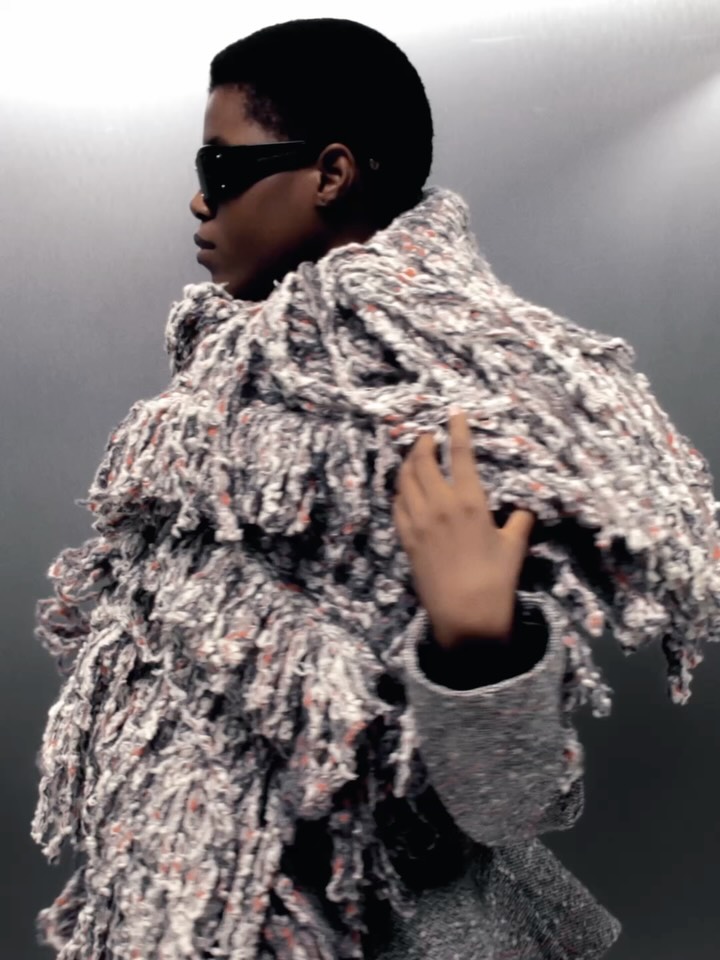
The editorial styling of the patchwork jeans—paired with a sculptural peplum jacket in red-flecked check tweed and an oversized fringed scarf—demonstrates that restraint in material choices allows for greater freedom in silhouette and proportion. The ensemble avoids visual cacophony through tonal coherence; the checked jacket and fringed scarf operate within a complementary chromatic framework rather than competing for visual authority.
This approach to dressing reflects a mature understanding of luxury: that conspicuous consumption has given way to discernment, and that true status resides in articulated vision rather than logo saturation.
The patchwork jeans and Appaloosa bag are available through Stella McCartney's Winter 2026 collection, both in-store and via stellamccartney.com, positioning the designer's sustainability credentials not as a separate product line but as the foundation of her core offering.
For consumers across established fashion capitals—from London to Milan, Paris to Hong Kong—this collection demonstrates that environmental consciousness and sartorial ambition need not exist in opposition. They are, in McCartney's hands, the same thing entirely.
Imagery is used for editorial purposes. All rights remain with the respective owners, photographers and licensors.
Imagery courtesy of Stella McCartney (@stellamccartney).