
The Deliberate Deception: Bhupen Khakhar’s Masterwork Arrives at Sotheby’s London
AI-assisted voice playback. Starts only when you choose Play.
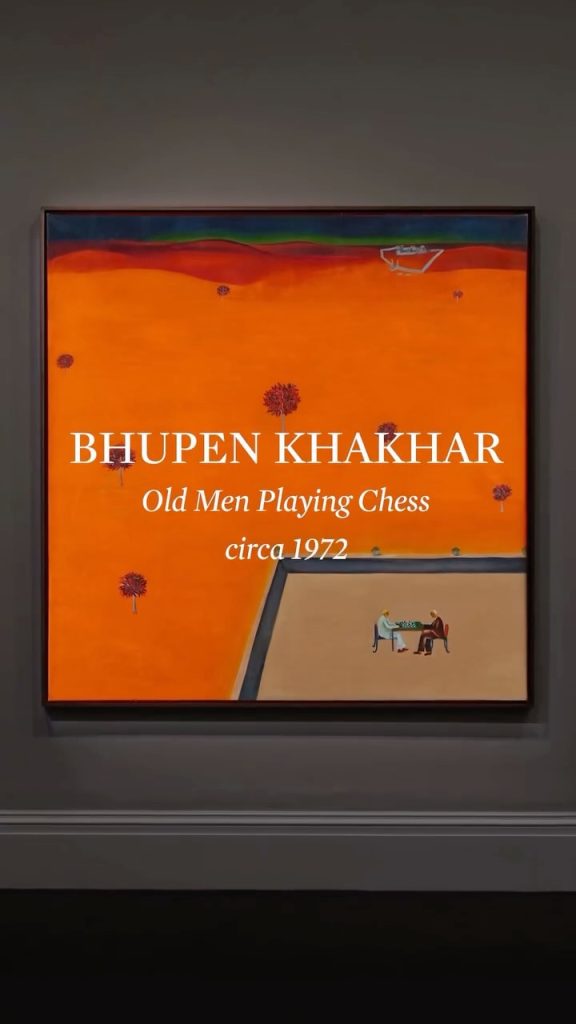
The canvas presents itself as a straightforward composition: eight trees rendered in the distinctive visual language of India's pioneering Pop movement. Yet the artist himself claimed otherwise. In his own catalogue essay, Bhupen Khakhar described the very painting he created as containing seven trees, not eight.
This numerical discrepancy—whether deliberate or inadvertent—transforms 'Old Men Playing Chess' into something far more complex than its serene surface suggests. The work arrives at Sotheby's London this weekend as the centrepiece of the Modern & Contemporary South Asian Art auction, inviting collectors and scholars to grapple with a question that may never be definitively answered: was the artist playing tricks on us, or on himself?
The Artist as Unreliable Narrator
Bhupen Khakhar's career redefined Indian contemporary art by introducing Pop sensibilities to a regional tradition often dominated by figurative and abstract vocabularies. His approach married vivid colour, commercial imagery, and a distinctly irreverent humour to canvas—qualities that positioned him as a radical departure from his predecessors.
'Old Men Playing Chess' exemplifies Khakhar's method of embedding meaning beneath visual pleasure. The composition itself remains accessible: two elderly figures absorbed in their game, the surrounding landscape rendered with compositional care. Yet Khakhar's own written account of the work introduces an ambiguity that destabilises any singular reading.
The discrepancy between what viewers observe and what the artist documented serves as a conceptual catalyst. Rather than resolving neatly, the inconsistency forces a reconsideration of artistic authority itself. Khakhar becomes simultaneously creator and critic, observer and subject—a positioning that reflects broader modernist anxieties about the artist's relationship to their own output.
A Moment for Serious Collectors
The appearance of this work at auction represents a significant moment for those tracking South Asian contemporary art at the highest levels of the international market. Sotheby's positioning of the painting as a highlight underscores its importance both historically and culturally.
Collectors attending the London sale this weekend will encounter not merely a painting, but an invitation to participate in an interpretive act. The work refuses passive consumption; it demands engagement, scrutiny, and a willingness to accept that some artistic questions remain productively unresolved. This intellectual complexity, paired with Khakhar's undisputed influence on subsequent generations of Indian artists, creates the conditions for serious acquisition.
The Legacy of Playful Profundity
Khakhar's willingness to infuse serious artistic inquiry with humour—whether intentional misdirection or genuine oversight—places 'Old Men Playing Chess' squarely within a modernist tradition that values ambiguity. The work resists conclusive interpretation, which is precisely its strength.
For international collectors and institutions, the piece offers rare insight into how Indian Pop art navigated the tension between accessibility and complexity, between commercial visual language and intellectual rigour. It stands as testimony to an artist unafraid of contradiction, inconsistency, and the productive uncertainties that arise when critics are forced to question their own reading of a work against the artist's stated account.
Sotheby's London sale this weekend presents an opportunity to engage directly with one of India's most significant twentieth-century artistic achievements—a painting that refuses to settle, and an artist who, whether by accident or design, understood that the most enduring works are those that harbour secrets.
Imagery is used for editorial purposes. All rights remain with the respective owners, photographers and licensors.
Imagery courtesy of Sotheby's (@sothebys).