The Emperor’s Golden Vessel: A Qianlong Masterwork Returns to Auction
AI-assisted voice playback. Starts only when you choose Play.
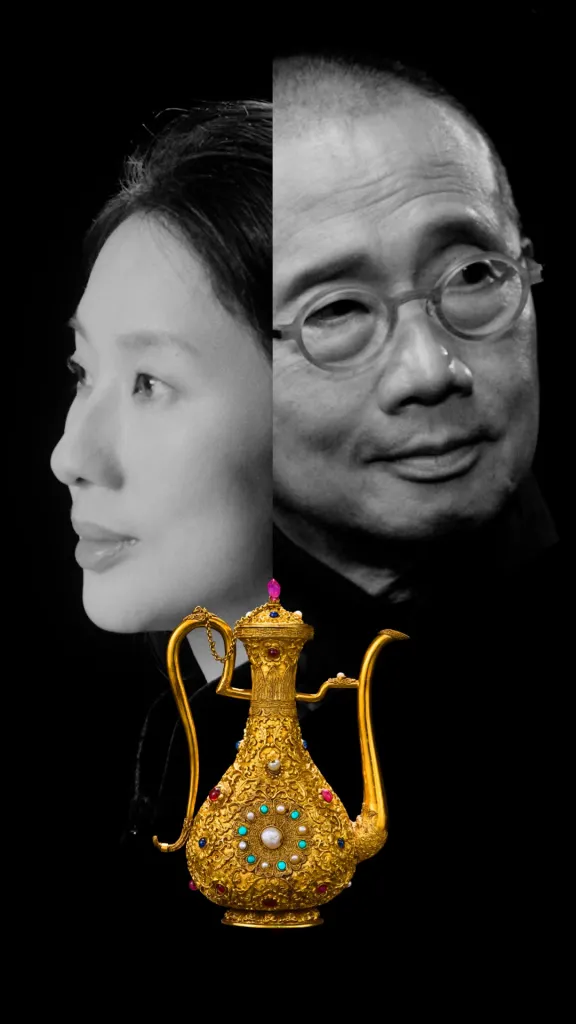
When the emperor emerged for New Year ceremonies within the Forbidden City, certain vessels held meanings far beyond their material worth. One such object, a gold ewer from the reign of the Qianlong Emperor, carries within its form an entire language of imperial aspiration and dynastic continuity. This magnificent work, fashioned in gold and lavishly embellished with pearls, rubies, sapphires and turquoise, now appears before collectors for what may be a rare moment of acquisition outside the imperial collections themselves.
A Lineage of Imperial Ceremony
The ewer echoes the Jin'ou Yonggu cup, the legendary Golden Cup of Eternal Stability that became synonymous with Qing imperial ritual. That celebrated predecessor established a visual and spiritual template that reverberates through the imperial workshops across generations. To possess such a vessel was to participate in the continuity of imperial power, a material declaration of stability and cosmic order rendered in precious metal and stone.
Dating to the Qianlong period (1736–1795), this ewer represents the pinnacle of imperial goldsmithing as it flourished within the palace workshops. The reign itself was marked by an almost obsessive refinement of aesthetic standards, a moment when imperial patronage reached toward absolute perfection in the applied arts. The workshops that produced this work operated under exacting protocols, their artisans selected and trained to execute visions of imperial grandeur with unwavering precision.
Craftsmanship of the Imperial Ateliers
What distinguishes this ewer is not merely its materials, however lustrous. The filigree work speaks of an extraordinary technical mastery, a refinement achieved only through generations of accumulated knowledge. The integration of gemstones—pearls, rubies, sapphires and turquoise—into the gold body required not only access to the finest raw materials but also an understanding of how light, colour and form might converge to convey imperial authority and benevolence.
The elegant form of the vessel, its proportions and the distribution of its ornamental elements reveal the hand of craftsmen working within a sophisticated design tradition. Each detail emerges as intentional, nothing placed without consideration of the whole. This is metalwork as a form of court language, communicating through material and technique what words alone could not express.
Rarity and Provenance
To encounter such a work in private hands remains genuinely exceptional. The majority of imperial gold vessels remain within institutional collections or the imperial collections themselves. That this ewer has survived the centuries, retained its integrity and clarity of detail, and now appears in the market represents a singular convergence of fortune, stewardship and historical circumstance. For collectors of imperial Qing metalwork, such opportunities emerge rarely across decades.
The appearance of the ewer during Hong Kong Asian Art Week situates it within a gathering of significant works and serious collectors, a moment of genuine consequence for the market and for the broader conversation about Chinese imperial arts. Hong Kong remains one of the world's preeminent centres for the study, acquisition and appreciation of such objects, a city where expertise and passion converge most intensely.
This ewer stands as testimony to an extraordinary historical moment, when imperial workshops operated at the summit of their ambitions and when the materials of the earth were transformed into objects of enduring beauty and symbolic power. For collectors drawn to the very finest expressions of imperial craftsmanship, it represents not merely an acquisition but an encounter with history rendered tangible and magnificent.
Key Facts
- Period: Qianlong mark and of the period, 1736–1795
- Materials: Gold, embellished with pearls, rubies, sapphires and turquoise
- Auction: For the Son of Heaven: The Imperial Qianlong Gold Ewer
- Location: Hong Kong
- Date: 29 October 2026
- Auctioneer: Christie's Asia
The Simply Luxury View
The emergence of an imperial gold vessel of this calibre and condition speaks to the depth and rarity of the finest Qing court metalwork remaining in private hands. Collectors of Chinese imperial arts understand that such objects occupy a rarefied category: functional vessels that operated within the most restricted precincts of imperial ceremony, executed with absolute standards of materials and technique. This ewer's survival and its appearance at auction during one of Asia's most significant art weeks underscores Hong Kong's enduring position as a centre where such works find their natural audience.
The work exemplifies a moment in Chinese imperial history when refinement and ambition achieved an almost unprecedented synthesis. Its gemstone inlays, filigree work and proportions reflect the standards established within the Imperial Workshops at their zenith. For collectors seeking authentic encounters with imperial Qing craftsmanship, this ewer presents a genuinely exceptional opportunity.
Official brand website: christies.com
Imagery is used for editorial purposes. All rights remain with the respective owners, photographers and licensors.
Imagery courtesy of Christie's Asia (@christiesasia).