
The Final Ear: Inside Steinway’s Uncompromising Tuning Ritual
AI-assisted voice playback. Starts only when you choose Play.
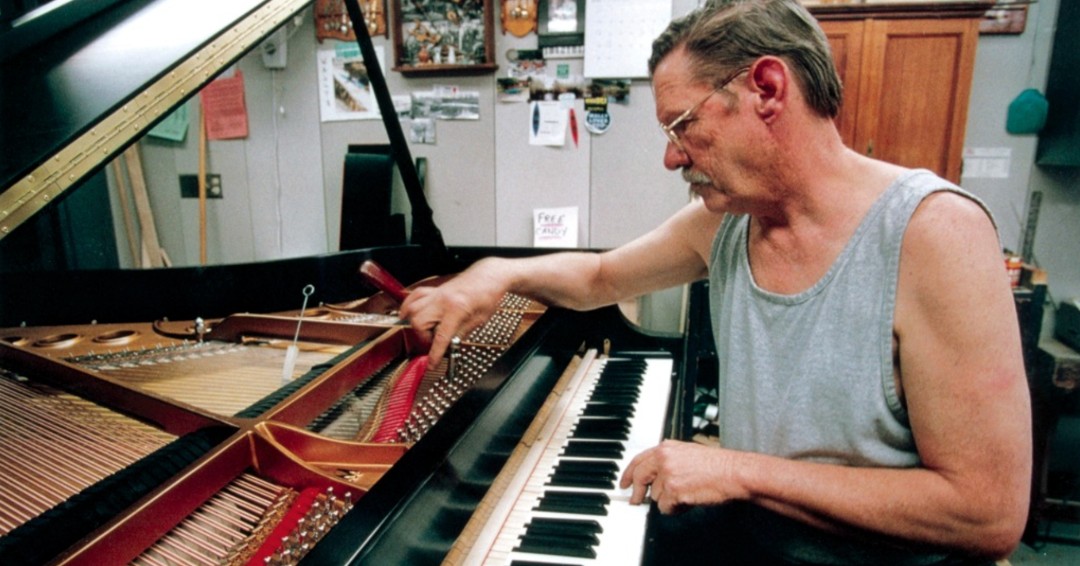
In the final tuning department of Steinway & Sons, no piano crosses the threshold toward its owner until it has satisfied a single, exacting standard: the ear of a master craftsman.
This moment—where hand, ear, and instrument converge in what the storied piano manufacturer describes as 'a final conversation'—represents far more than a quality-control checkpoint. It is the embodiment of a philosophy that has defined Steinway for nearly two centuries: that mechanical perfection alone does not suffice. Only the human ear, trained through years of disciplined practice, can validate whether hundreds of individual strings have achieved true coherence.
The Ritual of Refinement
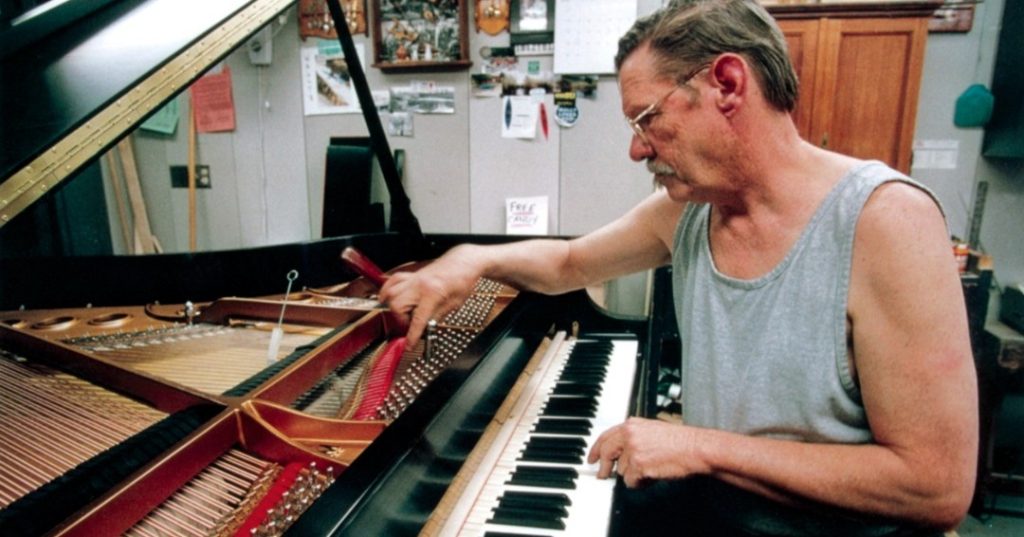
The tuning process unfolds methodically, note by note, across the keyboard. Steinway's technicians do not merely adjust pitch; they listen for resonance and examine the relationship between registers—the low, middle, and high ranges that together comprise a piano's voice. Each string must align not in isolation, but as part of a unified acoustic whole.
This approach distinguishes Steinway from mass-production competitors. Where factory efficiency might favour expedited testing protocols, Steinway's final tuning department treats each instrument as a singular acoustic entity, requiring individual attention and judgment.
A Tradition Spanning Continents
Remarkably, this labour-intensive ritual persists across two of the world's great musical cities: New York and Hamburg. The duplication of this exacting standard across both manufacturing hubs—rather than centralisation—underscores Steinway's commitment to consistency without compromise.
For a brand established in the mid-19th century, the continuation of this tradition speaks to a deliberate choice: to preserve craft knowledge and acoustic intuition as non-negotiable elements of production, even as modern manufacturing has rendered such practices economically challenging elsewhere in the luxury goods sector.
The Acoustic Conversation
Steinway's language—'a final conversation between hand, ear, and instrument'—is not decorative marketing language. It reflects a technical reality: the tuning technician is, in effect, in dialogue with the piano's own acoustic properties. The instrument responds to touch and adjustment; the technician listens and responds in turn.
This reciprocal relationship demands more than technical competency. It requires the kind of auditory discernment that can only develop through sustained, focused practice—the hallmark of genuine luxury craft, where human mastery remains irreplaceable.
In an era when many luxury manufacturers have adopted automated precision as the ultimate guarantee of quality, Steinway's insistence on the tuning technician's ear represents a deliberate stand: that excellence in acoustics remains a conversation between human perception and material reality, and that no machine can yet substitute for the trained judgment of a master ear.
Imagery is used for editorial purposes. All rights remain with the respective owners, photographers and licensors.
Imagery courtesy of Steinway & Sons (@steinwayandsons).