
MINI ACEMAN SE: ELECTRIC CHARACTER FOR THE MODERN CITY
With its new Ocean Wave Green finish, five-seat crossover format and fully electric powertrain, the MINI Aceman SE brings a distinctly urban interpretation of electric mobility. Combining 218 hp with a WLTP range of up to 405 kilometres, it carries MINI’s compact proportions and playful road manners into a new chapter.
AI-assisted voice playback. Starts only when you choose Play.
For a car designed around city life, the MINI Aceman SE has a surprisingly broad brief. It needs to be compact enough for urban streets, practical enough for everyday routines, and engaging enough to preserve the sense of character that has long distinguished MINI. The latest all-electric Aceman SE approaches that balance through a crossover body, five-door practicality and a powertrain developed for immediate, quiet performance.
For September 2026, MINI is placing particular emphasis on Ocean Wave Green, a new colour that brings out the Aceman SE’s short overhangs, clean surfaces and muscular proportions. Rather than treating electrification as a reason to abandon the visual language of the marque, the Aceman retains the compact stance and distinctive detailing associated with MINI, adapting them to a more contemporary crossover silhouette.
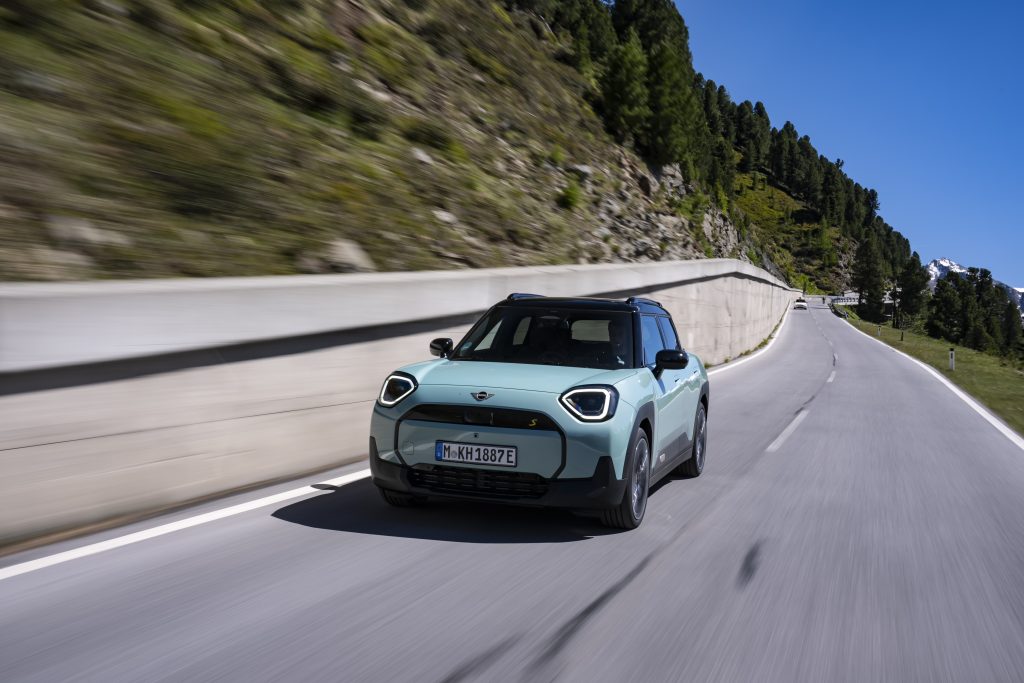
At the heart of the Aceman SE is a 160 kW, or 218 hp, electric motor. Its immediate power delivery is particularly suited to the stop-and-start rhythm of urban driving, while the battery provides an official WLTP range of up to 405 kilometres. MINI lists combined electric consumption for the Aceman SE at 14.0–14.8 kWh per 100 kilometres, with zero tailpipe CO₂ emissions under the WLTP test cycle.
The model’s proportions are equally central to its appeal. The Aceman is MINI’s first all-electric crossover, positioned around compact exterior dimensions while creating a more generous interior than its footprint might suggest. Five doors and five seats give it a practical advantage for everyday journeys, while the versatile luggage compartment allows the cabin to adapt to different combinations of passengers and cargo.
Its character becomes particularly apparent behind the wheel. Earlier MINI engineering established the brand’s celebrated agility through compact dimensions, responsive handling and a low centre of gravity. In the Aceman SE, that philosophy takes on an electric form. MINI’s own road testing describes light, direct steering, front-wheel drive and a low centre of gravity, with the electric motor capable of delivering up to 330 Nm of torque from standstill. The result is a drivetrain that can respond quickly to changes in pace and direction without sacrificing the relaxed qualities expected of an electric vehicle.
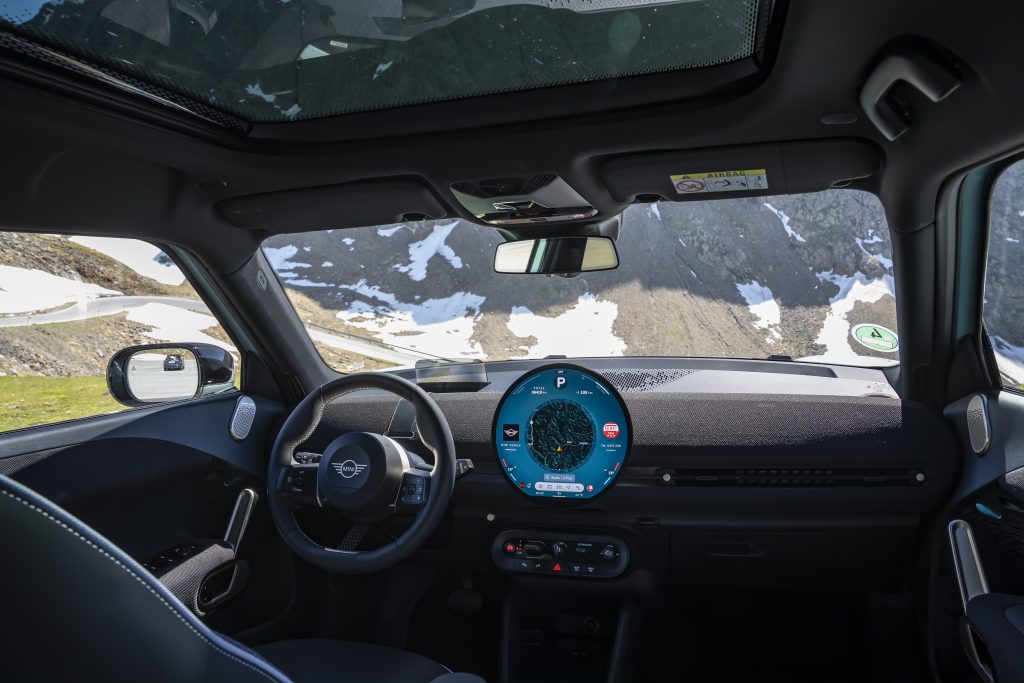
Inside, the design is deliberately centred around a large circular OLED display measuring 24 centimetres. It forms the main interface for MINI Operating System 9, bringing navigation, entertainment and vehicle functions together within a single digital environment. The approach retains one of MINI’s familiar visual signatures while giving it a distinctly modern purpose: rather than surrounding the driver with multiple separate displays, the central screen becomes the focal point of the dashboard.
The Aceman also reflects the broader evolution of MINI’s design language. The brand describes its current direction through cleaner surfaces and a reduction of unnecessary visual elements, while retaining recognisable details that allow a MINI to remain immediately distinguishable. On the Aceman, this translates into a relatively upright stance, compact bodywork and a crossover profile that gives the model additional visual presence without moving it into the proportions of a conventional large SUV.
That balance between compactness and usability has been part of MINI’s engineering philosophy since the original car appeared. The first Mini was launched in 1959 during a period of fuel shortages and economic pressure. Engineer Alec Issigonis responded by creating a small car that made unusually efficient use of its available space, using a transverse engine layout to keep the exterior dimensions compact while preserving room for passengers. The same car later developed an unexpected sporting character after motorsport pioneer John Cooper recognised its agile handling and helped create the Mini Cooper.
MINI’s heritage therefore begins not simply with a small car, but with an approach to design that treats limitations as opportunities for inventive engineering. The original Mini’s space efficiency and agility established principles that have continued to influence the marque, from its early motorsport successes to the modern electric range. MINI’s first-generation modern car rolled off the production line at Oxford in 2001, while the Oxford plant remains an important part of the brand’s British manufacturing story.
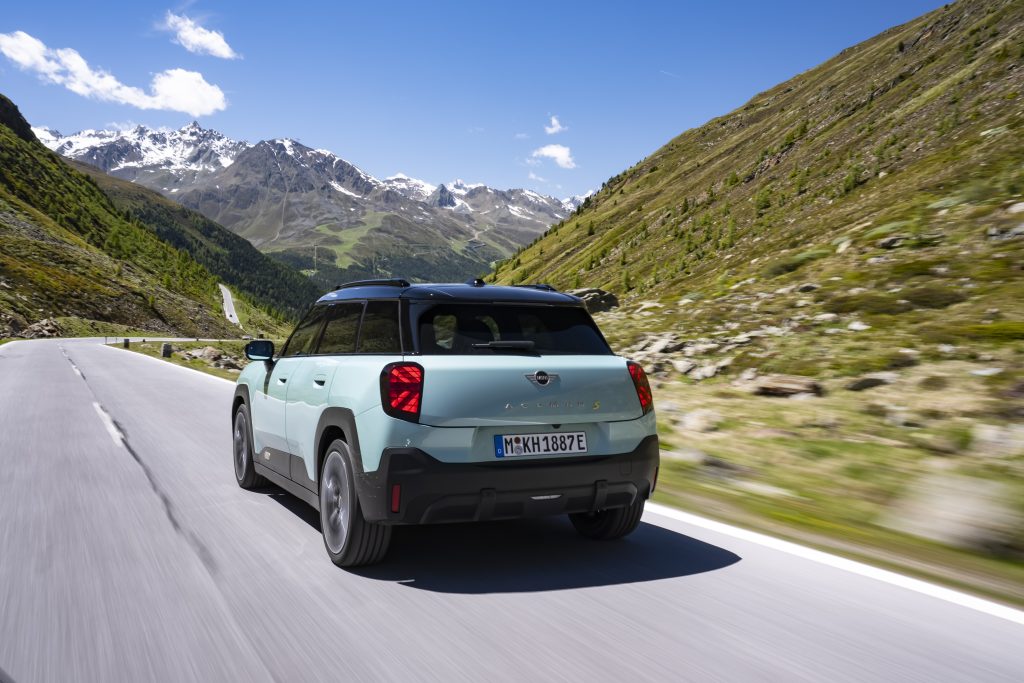
The Aceman SE extends that history into a period when urban mobility is increasingly shaped by electrification. Its fully electric powertrain removes local tailpipe emissions, while its compact dimensions remain suited to dense city environments. Rather than separating practicality from personality, the crossover format allows MINI to combine five-seat usability with the responsive qualities associated with its smaller models.
In the UAE, MINI’s current official network includes authorised operations in Dubai and Abu Dhabi. MINI AGMC lists centres across Dubai, Sharjah and the Northern Emirates, including Sheikh Zayed Road and Motor City, while MINI Abu Dhabi Motors operates showrooms and service facilities in Abu Dhabi and Al Ain. Both networks currently feature the all-electric MINI Aceman among their model line-ups.
Ocean Wave Green adds another dimension to the Aceman SE’s urban identity. Against the crossover’s compact, upright proportions, the colour emphasises the relationship between its smooth surfaces and more assertive details, giving the electric model a visual presence that remains recognisably MINI without relying on nostalgia.
The Aceman SE ultimately reflects a broader shift in what a city car can be. Electric propulsion has allowed MINI to preserve the immediacy of its driving character while expanding the format into a practical five-seat crossover. With its compact footprint, digital interior and up-to-405-kilometre WLTP range, the Aceman SE suggests that everyday electric mobility need not be anonymous. Its most interesting quality may be the way it carries an old MINI principle forward: use space intelligently, keep the engineering purposeful, and leave room for a little enjoyment along the way.