
FUR’S RETURN TO FASHION IS MORE COMPLICATED THAN THE RUNWAY MAKES IT LOOK
Runway texture, faux-fur experimentation and a €220 million Saga Furs auction are colliding with New York Fashion Week’s new fur-free rule, revealing a luxury category moving in contradictory directions at once.
AI-assisted voice playback. Starts only when you choose Play.
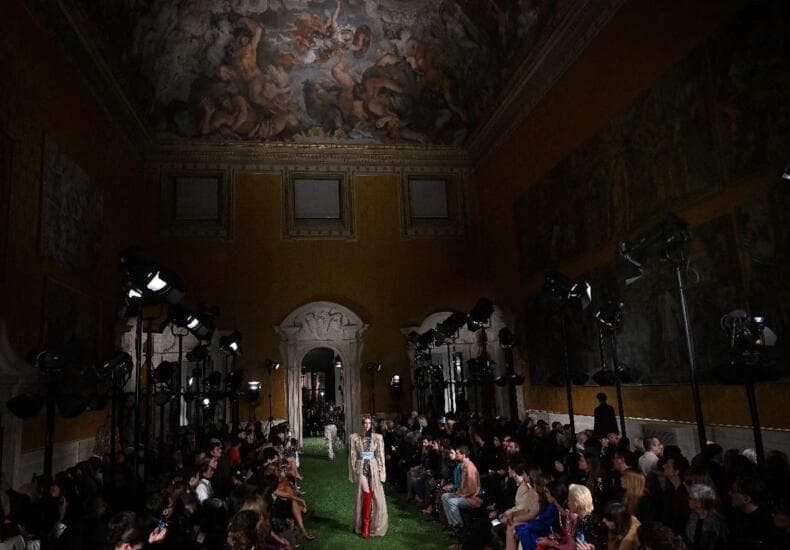
Fashion’s relationship with fur is becoming harder to describe in a single sentence. On one side, runways are rediscovering the visual language of plush volume, long pile and furrier-style construction — often through faux materials or shearling. On the other, auction prices for farmed fur have risen sharply. At the same time, New York Fashion Week has introduced a rule excluding animal fur from collections on its official September 2026 schedule.
LUXUO’s latest analysis places those forces in the same frame. The result is not a straightforward “fur comeback”, and it would be misleading to call it one. What is returning with confidence is the look: texture, weight, banded construction and the dramatic silhouette historically associated with fur. What the material actually is varies from house to house and garment to garment.
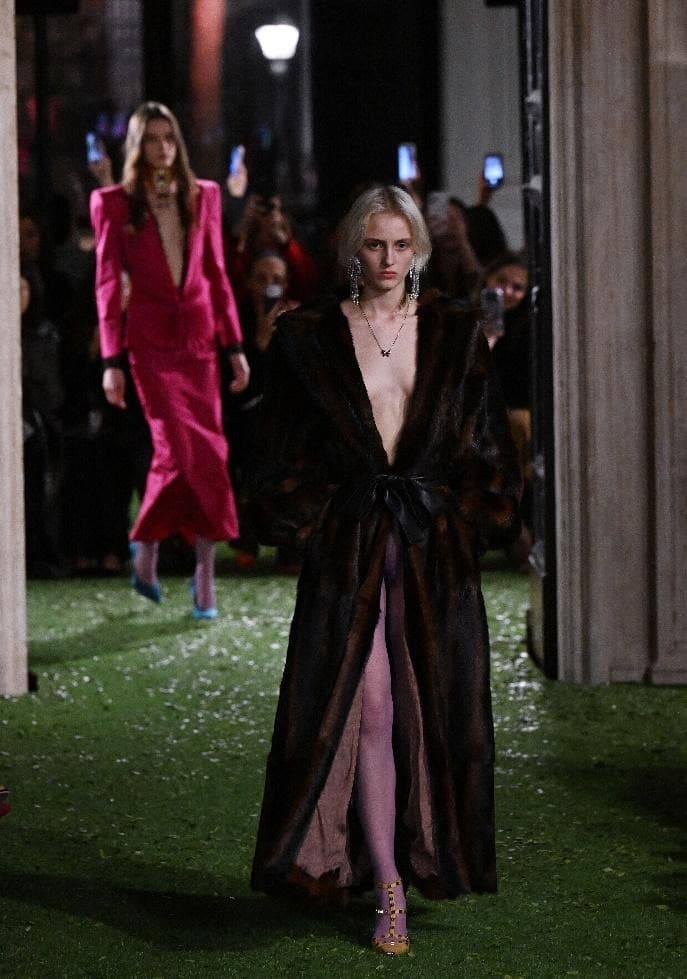
THE RUNWAY WANTS THE TEXTURE
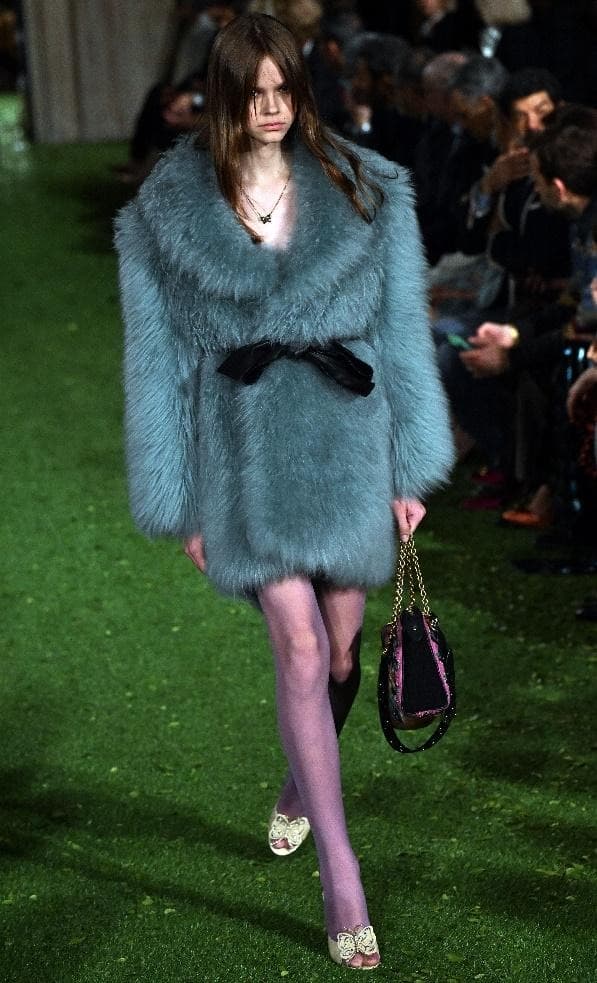
LUXUO points to Fall/Winter 2026 outerwear from Valentino and Khaite as examples of the renewed appetite for fur-like surfaces. Valentino has maintained a fur-free policy since 2021, so the visual interest lies in how a house can evoke traditional furrier techniques without returning to mink. Khaite, meanwhile, showed cropped, square-shouldered jackets that the publication describes as appearing to be faux fur.
This distinction matters. Faux fur, shearling, wool and farmed mink occupy very different ethical, environmental and commercial positions, even when the finished silhouettes can look similar from a distance. The current trend is therefore as much about texture engineering as it is about material revival.
THE AUCTION MARKET TELLS ANOTHER STORY
The commercial data from Saga Furs is less ambiguous. At its March 2026 auction, the company reported 3.4 million pelts sold and brokerage sales of €220 million, more than double the €96 million recorded in March 2025. All 3.1 million mink pelts offered were sold. Saga said average mink price levels increased by 76 per cent compared with previous offerings, with more than 500 buyers participating and China the dominant market.

Those numbers indicate renewed demand within the existing fur trade, but they also reflect supply dynamics. LUXUO notes that closures and restrictions affecting fur farming in parts of Europe have reduced availability, which can amplify price movements even without a uniform return to fur across luxury fashion. A higher auction price does not necessarily mean a broad cultural consensus has shifted; it means the market for the material that remains is active and competitive.
NEW YORK DRAWS A CLEAR LINE
The Council of Fashion Designers of America has taken the opposite institutional position. From the September 2026 New York Fashion Week season, collections on the official schedule may not include farmed or trapped fur from animals killed specifically for their pelts, including mink, fox, rabbit, karakul lamb, chinchilla, coyote and raccoon dog. The policy includes an exemption for fur obtained by Indigenous communities through traditional subsistence hunting practices.
The CFDA has also used the transition to encourage discussion around alternative materials, including bio-based and bio-polymer options. That means the runway’s renewed appetite for tactile drama may accelerate innovation rather than simply restore old supply chains.
The most accurate conclusion is therefore that luxury is moving in several directions at once. Real-fur auction economics are strengthening; major fashion platforms are tightening restrictions; and designers remain fascinated by the visual power of fur-like texture. Winter 2026 is not a clean return to the past. It is a negotiation over which parts of fur’s aesthetic legacy fashion wants to keep, which materials it is willing to use, and which values will define the next version of the look.