
Blancpain Resurrects the Lady B: When Horological Heritage Meets Contemporary Elegance
AI-assisted voice playback. Starts only when you choose Play.
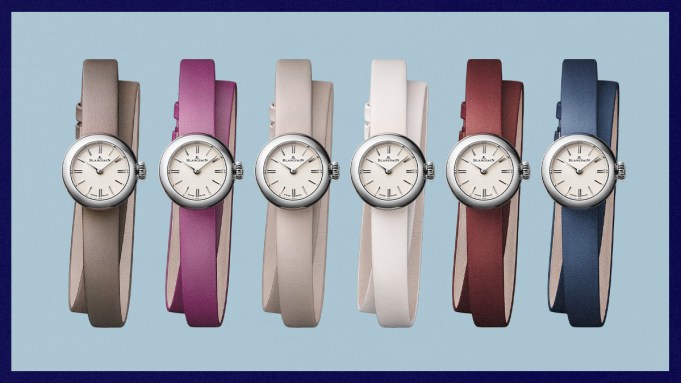
There exists a peculiar paradox in watchmaking: the smallest timepieces often carry the weightiest historical significance. Blancpain's announcement of the Lady B—a contemporary reinterpretation of its 1956 Ladybird Bullet—exemplifies this truth with particular eloquence. At 19 millimetres in diameter, this refined mechanical watch represents far more than mere nostalgia. It constitutes a deliberate curatorial gesture, resurrecting a moment when haute horlogerie acknowledged that women's wrists deserved the same technical mastery and design sophistication as their larger counterparts.
The original Ladybird Bullet occupied a singular position within mid-twentieth-century watchmaking. Produced during an era when women's watches were frequently treated as decorative afterthoughts—diminutive, jewel-encrusted confections rather than serious timekeeping instruments—Blancpain's diminutive creation insisted upon mechanical integrity without compromise. That the manufacture now returns to this lineage suggests something noteworthy about contemporary luxury: the appetite for authenticity, for designs that refused expedience and instead pursued excellence at every scale.
A Compact Legacy
The Ladybird Bullet earned its nickname through distinctive visual language: a streamlined, almost teardrop-like silhouette that suggested motion even in stillness. Its proportions—compact yet commanding—established an alternative vocabulary for women's horology at a moment when such alternatives scarcely existed. The original pieces, though produced in limited quantities, found devoted adherents among women who refused to accept that femininity demanded sacrificing mechanical sophistication.
Blancpain's archival depth permits such retrospective explorations. As one of the oldest watchmaking manufactures, operating continuously since 1735, the company possesses not merely historical records but living institutional memory. The decision to revive the Lady B speaks to an understanding that heritage carries contemporary relevance only when thoughtfully recontextualised rather than merely replicated.
Modern Interpretation, Uncompromised Standards
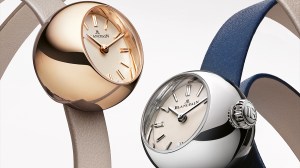
The new Lady B resists the temptation to enlarge its ancestor for contemporary tastes. Maintaining the original's 19-millimetre diameter represents a philosophical statement: that true luxury need not conform to prevailing proportional conventions. This constancy of scale creates genuine dialogue between eras, permitting direct comparison whilst announcing that no intervention has obscured the design's essential character.
Beneath the dial resides a mechanical movement—a detail that distinguishes this revival from the decorative minimalism that often characterises modern women's watches. Blancpain continues to populate even its most compact cases with automatic or manual-wind calibres, ensuring that owners engage with functional horology rather than mere aesthetic presence. This commitment to mechanical substance, regardless of dimensions, separates serious manufacture from commercial expediency.
The dial presentation honours proportional disciplines established seven decades ago. Legibility and visual hierarchy—essential to any respectable timepiece—remain paramount. Applied indices, characteristically restrained numerals, and a refined hand set create reading clarity without sacrificing the refined understatement that defines Blancpain's design language.
Positioning Within Contemporary Collecting
The Lady B's reintroduction arrives during a period of significant recalibration within horology. Contemporary collectors—particularly those establishing collections rather than pursuing single iconic pieces—increasingly value thematic coherence and historical lineage. Watches that connect to documented manufacture heritage and represent distinct design philosophies command particular attention among discerning enthusiasts.
Women's watchmaking has undergone substantial evolution. No longer confined to miniaturised versions of masculine designs or jewellery-centric proportions, contemporary women collectors frequently embrace full-sized sports watches, complicated movements, and aesthetic vocabularies previously coded as masculine. The Lady B occupies deliberately different territory: a celebration of compact scale as an aesthetic and functional choice rather than an apology.
The Collector's Consideration
For those building horologica collections, the Lady B presents particular merit. Its proportions make it genuinely wearable across a broad spectrum of wrist sizes—a practical advantage that vintage Ladybird Bullets, now decades old and occasionally bearing evidence of extended service, may no longer reliably provide. Simultaneously, contemporary manufacture ensures that the movement, case finishing, and overall execution reflect present-day standards without anachronistic pastiche.
The 19-millimetre specification creates another collecting consideration: such dimensions occupy genuinely rare territory within modern manufacture. Most contemporary watches congregate around larger diameters. A timepiece that maintains compact scale whilst incorporating full mechanical sophistication thus assumes distinction through scarcity of concept rather than mere production limitation.
Blancpain's Lady B succeeds because it resists two temptations simultaneously: the urge to enlarge for contemporary market expectations, and the impulse to overstyse through retro affectation. The watch exists as genuine continuity—a lineage maintained, not merely commemorated. For collectors who value horological seriousness, historical authenticity, and the proposition that luxury respects no minimum measurement, the Lady B extends an invitation to experience 1956 through 2026's technical capabilities and manufacturing standards.
In reviving the Ladybird Bullet, Blancpain makes a broader assertion about contemporary luxury: that the most compelling products often return to foundational principles rather than pursuing novelty for its own benefit. A 19-millimetre mechanical watch, executed with the manufacture's characteristic rigour, represents not nostalgia but rather a lucid recognition that certain design decisions transcend their particular historical moment and achieve something approaching timelessness.
Imagery is used for editorial purposes. All rights remain with the respective owners, photographers and licensors.