
McLaren’s McL 6GT: Where Motorsport Heritage Meets Contemporary Grand Touring
AI-assisted voice playback. Starts only when you choose Play.
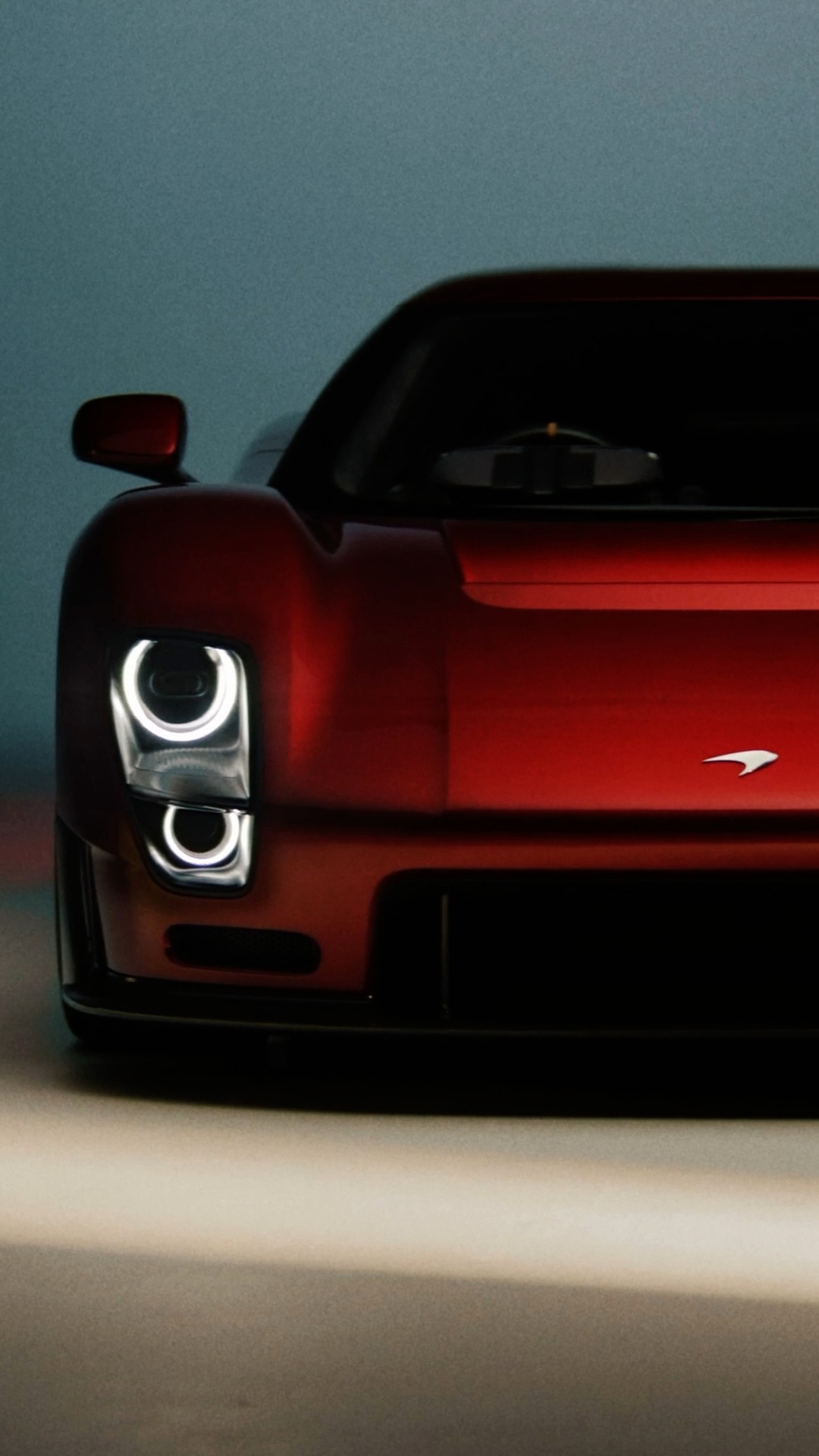
Few automotive manufacturers carry the weight of heritage quite like McLaren. Since its foundation in 1963, the Woking-based house has built an identity forged in competition—from Formula One triumphs to Can-Am dominance to its modern-era supercar revolution. That lineage is not merely decorative; it runs through the marque's design philosophy like tempered steel.
The introduction of the McL 6GT marks a deliberate inflection point in this evolutionary narrative. Here is a car that does not genuflect before its own past, nor does it discard it. Instead, McLaren has orchestrated a dialogue between what it has been and what it aspires to become—a grand tourer that honours six decades of racing knowledge whilst projecting a distinctly contemporary vision.
Design Language as Autobiography
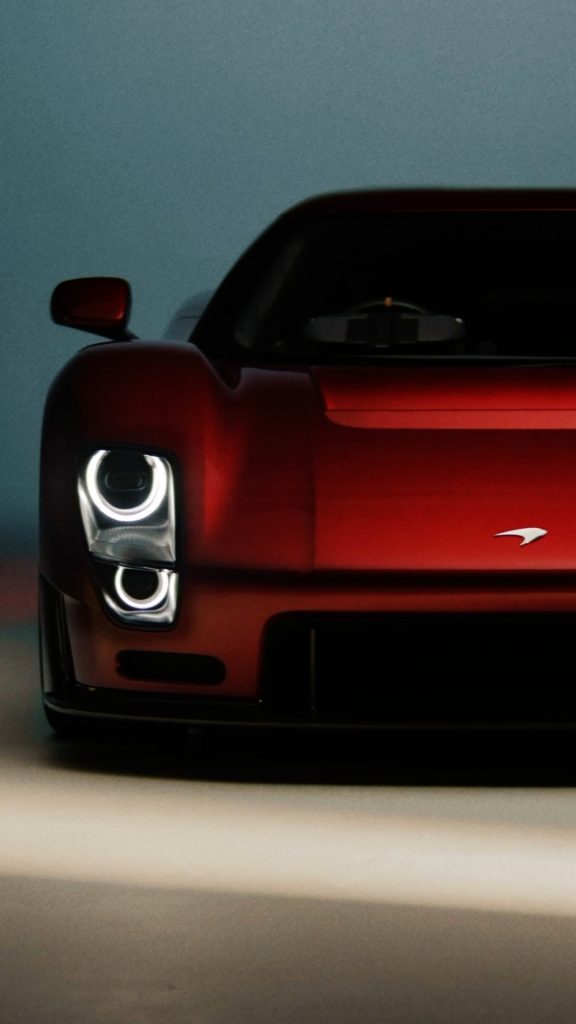
The McL 6GT's exterior vocabulary speaks in accents both recognisable and novel. Its proportions—low-slung, purposeful, yet unexpectedly graceful—recall the elegant aggression of McLaren's competition history. The relationship between solid mass and void, between surface tension and aerodynamic intent, reflects lessons learned across decades of engineering at the highest levels of motorsport.
The car's flanks carry visual cues that knowledgeable observers will trace back through McLaren's lineage: the characteristic shoulder line, the sculpted body work, the way light plays across carefully resolved curves. Yet these are not pastiche. Rather, they are contemporary reinterpretations—simplified, refined, stripped of unnecessary ornamentation in a manner that feels thoroughly modern.
Viewed from certain angles, the McL 6GT demonstrates McLaren's commitment to proportional honesty. The relationship between wheelbase and overall length, the positioning of the cabin relative to the powertrain, the visual weight distribution—all speak to a designer's hand guided by both aesthetic conviction and engineering pragmatism.
Grand Touring Redefined
The grand tourer category has long occupied an intriguing middle ground in the luxury automotive spectrum. It is neither pure competition machine nor leisure conveyance, but rather a synthesis: a car engineered for genuine performance yet capable of sustained, civilised travel. The McL 6GT positions itself squarely within this tradition, though interpreted through McLaren's particular sensibility.
Where traditional grand tourers have sometimes prioritised comfort above all else, and where some performance manufacturers have struggled to reconcile speed with long-distance practicality, the McL 6GT appears to sidestep these false dichotomies. Its design language suggests a machine conceived for both the mountain pass and the open motorway, equally at home on the Côte d'Azur or crossing the Alpine passes.
The car's silhouette conveys a certain restraint—a quality that has become increasingly rare in contemporary automotive design. Rather than accumulating visual complexity, the McL 6GT speaks through proportion, through the relationship of form to function, through an almost Scandinavian clarity of purpose.
The Grammar of McLaren
What distinguishes McLaren's design approach is its unwillingness to employ visual language divorced from functional reality. Every crease, every curve, every dimensional choice carries justification rooted in the car's engineering requirements. This philosophy, inherited from the brand's racing origins, prevents the McL 6GT from ever feeling like a stylistic exercise.
The front end resolves the challenge of modern pedestrian safety regulations and aerodynamic efficiency without resorting to the angular fragmentation that characterises some contemporary designs. The rear, freed from the packaging constraints that govern mid-engine supercars, explores a different spatial possibility—one that reflects the McL 6GT's different purpose and architecture.
Interior design philosophy appears equally considered. Rather than maximising visual drama through contrasting colours or exotic materials applied for their own sake, the McL 6GT seems to favour the sort of restrained luxury that appeals to globally-minded enthusiasts: craftsmanship evident in execution rather than ostentation, materials chosen for longevity and patina rather than initial shock value.
Continuity Through Transformation
The McL 6GT's emergence reflects a broader maturation within McLaren as an organisation. The marque has moved beyond the novelty of its initial supercar period into a more sophisticated phase—one confident enough to explore different bodystyles, different purposes, different expressions of its core values.
What remains constant, however, is an architectural honesty and a refusal to compromise engineering integrity for commercial expedience. The McL 6GT appears to exemplify this consistency of principle applied across a widening product range. It is McLaren because it thinks like McLaren, regardless of its category.
For the discerning international clientele for whom McLaren now builds, this represents a singular proposition: a grand tourer that carries the legitimacy of genuine competition heritage, designed with the clarity and precision expected of a marque forged in Formula One's unforgiving environment, yet conceived explicitly for the modern luxury market's demand for versatility and long-distance capability.
The McL 6GT does not represent a departure from McLaren's essential character so much as an expansion of its vocabulary. It is a car that proves the marque's design language remains potent precisely because it remains grounded in engineering truth rather than stylistic fashion.
In launching this contemporary interpretation of its design heritage, McLaren has not attempted to resurrect the past or abandon the future. Instead, it has created a machine that speaks fluently in both registers—a grand tourer worthy of the name, built by a manufacturer for whom racing will always remain the ultimate design studio.
Imagery is used for editorial purposes. All rights remain with the respective owners, photographers and licensors.
Imagery courtesy of McLaren Automotive (@mclarenauto).