
Graff’s Sapphire Rhapsody: 118 Carats of Architectural Precision
AI-assisted voice playback. Starts only when you choose Play.
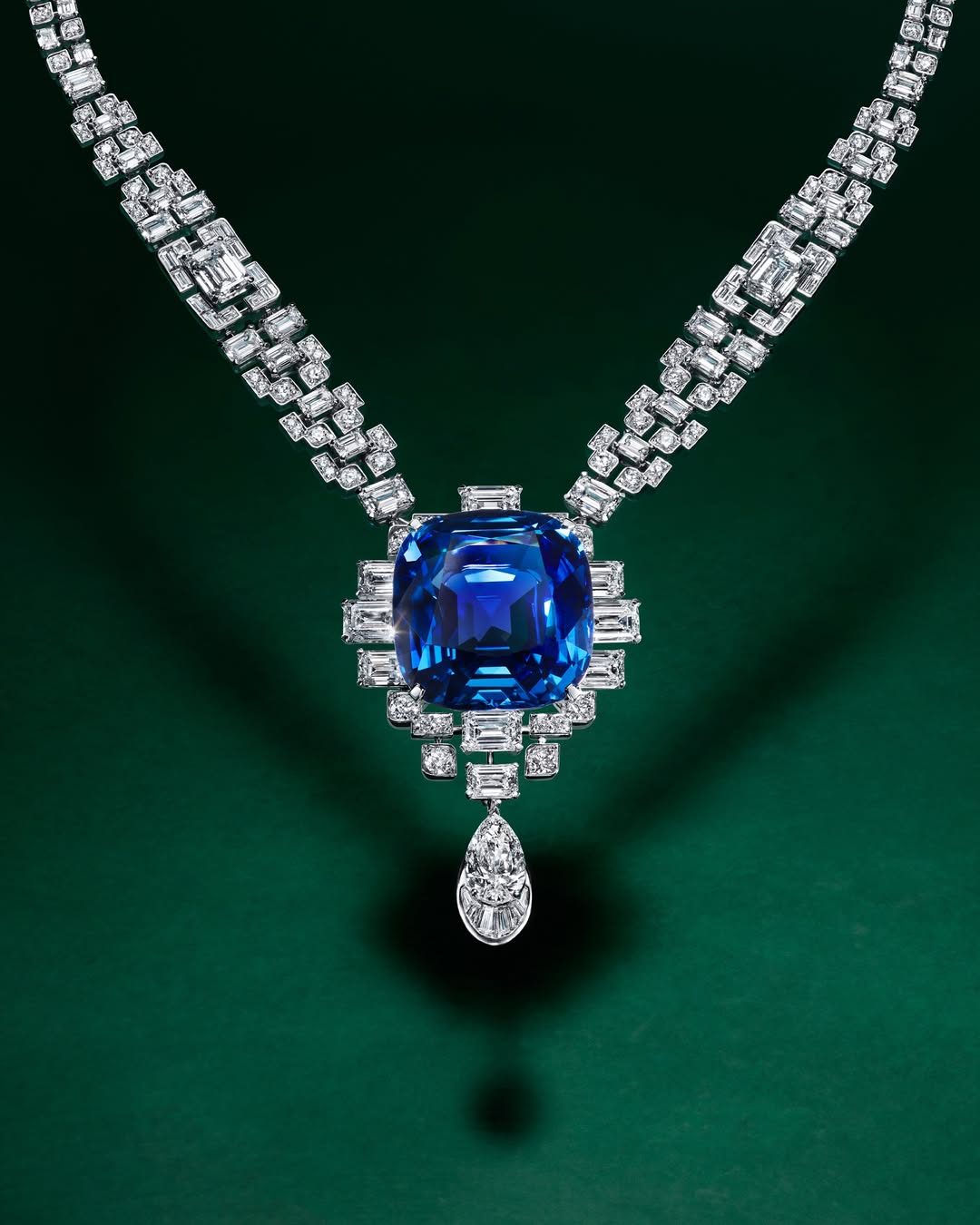
Graff has long understood that in jewellery of consequence, restraint and direction matter as much as weight and brilliance. The house's latest necklace—a composition of 118 carats—demonstrates this principle with characteristic clarity: every diamond on the piece serves a single architectural purpose: to guide the viewer's gaze toward the sapphire at its heart.
The centrepiece itself embodies a design signature that has come to define Graff in the eyes of those who study the jeweller's oeuvre: a pear-shaped drop. The form is neither accidental nor fashionable affectation. It represents decades of refinement in how Graff approaches the marriage of brilliant-cut supporting stones and coloured gemstones of serious weight and provenance.
Hierarchy and Light
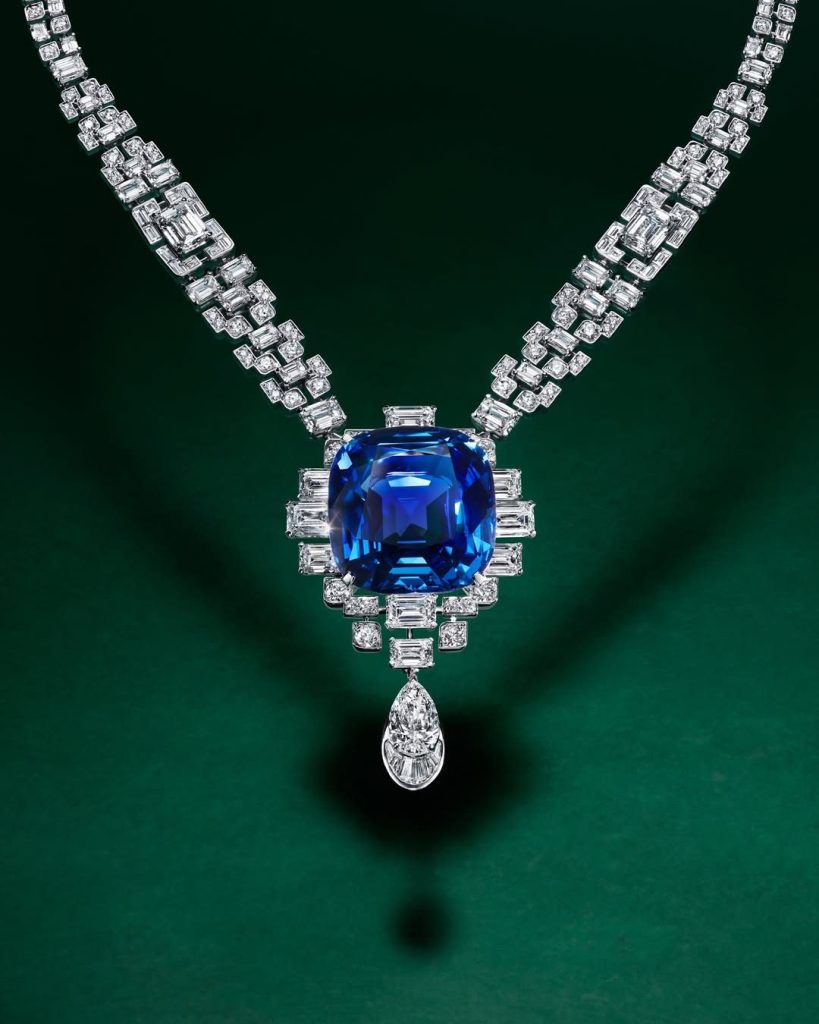
What distinguishes this design from more conventional approaches to diamond-and-sapphire necklaces is its intellectual rigour. Rather than treating diamonds and coloured stones as equal players, Graff has constructed the piece as a symphony of subordination—each brilliant white stone positioned to amplify and direct light toward the sapphire, creating an effect of inevitable focal unity.
The pear cut, with its tapering point and broader crown, becomes the visual terminus of the entire composition. It is the conclusion of a sentence written in diamonds and precious metal. This approach reflects Graff's longstanding philosophy: that jewellery of true luxury does not shout its carat weight across a room, but instead invites the informed observer to trace the logic of its construction.
The Graff Signature
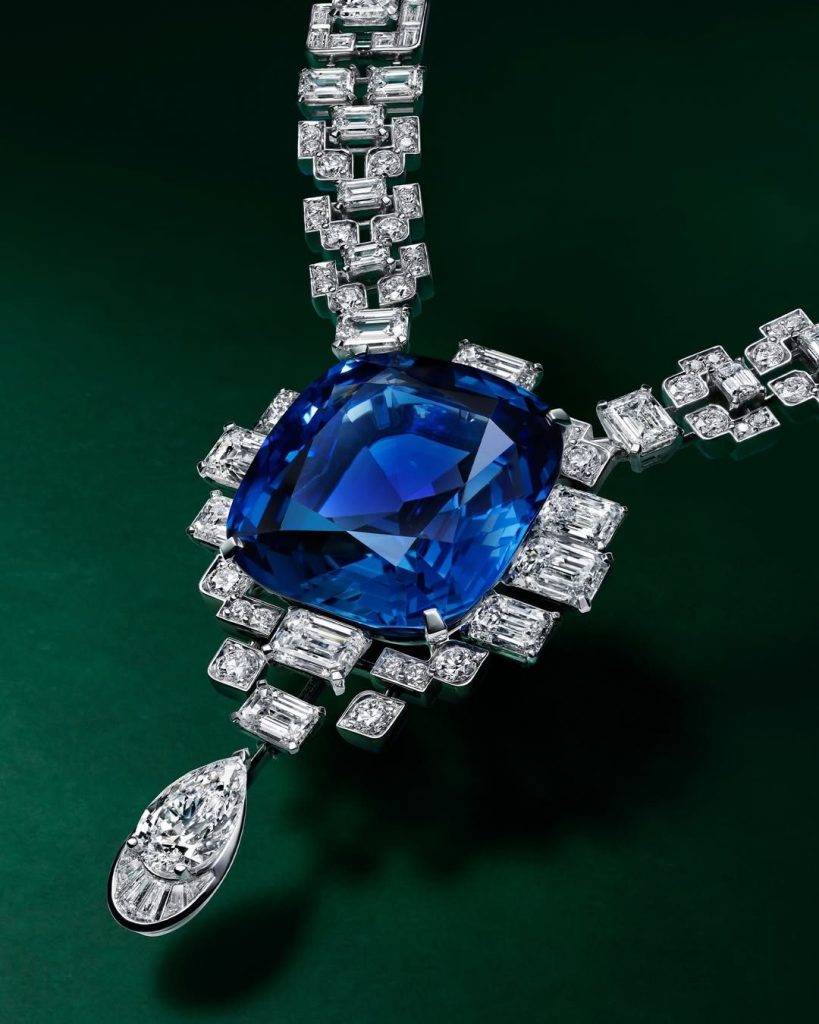
The pear-shaped drop has become sufficiently associated with Graff that connoisseurs recognise it as a house hallmark. This is not by accident. Since the maison's founding in 1960, Laurence Graff built his reputation on gemstone sourcing of uncommon rigour, paired with cutting and setting that eschews trend in favour of timelessness.
The repetition of a particular form—executed across different scales, materials and colour combinations—serves a dual purpose. It provides a visual continuity within the Graff portfolio whilst signalling to collectors that they are in the presence of a deliberate, house-approved aesthetic rather than a one-off exercise in display.
Composition and Restraint
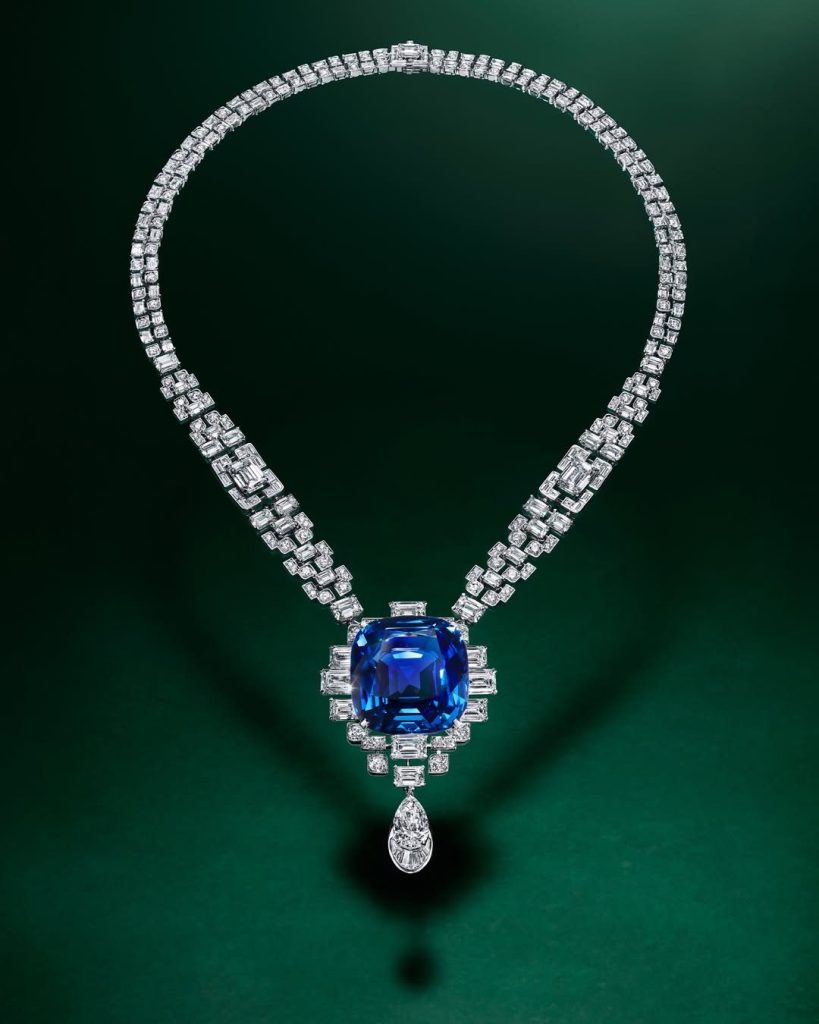
At 118 carats total, the necklace occupies a particular space in contemporary jewellery practice. It is substantial enough to command presence, yet restrained enough that it does not reduce to mere weight. This calibration—knowing how much is enough—separates jewellery of consequence from jewellery that simply costs a great deal.
The decision to anchor the design with sapphire rather than diamond reflects an ongoing trend among collectors of serious jewellery: the renewed appreciation for coloured stones as primary elements rather than accents. Sapphire, in particular, has regained its standing as a stone of equal prestige to diamond among those whose taste has been refined by exposure to historic jewels.
This necklace represents Graff at its most recognisable: a composition of considerable material value expressed through clarity of vision rather than complexity of design. It is jewellery that rewards close study, and that will likely appeal most to collectors who view gemstones as objects of intellectual as well as aesthetic interest.
Key Facts
- Total Carat Weight: 118 carats
- Primary Gemstone: Sapphire, pear-shaped drop
- Design Element: Supporting diamonds arranged to direct focus toward centrepiece
- House Signature: Pear-shaped drop form
- Brand: Graff
The Simply Luxury View
For the discerning collector, Graff's latest sapphire necklace exemplifies a principle that separates jewellery of lasting importance from fashion jewellery: the subjugation of all elements to a single visual and conceptual hierarchy. The pear-shaped sapphire drop is not one gemstone among many; it is the answer to which all other 118 carats of material serve as questions. This approach has defined Graff's most revered pieces across six decades, and its consistency speaks to a house philosophy rooted in restraint rather than excess.
The necklace also reflects a shift in contemporary collecting away from diamond-centric designs toward compositions where coloured stones—particularly sapphire of serious quality—reclaim their historical primacy. For collectors who have studied museum pieces and historic high jewellery, this represents not innovation but a return to principles that governed the finest jewellery before the twentieth-century ascendancy of the diamond solitaire.
Official brand website: graff.com
Imagery is used for editorial purposes. All rights remain with the respective owners, photographers and licensors.
Imagery courtesy of Graff (@graff).