
PRADA SPRING/SUMMER 2026 TURNS THE FASHION CAMPAIGN INTO AN OBJECT OF OBSERVATION
For Spring/Summer 2026, Prada turns its attention not only to clothes, but to the machinery of fashion imagery itself. Working with artist Anne Collier, the House transforms campaign photography into a layered study of looking, being looked at and the shifting meaning of advertising in a digital culture.
AI-assisted voice playback. Starts only when you choose Play.
The Spring/Summer 2026 campaign from Prada begins with a deceptively simple question: what happens when an image designed to be looked at becomes an object that looks back at us?
Created under the creative direction of Miuccia Prada and Raf Simons, the campaign takes a deliberately self-aware approach to fashion photography. Rather than presenting the collection through a conventional sequence of polished portraits or product-led compositions, Prada invited American artist Anne Collier to reconsider the campaign image as both subject and medium.
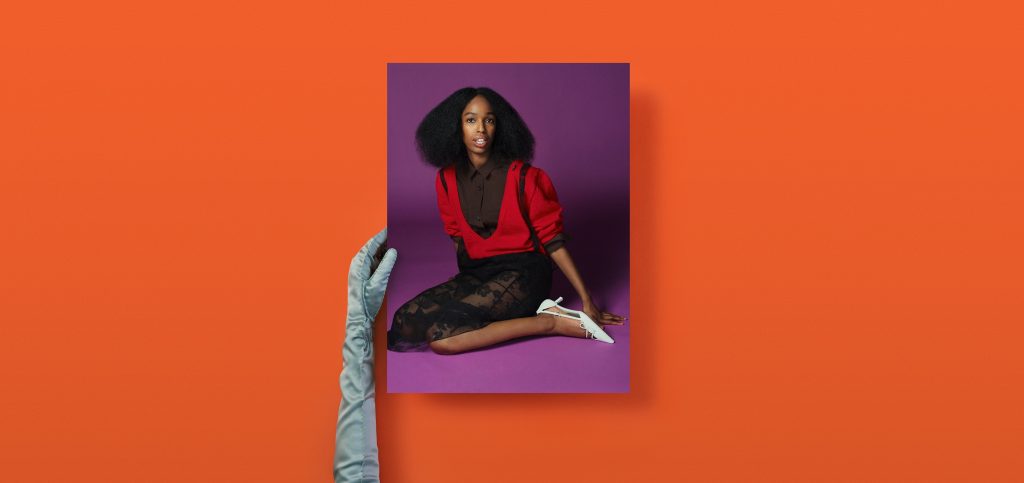
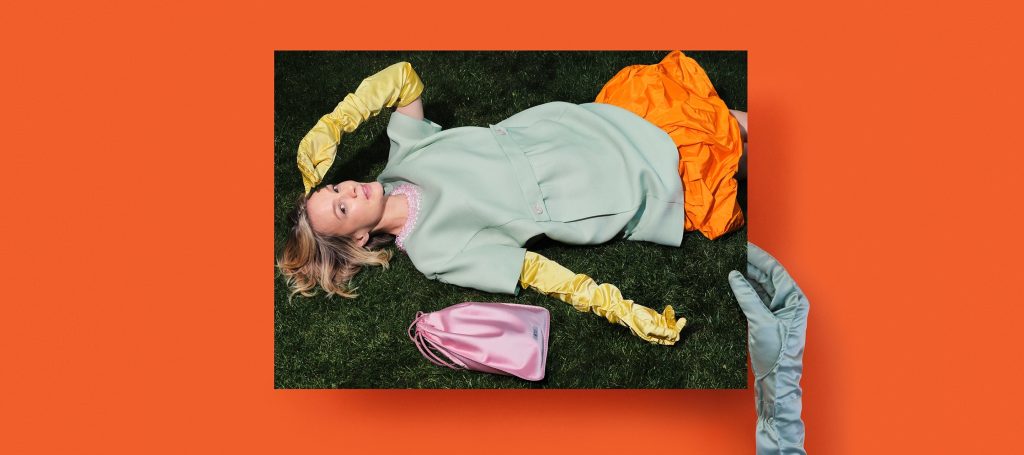
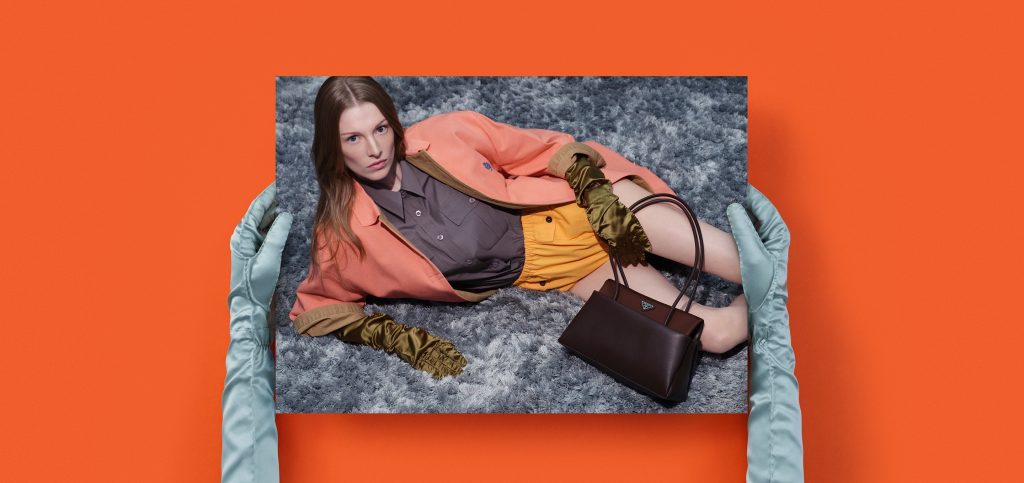 Collier’s practice has long examined photography, advertising and the act of looking. For Prada, she has translated that interest into a specially commissioned series in which fashion imagery becomes tangible. Photographs of the Spring/Summer 2026 collections, shot by Oliver Hadlee Pearch, appear within new still-life compositions, held in the hands of an unseen observer. The gesture is simple but conceptually charged: an image of fashion is itself photographed, transforming the campaign into a picture within a picture.
The effect creates several layers of spectatorship. There is the viewer looking at Collier’s photograph, the hands holding Pearch’s fashion image, and the people represented within that image. Each layer introduces another perspective on the act of seeing. The campaign therefore asks the audience to consider not only what is being presented, but how and why it is being presented in the first place.
This is particularly relevant in an era when fashion imagery is consumed almost instantaneously. Campaign photographs can appear on a phone screen, circulate through social platforms and disappear beneath another image within moments. Prada’s Spring/Summer 2026 work slows that process down conceptually. By photographing a photograph as a physical object, Collier introduces an element of distance between the original image and its audience. The campaign becomes something to examine rather than simply absorb.
Within these held photographs, Prada’s clothing is worn by a deliberately varied cast. Actors Levon Hawke, Nicholas Hoult, Damson Idris, Carey Mulligan and Hunter Schafer appear alongside musician John Glacier and model Liu Wen. Their individual identities add another dimension to the visual construction, placing personalities and performance inside an already layered photographic framework.
The casting also reinforces one of the campaign’s underlying ideas: fashion does not exist in isolation from the people who wear it. A garment changes according to its surroundings, its wearer and the context in which it is photographed. By placing recognisable personalities inside Collier’s carefully constructed images, Prada creates a sequence in which the clothes, the subjects and the audience are continually shifting positions.
Photography, therefore, becomes part of the campaign’s subject matter rather than merely its delivery mechanism.
That approach has a clear relationship with Prada’s wider cultural history. The House has consistently maintained a dialogue between fashion, contemporary art, architecture and broader intellectual culture. Fondazione Prada, established in 1993, has provided a major platform for contemporary artistic and cultural projects, while Prada’s fashion imagery has repeatedly treated advertising as a space for experimentation rather than a straightforward catalogue of products.
For Spring/Summer 2026, that relationship becomes particularly explicit. Collier’s intervention effectively removes the campaign from its usual flat, digital context and gives it physical presence. The photographs are pictured as things that can be held, examined and framed. That physicality introduces an almost archival quality to an image that was created for the present.
It also makes the campaign feel less concerned with delivering a single interpretation. There is no obvious hierarchy between the photograph being held and the photograph doing the holding. Instead, the viewer moves between layers, deciding where to focus. A hand may initially attract attention; then a face; then a particular garment; then the frame of another image. The eye continually moves between foreground and background.
That movement is central to Collier’s contribution. Her work has frequently investigated how familiar photographic conventions influence perception, particularly when images are removed from their original context. In this collaboration, the advertising photograph becomes something that can itself be questioned.
The Spring/Summer 2026 collections by Miuccia Prada and Raf Simons provide the material foundation for that experiment. Both the women’s and men’s collections are presented through the campaign as part of a broader conversation about image-making rather than as isolated fashion objects. The campaign credits Ferdinando Verderi with its creative direction, while Collier’s photographs incorporate Pearch’s original collection imagery.
Prada’s own history makes this willingness to move between fashion and culture especially significant. The House was founded in 1913, when Mario Prada opened the first Prada store in Milan’s Galleria Vittorio Emanuele II. Initially known for refined leather goods and imported luxury objects, the business developed a reputation for sophisticated materials and craftsmanship. Mario Prada’s curiosity extended beyond Italy, with objects and materials sourced internationally and brought together through skilled European artisans.
A major transformation came decades later when Miuccia Prada began working with entrepreneur Patrizio Bertelli. Their collaboration helped establish the business model that would drive Prada’s international expansion from the late 1970s onwards. The House subsequently expanded into ready-to-wear and developed an increasingly distinctive intellectual and cultural identity.
That heritage helps explain why the Spring/Summer 2026 campaign feels interested in the question of fashion as much as fashion itself. Prada’s brand language has long allowed clothing, image, architecture and contemporary art to overlap. Here, that relationship is distilled into a single visual device: a photograph of an image being held by someone outside the frame.
For audiences in the United Arab Emirates, the Spring/Summer 2026 collections are supported by Prada’s current official boutique network. The House’s UAE store locator currently lists one location in Abu Dhabi at The Galleria Al Maryah Island, and four in Dubai: The Dubai Mall Level Shoe District, The Dubai Mall Fashion Avenue, Mall of the Emirates and La Mer Bâoli.
What makes Prada’s latest campaign compelling is ultimately its refusal to treat advertising as an invisible vehicle. By making the photograph itself visible—held, framed and observed—the House exposes the layers normally concealed behind a finished fashion image.
The clothes remain central, but they are no longer the only subject. The camera, the viewer, the photograph and the person being photographed all become part of the same composition. In doing so, Prada turns a familiar commercial format into a quieter meditation on attention itself—and asks us to look at the fashion image with the same curiosity with which we look at fashion.