
The 911 GT3 RS: Porsche’s Uncompromising Apex of Track-Bred Precision
AI-assisted voice playback. Starts only when you choose Play.
Since its debut in 2003, the Porsche 911 GT3 has occupied a peculiar and coveted position in automotive culture: a car engineered not for the showroom, but for the circuit. The distinction matters. Where most high-performance automobiles wear their power as costume jewellery, the GT3 line has always considered racing its primary purpose and road-going secondary.
The latest iteration of the 911 GT3 RS, now in its 2026 specification, deepens that commitment further—a machine calculated for those who understand that true performance demands commitment, not mere affluence.
Engineering Precision Uncompromised
The 911 GT3 RS occupies the apex of Porsche's naturally aspirated engineering hierarchy. This is not a vehicle designed by committee or tempered by market research. Every curve, every component, every calibration reflects a singular obsession: extracting maximum performance through mechanical sympathy rather than brute displacement.
The distinction between the GT3 and its RS derivative lies in unrelenting refinement. Where the standard GT3 achieves 13.8–13.7 litres per 100 kilometres in combined testing, the RS variant improves that efficiency to 13.2 litres per 100 kilometres—a marginal but meaningful difference achieved through aerodynamic sophistication, weight reduction and the meticulous tuning of every drivetrain component. Combined CO₂ emissions of 299 grams per kilometre represent the environmental cost of this mechanical honesty.
This is not greenwashing. This is engineering transparency: Porsche states precisely what the machine consumes and what it returns to the atmosphere. There is nobility in that clarity.
Design as Function
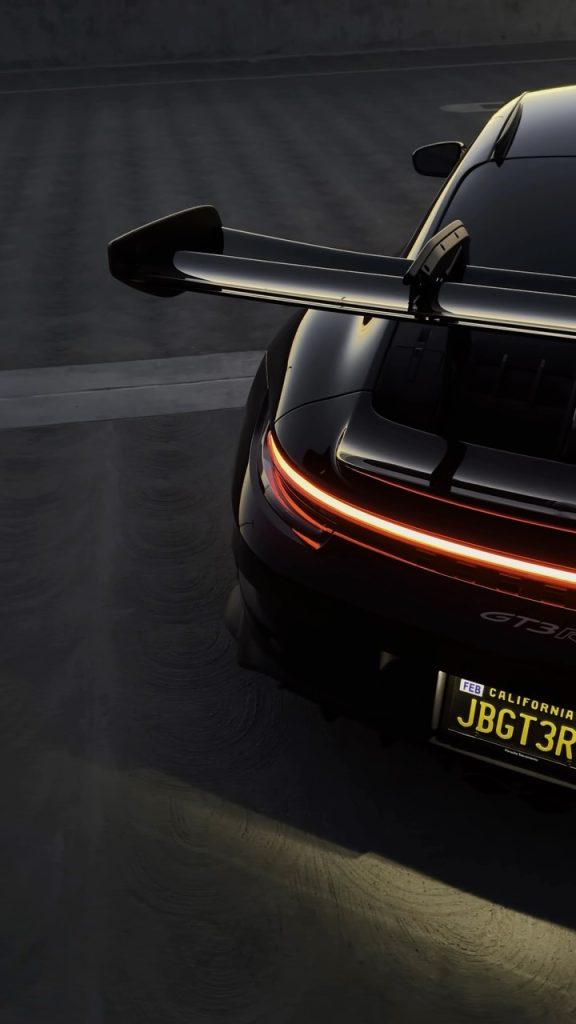
The visual drama of the 911 GT3 RS—the aggressive stance, the integrated rear wing, the muscular haunches—flows from aerodynamic necessity rather than aesthetic theatre. The RS designation signals that every styling cue exists to manage airflow, enhance stability and optimise downforce at the speeds for which this car was conceived.
Recent imagery released through Porsche's official channels captures the vehicle in its native habitat: the racing line, the moment when driver and machine achieve perfect synchronicity. These are not studio renders or seaside promotional photographs. They are documentation of purpose.
The Philosophy of Restraint
In an era when luxury frequently equates to excess—vast touchscreens, autonomous systems, artificial infotainment—the 911 GT3 RS represents a countervailing wisdom. This is a car that trusts the driver. It offers no pretence of self-driving capability, no need for artificial augmentation. The steering communicates directly. The engine note requires no synthetic enhancement.
That restraint, paradoxically, has become radical. The GT3 RS appeals to a shrinking cohort of motorists who believe that driving should demand skill, attention and commitment. For them, this represents not a compromise but a statement of values—a refusal to allow technology to mediate the primary relationship between human and machine.
The 911 GT3 RS has never been a comfortable choice. It demands sacrifices—practicality, civility, everyday convenience. In return, it offers something increasingly rare: authenticity. A machine built to fulfil a singular vision, executed without apology or dilution.
For the discerning driver—the person for whom motoring represents not mere transport but deliberate engagement with mechanical excellence—such commitment justifies everything.
Imagery is used for editorial purposes. All rights remain with the respective owners, photographers and licensors.
Imagery courtesy of Porsche (@porsche).