The Lineage of Legend: Tracing the Carrera’s Chronographic Heritage
Long before the Heuer Carrera emerged as one of watchmaking's most celebrated chronographs in 1963, a succession of visionary timepieces established the technical mastery and design language that would define generations of excellence.
AI-assisted voice playback. Starts only when you choose Play.
The genesis of the Heuer Carrera represents far more than a single moment of inspiration. Rather, it embodies the culmination of decades of horological refinement, where pioneering engineers and designers methodically established the design principles and technical innovations that would ultimately crystallise into one of watchmaking’s most revered instruments.
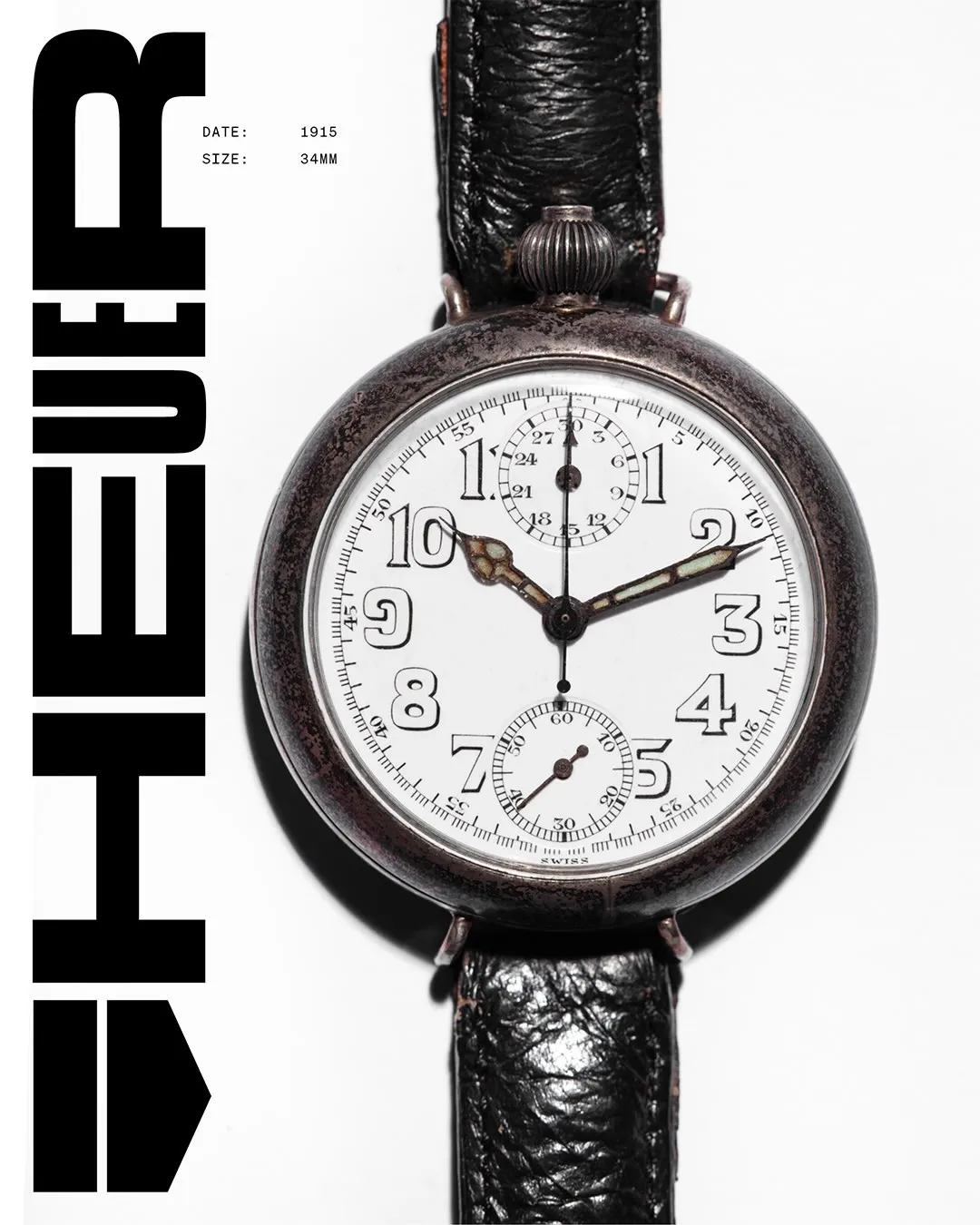
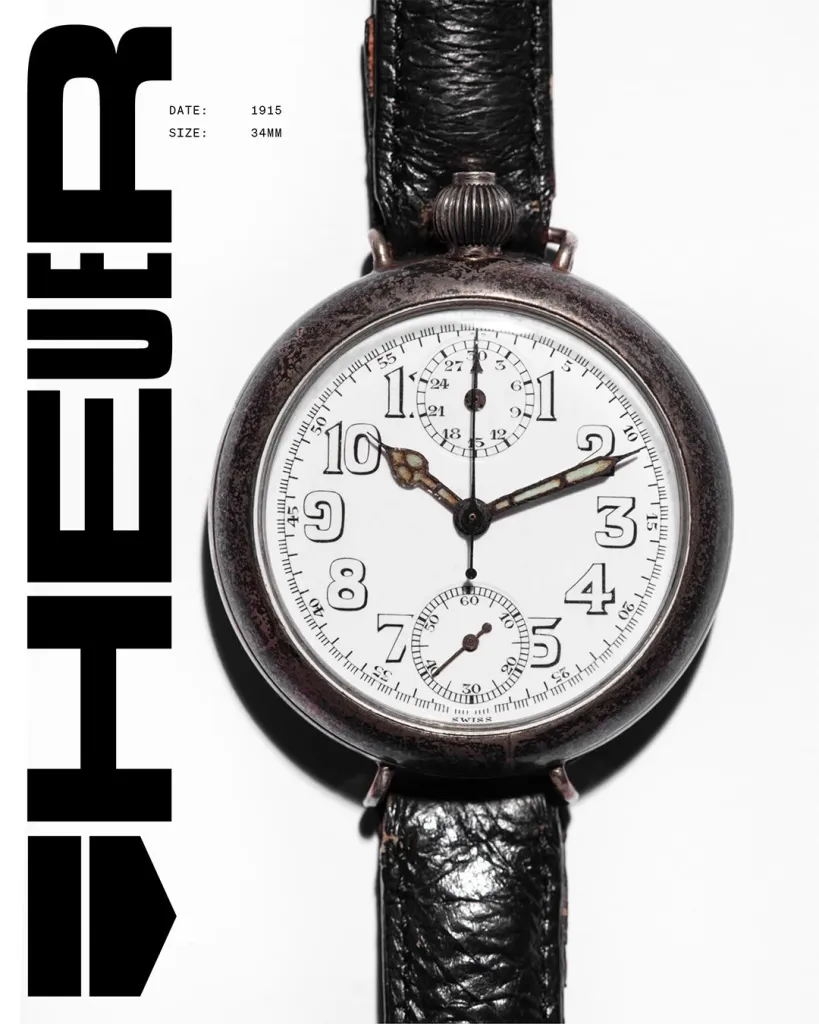
The earliest chapters of this story begin with the 1915 Heuer wristwatch chronograph, a timepiece of remarkable prescience for its era. Featuring an unconventional crown positioned at twelve o’clock, subsidiary dials positioned symmetrically above and below the dial’s centre, and wire lugs securing the strap with characteristic robustness, this landmark chronograph stands among the most consequential examples of early horological engineering. It marks the genesis of a narrative that would fundamentally shape the broader watchmaking industry.
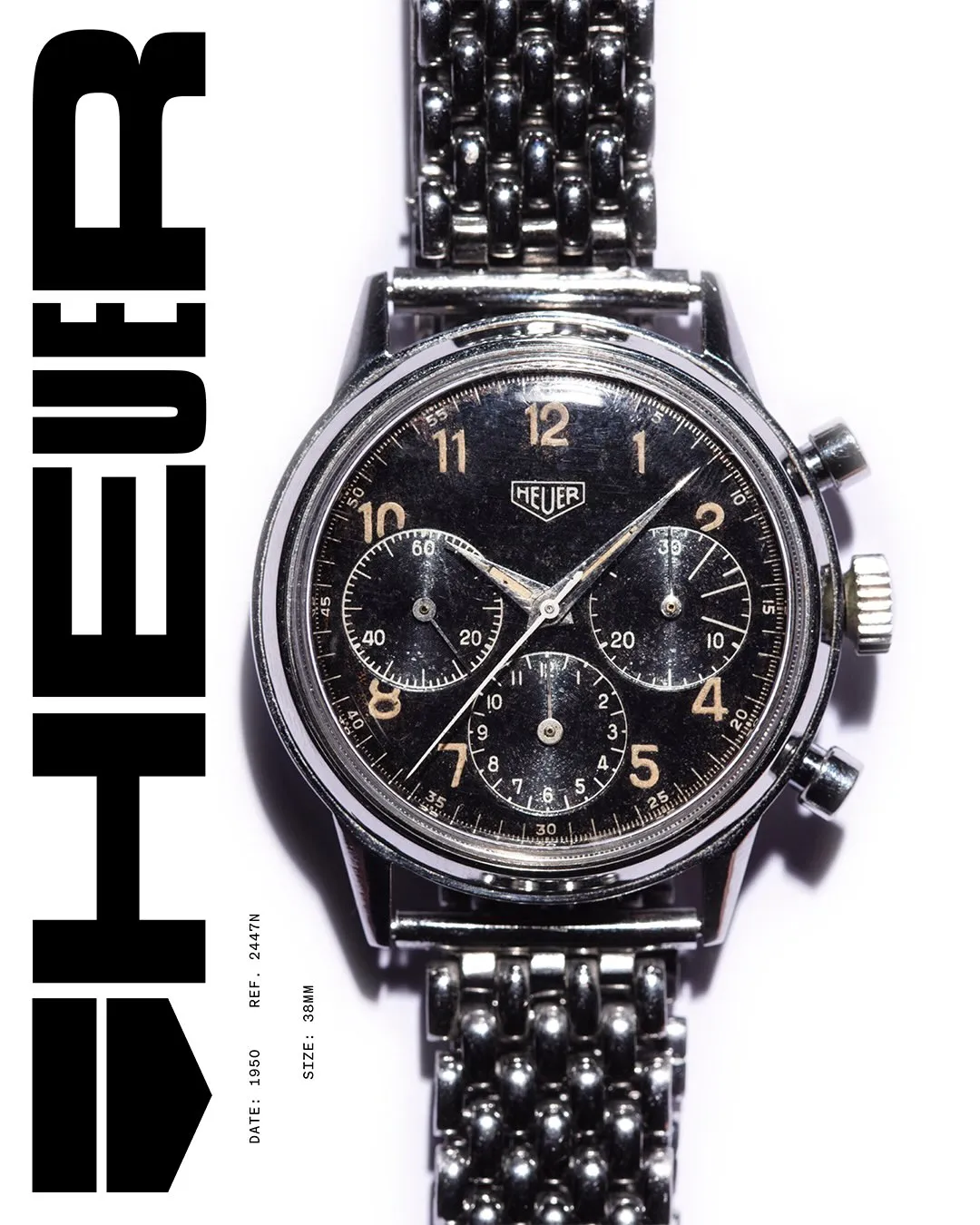
By 1950, the Heuer reference 2447 advanced this utilitarian philosophy with pronounced refinement. The watch introduced a substantially enlarged case diameter, paired with a commanding black dial and radium numerals that embodied the legible, purposeful aesthetic of mid century sports chronography. Its construction spoke to an uncompromising commitment to durability and function.
The Blueprint Emerges
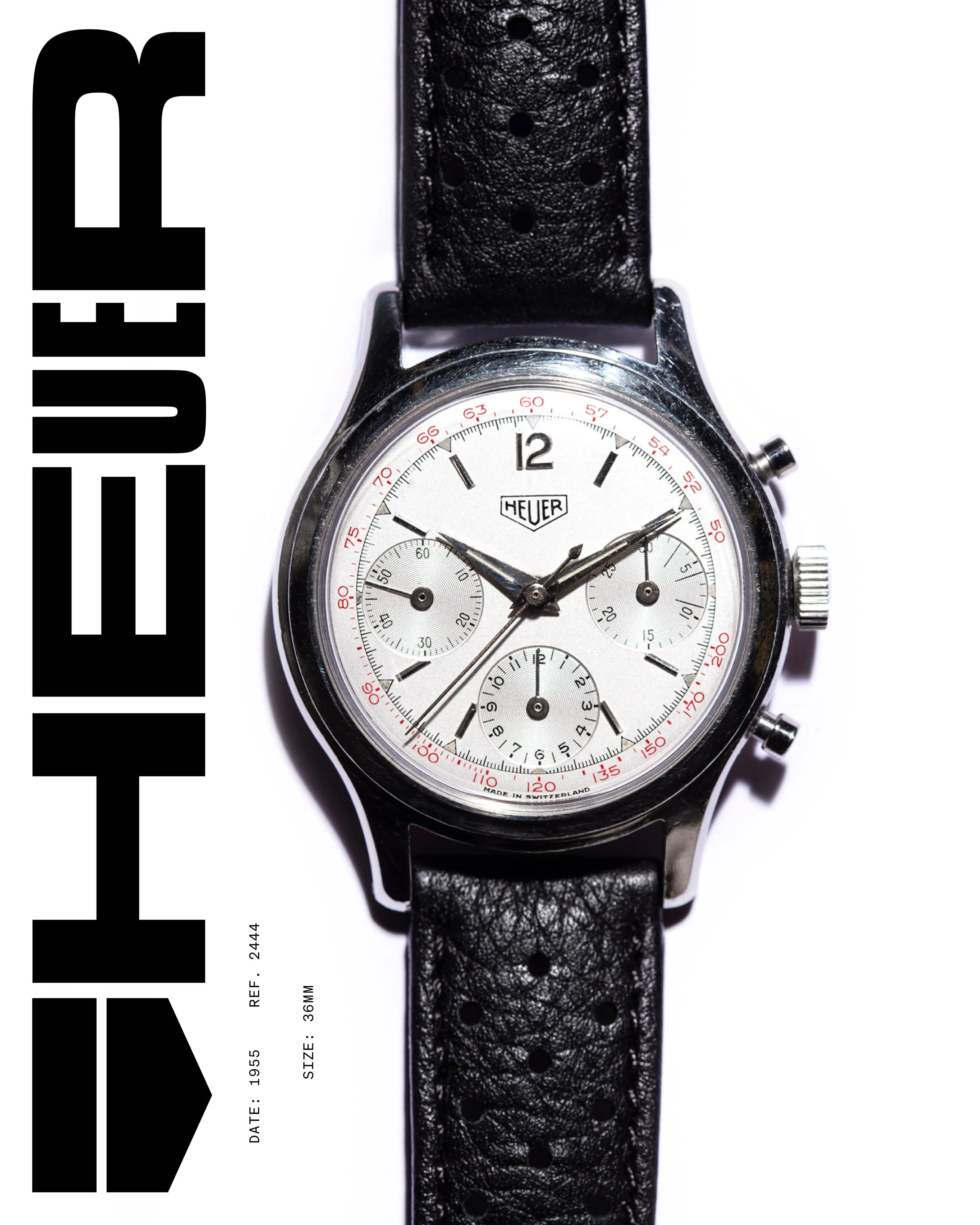
The 1955 reference 2444 T proved particularly significant in this evolutionary arc, introducing many of the defining codes that would become inseparable from the future Heuer Carrera. The screw down caseback, conceived as a technical solution to enhance water resistance, became an iconic visual signature. The pronounced pushers, engineered for operational ease, established an ergonomic principle that would endure. These elements were not merely functional; they represented the convergence of engineering necessity and aesthetic clarity that characterises truly enduring design.
When the Heuer Carrera finally debuted in 1963, it arrived not as a revelation born from sudden inspiration, but as the inevitable crystallisation of nearly five decades of horological wisdom. Each predecessor had contributed essential DNA to the final form. The proportional mastery, the legible dial architecture, the robust construction, the intuitive operation, the visual distinction, and the underlying technical innovation all traced their lineage directly to these pioneering instruments.
This genealogical approach to watchmaking represents a philosophy increasingly rare in contemporary luxury horology. The Carrera’s enduring prestige rests upon foundations laid long before its introduction, constructed through the accumulated knowledge and disciplined refinement of successive generations of craftsmen. It remains a testament to the principle that true icons are rarely invented; rather, they emerge when accumulated expertise finally achieves its perfect expression.
Imagery courtesy of TAG Heuer (@tagheuer).